
Editor’s Note
At Decor Your Room, we believe that every corner of your home deserves a touch of nature, regardless of window placement. Low light rooms are often the hardest to style, but they offer a unique opportunity to create a moody, lush sanctuary. This guide is professionally curated to help you identify resilient species that thrive in the shadows, ensuring your living room stays green and vibrant without the need for direct sun.
Why Every Low-Light Room Needs Greenery
Many homeowners believe that if their living room lacks large windows or direct sunlight, they simply cannot grow real plants. This is a significant misconception. Nature has provided us with resilient species that thrive in the shadows of dense jungles, making them perfectly adapted for low-light indoor environments.
In this comprehensive guide, we will explore the top 10 plants that can breathe life into your darker rooms. We will also discuss how to style them effectively and maintain them so your home feels like a high-end “Designer Home.”
Understanding “Low Light” in Interior Design
In interior design, “low light” doesn’t mean a pitch-black room. It refers to spaces that don’t receive direct sun, such as North-facing windows or corners far away from any light source.
The Scientific Benefits of Indoor Greenery
Indoor plants are more than just decor. Research shows that plants filter toxins like Formaldehyde and Benzene from the air. Furthermore, they increase humidity levels, which is excellent for your skin and respiratory health, especially in air-conditioned environments.
Top 5 “Hard-to-Kill” Low Light Plants
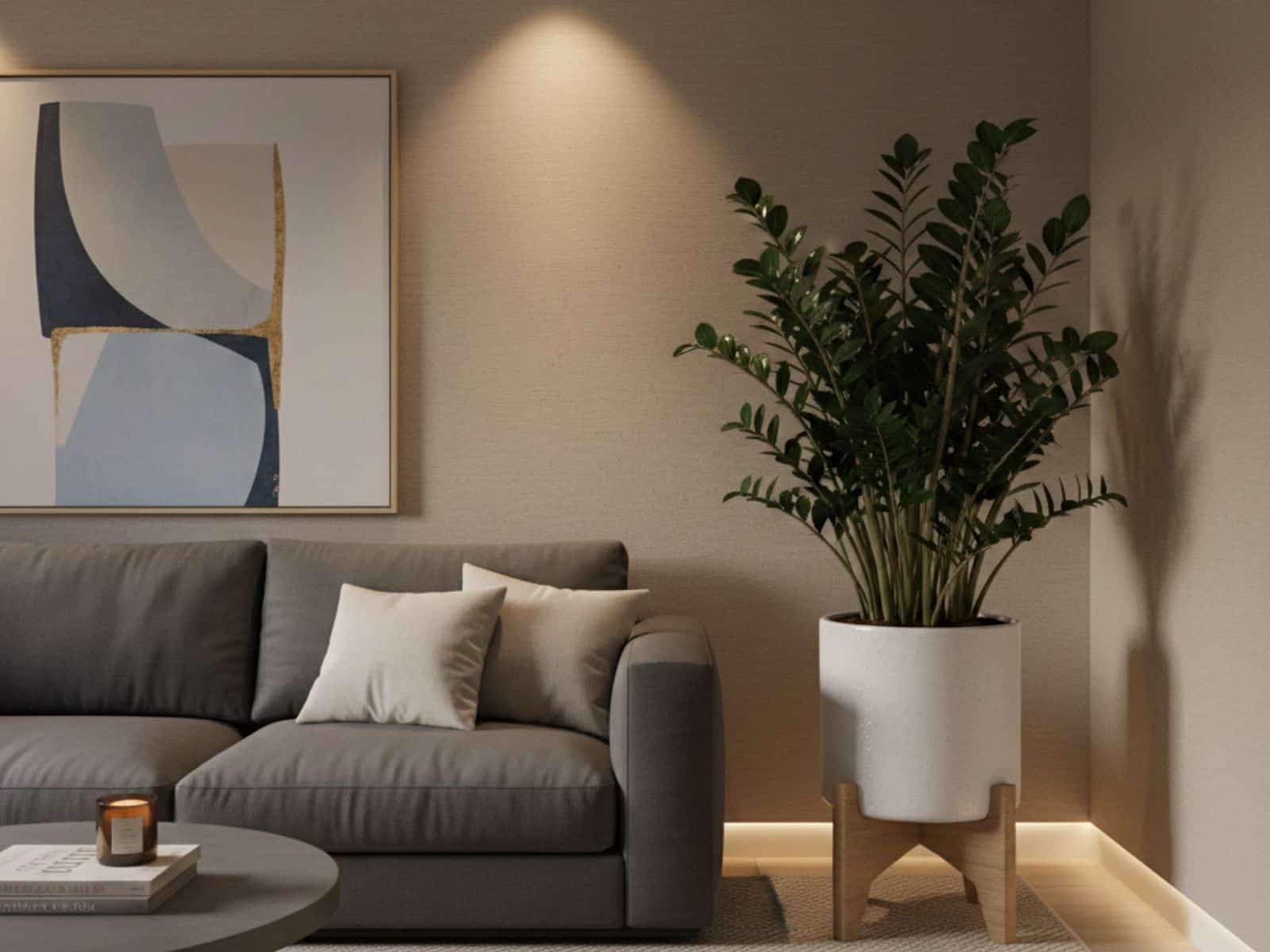
The ZZ Plant (Zamioculcas zamiifolia)
The ZZ plant is the king of low light. Its waxy, glossy leaves are not just for show they help the plant store water. Its best feature is its ability to handle “neglect.” Even if you forget to water it for a month, it will remain upright and green.
Snake Plant (Sansevieria)
Unique among plants, the Snake Plant releases oxygen at night. Its tall, sword-like leaves add Vertical Height” to small rooms. As we discussed in our “Small Room Hacks,” adding vertical “elements makes the ceiling feel higher and the room feel more spacious.

Adding Drama with Large Low-Light Plants
Parlor Palm (Chamaedorea elegans)
If you want a “Tropical” vibe without the need for a greenhouse, the Parlor Palm is your best bet. It has been popular since the Victorian era because it survives in low light and cooler temperatures. It grows slowly, meaning it won’t outgrow its pot quickly.
Cast Iron Plant (Aspidistra elatior)
Named the “Cast Iron” plant for its incredible strength, this plant can survive near-darkness, dry air, and fluctuating temperatures. Its broad, dark green leaves add a “Classy” look to any neglected corner.

Styling Tips: Plants and Furniture Balance
Placing plants is an art, but matching them with the right furniture is “Pro Interior Design.”
The “Leggy” Furniture Connection
As mentioned in our previous guides, using “Leggy” furniture (sofas or tables with thin legs) creates a sense of openness. Placing small pots near or under such furniture allows the floor to remain visible, ensuring the room doesn’t feel cluttered or overwhelmed by greenery.

Vertical Greenery: Using Wall Space and Shelves
When floor space is limited, look up!
Pothos
The Pothos is a versatile vine that looks stunning trailing down from a shelf. It is a fast grower and can be used as “Living Wall Decor” to fill empty vertical spaces.
Heartleaf Philodendron
Similar to the Pothos but with heart-shaped leaves, this plant is incredibly happy in low light. It is best displayed in hanging baskets where its vines can cascade freely.

Advanced Low-Light Decor: Textures and Colors
Calathea (The Prayer Plant)
Calatheas feature amazing patterns on their leaves that fold up at night and open in the morning. They prefer indirect light and add an “Artistic” texture to your living room palette.
Aglaonema (Chinese Evergreen)
If you want colors other than green, choose the Aglaonema. It comes in shades of silver, pink, and red, which remain vibrant even in lower light conditions.

How to Not Kill Your Low-Light Plants
The number one mistake people make is “Over-watering.”
- The Finger Test: Check the soil with your finger. If the top 2 inches are dry, only then water it. In low light, water evaporates slowly.
- Dusting is Key: Plants eat through their leaves. If they are covered in dust, they cannot breathe properly. Wipe them with a damp cloth once a week.
- Humidity Boost: Tropical plants like Peace Lilies love moisture. Occasional misting helps prevent brown leaf tips.

Using Reflective Surfaces to Boost Growth
In low light living rooms, your goal is to maximize every single photon of light available. Interior designers often use the ‘Shadow Play’ secret placing low-light plants near reflective surfaces like mirrors, metallic decor, or high gloss furniture. By positioning a Snake Plant or ZZ Plant across from a mirror, you aren’t just doubling the visual greenery; you are actually bouncing diffused light back onto the leaves.
This trick is especially effective in north facing rooms. Additionally, pairing these plants with ‘warm white’ LED grow bulbs hidden in stylish floor lamps can supplement light during winter months without ruining your room’s aesthetic, making your indoor garden look professionally maintained year-round.

FAQ :
Can plants survive in a windowless bathroom?
No plant can live in total darkness forever. If you have no windows, you will need to supplement with artificial LED “Grow Lights.”
How often should I fertilize low-light plants?
They require very little feeding. Twice a year (in Spring and Summer) is usually enough.
Which plants are safe for pets?
Parlor Palms and Spider Plants are 100% pet-safe. Snake Plants and ZZ Plants should be kept out of reach.

Conclusion:
Low light should not be a barrier to home decor; it’s an opportunity to bring resilient and unique life into your home. Start with a ZZ plant or a Snake plant, and you’ll soon see how greenery transforms the energy of your space.