
Editor’s Note
At Decor Your Room, we believe that limited square footage should never limit your style. A small living room is simply an opportunity to be more intentional with your design choices. This guide is curated by our interior experts to help you master the “visual expansion” techniques used in luxury apartments to create an airy, sophisticated, and spacious sanctuary.
The Art of Small Space Living
Having a small living room is a common challenge for many modern homeowners and apartment dwellers. However, a small square footage does not mean you have to live in a cluttered or cramped environment. Interior design is not just about the space you have; it’s about the perception of that space.
By using clever psychological tricks, specific color palettes, and strategic furniture placement, you can effectively “stretch” your walls. In this comprehensive guide, we will explore 10 professional hacks that will turn your tiny living area into a spacious-feeling sanctuary.
Hack 1: The Magic of Strategic Mirror Placement
In the world of home styling, mirrors are considered a ‘magic tool’ because they can instantly change how we see a room’s size.They don’t just help you check your outfit; they create an immediate illusion of more space.
Creating Depth and Dimension
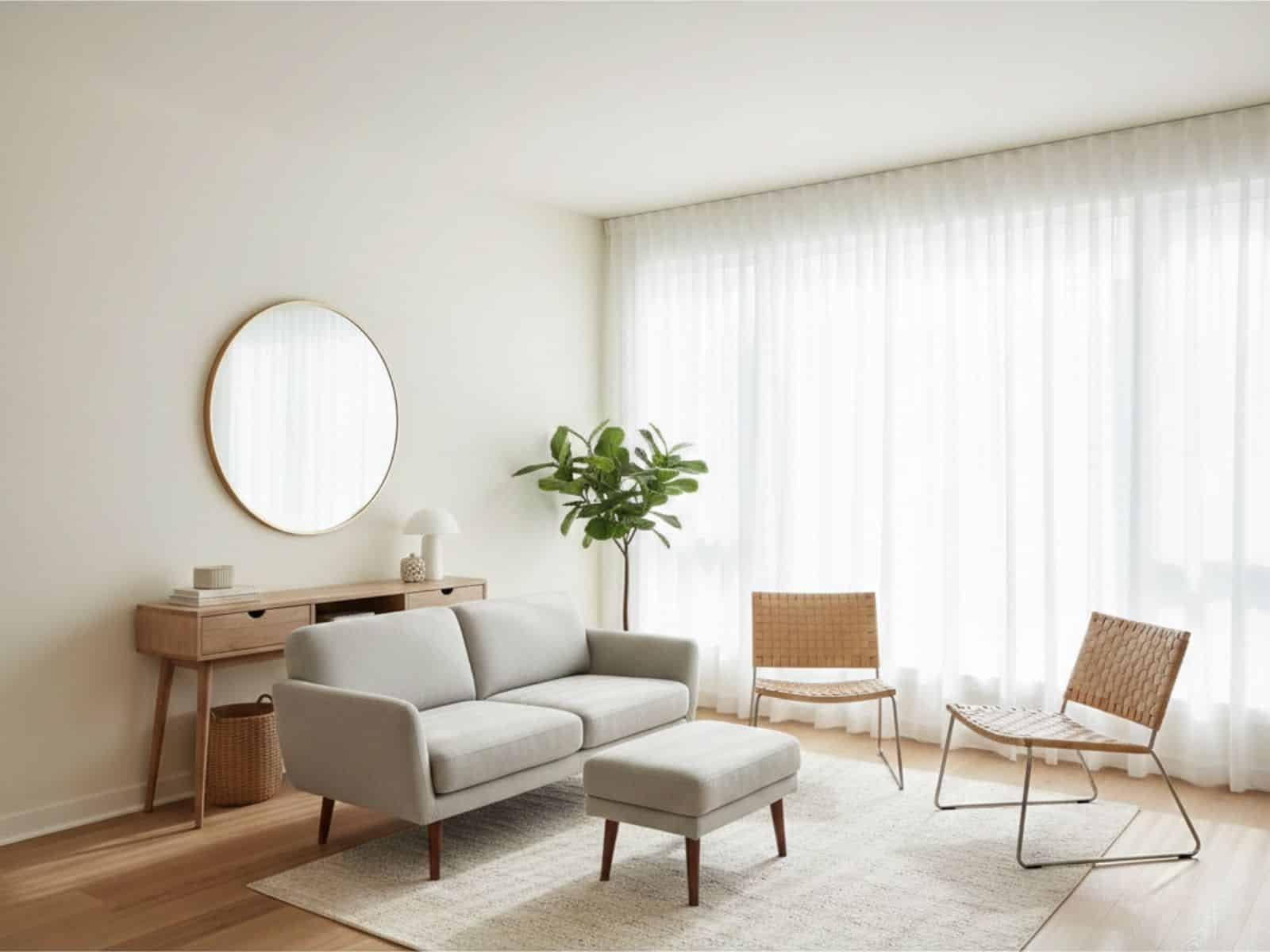
When you hang a mirror, it reflects light and the room’s interior, tricking the brain into thinking the room extends further than it actually does. For the best effect, use a floor-to-ceiling mirror or a large oversized wall mirror.
The Window Reflection Trick
Place your mirror directly opposite your largest window. This reflects the outdoor view and natural light, making it feel like you have an extra window, which significantly opens up the room.
Hack 2: Choose Furniture with “Legs”
The visual weight of your furniture plays a huge role in how “full” a room feels.
The Concept of “Airflow”
If your sofa or armchairs are bulky and sit flat on the floor, they act like a wall, stopping the eye. Instead, opt for furniture with tapered legs (mid-century modern style). When you can see the floor extending underneath the furniture, the room feels much more open and less crowded.

Using Vertical Proportions to Your Advantage
One of the most overlooked secrets in interior design is the relationship between furniture height and ceiling perception. To make a small living room feel significantly larger, opt for ‘low profile’ furniture. By choosing a sofa and coffee table that sit lower to the ground, you increase the ‘vertical volume’ of the room the unoccupied space between the furniture and the ceiling.
This gap tricks the eye into perceiving the room as much taller and more open. Pair this with floor to ceiling drapery placed slightly above the window frame, and you create a powerful vertical stretch that makes even the tightest living areas feel grand and expansive.”

Hack 3: Go Vertical with Floor-to-Ceiling Shelves
When you lack horizontal floor space, you must utilize your vertical space.
Drawing the Eye Upward
Installing shelves that go all the way from the floor to the ceiling draws the eye upward. This emphasizes the height of the room rather than the narrowness of the floor. It creates a “grand” feeling even in a small studio apartment.

Functional Decor
Use these shelves not just for books, but as a place to display minimalist decor. Remember the rule of “breathing room” don’t pack every inch of the shelf; leave some empty spaces to avoid a cluttered look.
Hack 4: The “Low Profile” Monochromatic Color Scheme
Colors have a massive impact on spatial perception. High-contrast colors “break up” a room, making it look like a series of small boxes.
The Power of Light Neutrals
Stick to a palette of whites, creams, soft beiges, or light greys. When the walls and the furniture are in similar light tones, the boundaries of the room disappear.
Painting the Ceiling
A pro tip is to paint your ceiling the same color as your walls (or a shade lighter). This removes the hard line where the wall ends, making the ceiling feel much higher.
Hack 5: Use Multi-Functional & Hidden Storage
Clutter is the number one enemy of a small room. If your coffee table is covered in magazines and remotes, the room will feel tiny.
Furniture that Works Twice
Invest in pieces like:
- Storage Ottomans: These provide seating and a place to hide blankets.
- Lift-top Coffee Tables: These can act as a desk and provide hidden storage.
- Sofa Beds: Perfect for guests without needing an extra

Hack 6: The “High and Wide” Curtain Rule
A frequent mistake is installing curtain rods exactly where the window begins, which often makes the wall look shorter than it is.This is a mistake in small rooms.
Faking Window Height
To create a sense of grand height, try mounting your drapery rods just a few inches below the ceiling line instead of right above the window. Also, extend the rod about 6-10 inches wider than the window on both sides. This makes the window look massive and allows more light to enter when the curtains are open.

Hack 7: Scale Your Furniture Properly
A common mistake is putting too many small pieces of furniture in a small room. This actually makes it look “bitsy” and cluttered.
One Large Piece vs. Many Small Pieces
One large, comfortable sectional sofa often looks better and feels more spacious than a small sofa plus two bulky armchairs. It creates a clean, singular focal point.
Hack 8: The 60-30-10 Rule for Small Spaces
To keep the room looking professional and balanced, follow this classic design rule:
- 60% Primary Color: (Walls, Rugs, Large Sofa) – Use your light neutral here.
- 30% Secondary Color: (Curtains, small chairs) – Use a slightly darker shade.
- 10% Accent Color: (Cushions, Art) – This is where you can add a pop of color without overwhelming the space.
Hack 9: Transparent Furniture (Acrylic & Glass)
If you need a desk or a coffee table but don’t want it to take up “visual space,” go transparent.
The “Invisible” Look
Glass or acrylic (Lucite) furniture is perfect because the eye travels right through it. You get the function of a table without the visual “block” of wood or metal.

Hack 10: Declutter and Keep Surfaces Clear
Minimalism isn’t just a style; it’s a necessity for small rooms.
The One-In, One-Out Rule
Every time you buy a new decor piece, remove an old one. Keeping surfaces like coffee tables and mantels 70% clear will instantly make the room feel larger and more peaceful.
FAQ: Common Questions About Small Living Rooms
Can I use dark colors in a small room?
Yes, but use them as accents. A dark navy feature wall can actually add depth, but ensure you have plenty of lighting to balance it out.
What is the best rug size for a small room?
Avoid tiny rugs! A small rug makes the floor look fragmented. Use a large rug that sits under the front legs of all your furniture to “ground” the space and make it feel unified.
How do I choose a sofa for a tiny apartment?
Look for a “Low Profile” sofa (low back and low to the ground) with thin arms. Bulky, rolled arms take up space without offering extra seating.

Conclusion
Transforming a small living room is all about creativity and discipline. By implementing these 10 hacks, you are not just decorating; you are architecturally changing how the room feels. Focus on light, height, and hidden storage, and you will find that your small room has more potential than you ever imagined.