
Editor’s Note
At Decor Your Room, we believe that you don’t need a massive renovation budget to change how your home feels. Sometimes, a simple piece of glass can do more than a new wall. This guide is designed to help you master the “illusion of space” using mirrors like a professional decorator.
The Science of Visual Expansion
Living in a compact apartment can often feel restrictive, but the walls are not your enemy. The secret to making a small living area feel palatial lies in the clever use of reflection. When we talk about small space solutions, mirrors are not just decorative accessories; they are architectural tools.
They work by tricking the human brain into perceiving more depth and light than actually exists. By strategically placing mirrors, you can effectively “push back” the walls and create a sense of flow that was missing before. In this comprehensive guide, we will break down the professional techniques to transform your cramped lounge into a bright, airy, and expansive sanctuary.
The “Window” Illusion: Creating Depth
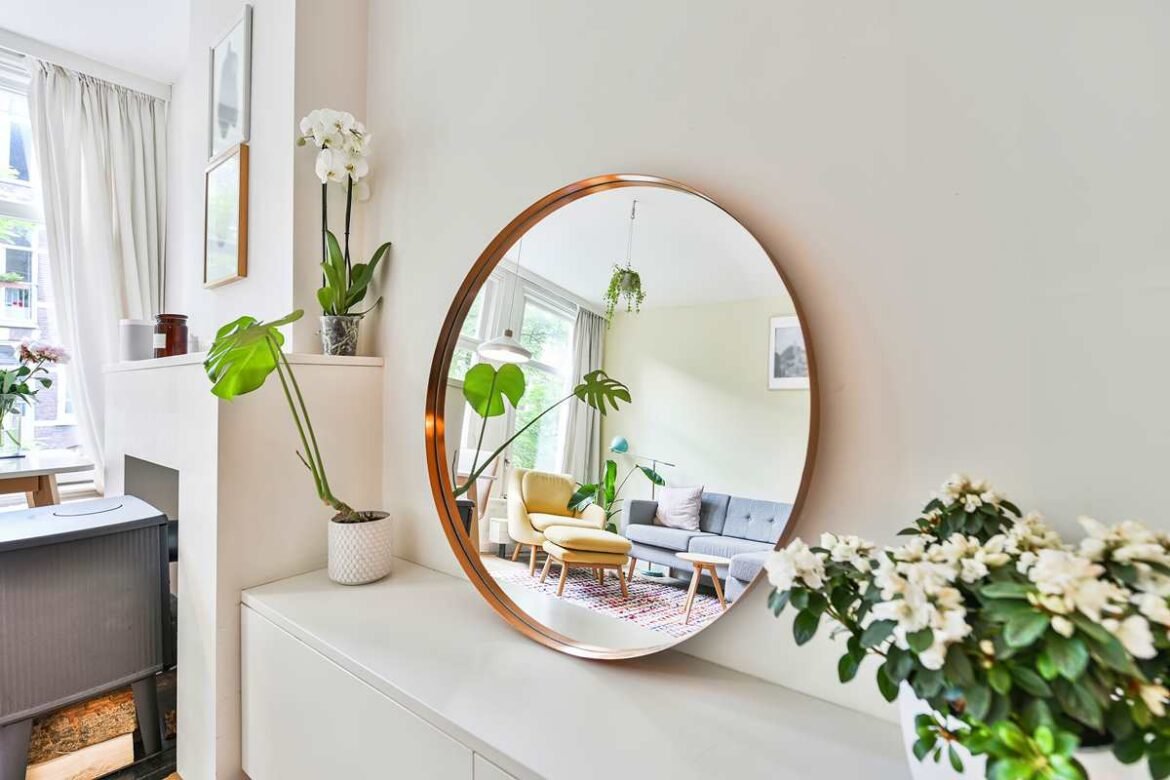
If your living room lacks enough windows, you can literally create a “fake” one. By placing a large, framed mirror directly across from your existing window, you capture the outdoor view and bring it inside.
This does two things: it doubles the amount of natural light entering the room and creates the sensation of having an extra window on a solid wall. This simple move can brighten a dark corner instantly and make the room feel connected to the outside world.

Go Floor-to-Ceiling for Vertical Height
When floor space is limited, you must use your vertical space. A tall, oversized floor mirror that reaches toward the ceiling creates a strong vertical line. This draws the eye upward, which is a classic designer trick to make low ceilings appear much higher.
Leaning a large mirror against the wall (securely, of course) adds a touch of effortless style. It acts as a bold statement piece that serves a huge functional purpose without taking up more than a few inches of floor depth.

The “Phantom Room” Illusion: Why Arch Mirrors Win
If you want to trick your guests into thinking your apartment has an extra room, swap your standard rectangular mirror for a large ‘Arch’ floor mirror. In architectural psychology, an arch shape is instantly associated with doorways and passages. When you lean a tall arch mirror against a solid wall, your brain subconsciously registers it as an opening to another area, rather than just a flat reflective surface.
This ‘Phantom Room’ effect adds incredible depth and softens the harsh boxy lines of a small living room, making it feel less like a cage and more like a flowing, open-concept space.

The Magic of Mirrored Furniture
Sometimes, you don’t have enough empty wall space for a large mirror. This is where mirrored furniture comes into play. Items like mirrored coffee tables, sideboards, or even small end tables are incredible for small rooms.
Because these pieces reflect the floor and the rug around them, they appear almost “invisible” to the eye. Unlike a heavy wooden chest that feels like a solid block, a mirrored cabinet feels light and airy. It keeps the floor plan looking open and prevents the furniture from “crowding” the room.

Reflecting the Focal Point
A common mistake is hanging a mirror just anywhere. A mirror should always be positioned to reflect something beautiful. If you place a mirror where it reflects a cluttered bookshelf or a messy corner, you are simply doubling the visual noise.
Instead, aim the reflection toward a beautiful chandelier, a piece of art, or a well-styled indoor plant. When a mirror reflects an attractive focal point, it enhances the overall aesthetic of the room and makes the decor feel more intentional.

Creating a Mirror Gallery Wall
If you find one large mirror too intimidating or expensive, you can create a “gallery wall” using several smaller mirrors. This technique provides the same light-reflecting benefits but adds more personality to the room.
You can mix different shapes round, square, and hexagonal but try to keep the frame colors similar (all gold, all black, or all wood) to maintain a cohesive look. This creates a stunning focal point that acts as art while opening up the space.

Strategically Placing Mirrors in Entryways
The way a guest perceives your entire house is often decided the moment they step through the entrance. If your living room opens directly into a narrow hallway or entryway, placing a mirror there is essential.
It opens up the narrowest part of your home and makes the transition into the living area feel much wider and more welcoming. This prevents that “tunnel” feeling that many small apartments have.

Behind the Sofa: The Classic Expand-o-Vision
One of the most effective placements is hanging a large horizontal mirror directly behind the sofa. This is usually the largest wall in the room. By covering a significant portion of it with a mirror, you create a “hole” in the wall that looks like the room continues further. This is a favorite trick of luxury hotel designers to make small suites feel like grand apartments.

Using Mirrors in Pairs for Symmetry
Symmetry creates a sense of order, and order makes a room feel more spacious. Placing two identical tall mirrors on either side of a fireplace or a large piece of furniture creates a “balanced” look. This trick tricks the eye into seeing the room as wider than it actually is, adding a touch of formal elegance to a tiny space.

Thinking Outside the Frame: Mirrored Backsplashes
If your living room is connected to a small kitchenette or bar area, consider a mirrored backsplash. It adds a modern, sleek look and makes the “work” area of the house feel like it’s part of the living space. This seamless transition is key to making open-plan small homes feel unified and large. To maximize the effect of your mirrors, pair them with the Best lighting ideas for small rooms to bounce warm light into every corner.
Lighting and Mirrors: The Ultimate Duo
Always consider your artificial lighting when hanging mirrors. Placing a mirror behind a lamp or a wall sconce will double the light output of that bulb. This is especially helpful in the evenings, as it creates a warm, glowing atmosphere that makes the room feel cozy rather than cramped.

FAQs
Are there any specific spots in a lounge where hanging a mirror should be avoided?
Avoid placing mirrors where they reflect “dead” spaces like a plain ceiling, a cluttered closet, or a dark hallway without any decor. The goal is to reflect beauty and light.
How big should a mirror be for a small room?
In a small room, bigger is usually better. A tiny mirror on a large wall can actually make the room look smaller. Don’t be afraid to go large!
Can mirrors really make a room warmer?
Visually, yes. If a mirror reflects warm sunlight or a cozy fireplace, it will make the entire room feel warmer and more inviting.
Conclusion
Using mirrors is more than just a decorating choice; it is a clever strategy to improve your quality of life at home. By following these small space solutions, you can break free from the feeling of being “closed in.”
Whether you choose a massive floor mirror or a collection of small ones, the key is to be intentional about what you are reflecting. With the right placement and a bit of creativity, you can turn your compact living room into a bright, airy, and sophisticated space that feels like it has twice the square footage. Now, go grab a mirror and start expanding your world!