
Editor’s Note
At Decor Your Room we believe that your walls should reflect your soul and not just the depth of your pockets. High-end art galleries often charge thousands for pieces that you can recreate at home with a bit of patience and creativity. This guide is dedicated to the “expensive look” for the “everyday budget” providing you with professional-grade DIY wall art ideas.
The Psychology of Large Scale Art
One of the biggest secrets of interior designers is that large-scale art makes a room look more expensive. Instead of hanging many small pieces which can look cluttered, one massive canvas creates a sophisticated focal point.
In this guide we will skip the craft store glitter and focus on textures and techniques that mimic high-end abstract art. Whether you are a beginner or a seasoned crafter these DIY wall art ideas for a high-end look will elevate your home instantly.
By choosing the right colors and frames you can fool anyone into thinking you spent a fortune at an auction. Let’s dive into the first and most popular technique of 2026 which is textured plaster art.
The Plaster of Paris Texture Canvas
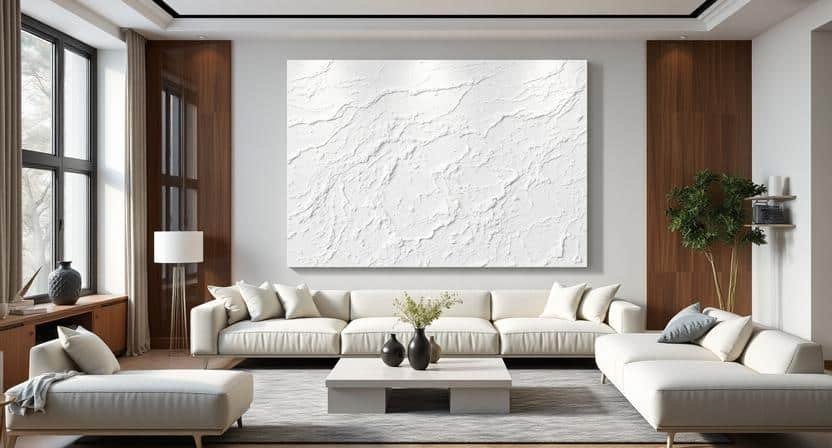
Textured art is dominating the 2026 decor scene because it adds a 3D element to your walls. To create this you only need a large blank canvas, a tub of joint compound (plaster) and a notched trowel.
Spread the plaster over the canvas and use the trowel to create waves or geometric lines. Once it dries you can leave it a raw white for a minimalist look or paint it in a single matte tone like charcoal or sand.
The shadows created by the texture give the piece an architectural quality that looks incredibly high-end. This is the perfect project for a Saturday afternoon that results in a gallery-worthy masterpiece.

Framed Fabric and Textile Panels
Sometimes the best art is not painted but woven. High-end designers often frame rare textiles or vintage scarves to add warmth and history to a room.
You can recreate this by finding a beautiful piece of linen or an ethnic fabric with an interesting pattern. Stretch the fabric over a wooden frame or place it inside an oversized matted frame.
The key to making this look expensive is the framing. Use a thin black or gold frame with a wide white mat to give the fabric room to breathe and look like a curated museum piece.

The Floating Botanical Press
Pressed flowers are a timeless trend but in 2026 we are making them “floating.” Instead of a traditional frame use two sheets of glass with a thin metal border.
Place a single large monstera leaf or a few delicate ferns between the glass sheets. The wall color will show through the frame making the plant look like it is floating in mid-air.
This is a brilliant way to bring nature indoors while maintaining a sleek and modern aesthetic. It works particularly well in bedrooms or home offices where a calm atmosphere is needed.

Abstract Color Blocking with Sample Pots
You don’t need expensive oil paints to create abstract art as simple wall paint sample pots can do the trick. Choose three colors that complement your room’s palette and paint large bold blocks of color on a canvas.
To make it look intentional and professional, keep the edges crisp using painter’s tape. A mix of a deep navy, a warm terracotta and a soft cream can create a mid-century modern vibe.

If you are unsure about which colors will work best with your current walls you should check the overall balance of the room. Our Paint & Wallpaper Calculator can help you plan your wall colors so your DIY art sits perfectly against its background.
3D Minimalist Plaster Art: Bringing Texture to Your Walls
In 2026, the ‘high-end look’ is all about tactile experience. Instead of a flat canvas, the most sought-after DIY wall art involves using joint compound or plaster to create 3D architectural textures. By using a notched trowel or even a simple comb, you can create sweeping arches, geometric ridges, or organic waves on a large canvas.
Once dry, painting the entire piece in a single matte ‘Stone’ or ‘Terracotta’ shade gives it an expensive, gallery-grade look that mimics high-end plaster work found in luxury Mediterranean villas. It’s the ultimate way to add depth to a room without using multiple colors. Your new 3D art piece will be the perfect focal point for a Mastering Minimalism styled living room.

The Giant Grid Gallery Wall
If you have a collection of small photos or sketches don’t just hang them randomly. Create a giant grid of identical frames (for example a 3×3 or 4×4 grid).
By using the same frame and the same size mat for every image you create a massive visual impact. This technique is often used in luxury hallways to create a sense of rhythm and order.
To keep it high-end use black and white photography or simple architectural sketches. The uniformity of the grid is what creates the “designer” look rather than the individual images themselves.

Wood Slat Geometric Art
Wood is a great way to add an organic high-end feel to a room. You can use thin basswood strips from a craft store to create a 3D geometric pattern on a wooden board.
Glue the strips in various angles to create triangles or chevron patterns. Once the glue is dry stain the wood in a deep oak or walnut finish.
This piece adds a tactile element to your wall that feels very custom and architectural. It is an excellent choice for a dining room or above a fireplace where you want a sturdy and impressive focal point.

Abstract Gold Leaf Accents
Nothing says “high-end” like a touch of gold. You can take a simple abstract painting or even a piece of cardboard and apply gold leaf sheets in random patches.
The reflective quality of the gold leaf catches the light and adds a layer of luxury that paint simply cannot match. Use a matte sealer over the rest of the piece to make the gold pop even more.
This technique works best when used sparingly. A few thin veins of gold through a white and gray textured piece can make it look like a thousand-dollar marble slab.

Oversized Map Art with a Twist
Maps are classic but for a high-end look you should go oversized and monochromatic. Print a high-resolution map of your favorite city in black and white and have it printed on a large scale.
Instead of a standard frame hang it using two wooden dowels at the top and bottom. This “scroll” style look is very trendy in 2026 and feels less formal and more artistic.
It is a great conversation starter and adds a personal touch to your home without the high price tag of custom-commissioned maps.

Negative Space Paper Cutouts
For the minimalist lover, negative space art is the ultimate DIY. Use two sheets of high-quality cardstock in contrasting colors like white and black.
Carefully cut out organic shapes or silhouettes from the top sheet and place it over the bottom sheet. The depth created by the thickness of the paper adds a subtle shadow that looks very sophisticated. If you prefer living art, check out our Vertical Garden Hacks to turn your wall into a green masterpiece.
Frame these in simple shadow boxes to emphasize the layers. This style of art is quiet but carries a lot of visual weight in a well-designed room.
Triptych Photography Sets
A triptych is a set of three panels that show one continuous image. You can do this with a panoramic photo of a landscape or an architectural shot.
Split the photo into three equal vertical sections and frame them identically. Hanging them with exactly two inches of space between each frame creates a modern and expansive look.
This is a perfect solution for a large empty wall behind a sofa. It fills the space without feeling heavy and the “broken” image adds a level of artistic intrigue.

Conclusion
Creating a high-end look does not require a luxury budget as it only requires a shift in perspective. By focusing on scale framing and texture you can turn simple materials into stunning focal points.
The most important part of DIY art is the confidence to experiment. Use these DIY wall art ideas for a high-end look to tell your personal story on your walls. A beautiful home is built one creative project at a time.
FAQs
What is the best way to frame DIY art to make it look expensive?
Always use a mat board inside your frame. A wide white mat gives any piece of art a professional and museum-quality finish.
How high should I hang my DIY wall art?
The center of your artwork should be roughly 57 to 60 inches from the floor which is the standard eye level for most galleries.
Can I use regular house paint for my canvas art?
Yes you can use leftover wall paint for abstract art as it has a great matte or satin finish that looks very modern on canvas.

Pingback: Wall Decor Ideas: 17 Ways to Make Any Room Look Expensive