
Editor’s Note:
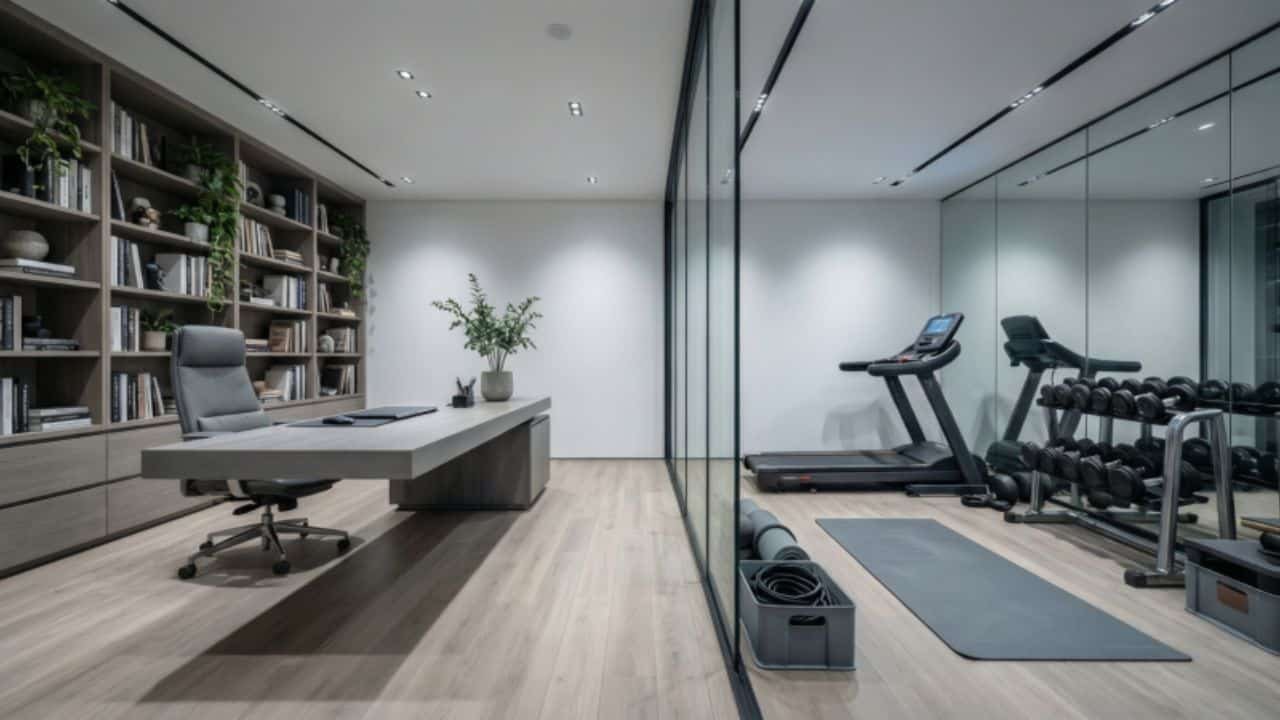
At Decor Your Room we understand that the modern home in the USA now has to work twice as hard. With the rise of remote work and home fitness the basement has become the most valuable real estate in the house. This guide will show you how to transform a dark basement into a bright productive office and a high-energy gym without the rooms clashing.
Mastering the Hybrid Layout: Visual Zoning for Work & Workout
The biggest challenge in a Basement Office and Gym combo is the mental shift between ‘Work Mode’ and ‘Sweat Mode.’ In 2026, top interior designers are using Visual Zoning to solve this. Instead of a physical wall that makes the basement feel smaller, use high-contrast flooring like polished concrete for the office and recycled rubber mats for the gym to define the boundaries.
To keep the professional vibe for your Zoom calls, install a ‘slat wood’ acoustic wall behind your desk. Not only does this look elite on camera, but it also absorbs the sound of clinking weights and treadmill noise, ensuring your workspace stays quiet and your gym stays high-energy without the two worlds colliding.

The Challenge of the Dual Purpose Basement
The biggest mistake homeowners make when converting a basement is not having a clear division of zones. If your treadmill is right next to your desk you will find it hard to focus on work and if your office files are scattered near your weights the gym will feel cluttered.
Creating a basement office and gym combo requires a smart layout that prioritizes air quality lighting and floor durability. In 2026 the trend is to move away from cold unfinished basements toward “Wellness Suites” that serve both your professional and physical health. Applying Warm Minimalism principles to your basement office will make it feel less like a cellar and more like a high-end studio
In this guide we will walk you through the essential steps to plan a dual-purpose space that adds massive value to your home. From choosing the right flooring to mastering the lighting we have everything covered.

Zoning Your Space for Maximum Productivity
Before you move a single piece of furniture you must map out your zones. The office area needs to be in the quietest corner ideally away from the noisy furnace or the stairs.
The gym area should be placed in a spot with the most head clearance especially if you plan on doing overhead presses or jumping. Use visual cues like different colored rugs or a partial glass partition to separate the two areas without closing off the room.
Open-plan basements feel much larger when you can see from one end to the other so avoid solid walls if possible. Instead use open bookshelves or decorative screens to create a “soft” boundary between your workspace and your workout space.

Flooring Solutions for Work and Workouts
The flooring in a basement office and gym combo has to be incredibly versatile. You need something soft enough for floor exercises but professional enough for an office setting.
Luxury Vinyl Plank (LVP) is the top choice for 2026 because it is 100% waterproof which is essential for basements. You can then layer heavy-duty rubber mats in the gym zone to protect the floor from dropped dumbbells.
In the office zone add a high-quality area rug to provide warmth under your desk. This combination of hard and soft surfaces defines the two areas perfectly while keeping the floor easy to clean from both sweat and coffee spills.

Lighting the Cave: Making it Bright and Airy
Basements are naturally dark which can lead to low energy and poor focus. For a professional office feel you need plenty of “cool white” LED recessed lighting to mimic daylight.
In the gym area you can get a bit more creative with RGB LED strips that change color based on your workout intensity. This “chromotherapy” is a massive trend in US home gyms right now as it helps boost adrenaline during heavy lifts.
If your basement has small windows, keep them clear of any obstructions. Use mirrors on the opposite walls to bounce what little natural light you have into the middle of the room.

Managing Air Quality and Humidity
Because basements are underground they often feel damp or stuffy which is not ideal for an office or a gym. A high-capacity dehumidifier is a non-negotiable requirement for this project.
To keep the air fresh while you exercise, consider installing a dedicated ventilation fan or at least a high-quality air purifier with a HEPA filter. This ensures that the “gym smell” does not linger over your desk during important Zoom calls.
Plants that thrive in low light like Sansevieria or ZZ plants are also great for basements. They help clean the air and add a touch of life to an otherwise windowless environment.

Planning Your Walls for Sound and Style
Soundproofing is vital if you have kids upstairs or if you plan on playing loud music during your workout. Use acoustic panels on the walls of the office zone to reduce echo during meetings.
When it comes to the color palette go for light and bright tones like soft whites or light grays to make the basement feel expansive. If you are worried about how much paint or wallpaper you will need for such a large space you can use our Paint & Wallpaper Calculator.
Matching your wall color with the right finish can make a huge difference in how the basement feels. A satin finish is great for basement walls as it reflects light without being too shiny.

Storage Hacks for a Clutter Free Combo
Clutter is the enemy of both focus and fitness. Use vertical wall-mounted storage for your gym equipment like racks for your weights and hooks for your resistance bands.
In the office zone use “hidden storage” solutions like desks with built-in drawers or floating shelves. Keeping the floor clear makes the room feel much larger and safer for moving around during a workout. Basements can get messy. Use our Hidden Storage Hacks to keep your gym equipment and office files tucked away.
If you have extra space consider a small “refreshment station” with a mini-fridge for water and a coffee maker. This prevents you from having to run upstairs every time you need a break.

Conclusion
Building a basement office and gym combo is one of the smartest investments you can make in your US home. It solves two major needs in one project while utilizing space that is often wasted.
By focusing on clear zoning, proper lighting and durable flooring you create a sanctuary for both work and wellness. Take it one step at a time and soon your basement will be the most popular room in the house.
FAQs
How do I stop my basement from feeling damp?
Yes provided you have clear visual boundaries and maintain good air quality to prevent the space from feeling cluttered or stuffy.
Is it okay to have a gym and office in the same room?
Always use a dehumidifier and ensure your basement has proper sealing. Using moisture-resistant paint and waterproof flooring like LVP also helps significantly.
What is the minimum ceiling height for a home gym?
Ideally you want at least 7 to 8 feet of clearance to safely perform overhead movements and use equipment like treadmills.