
Editor’s Note
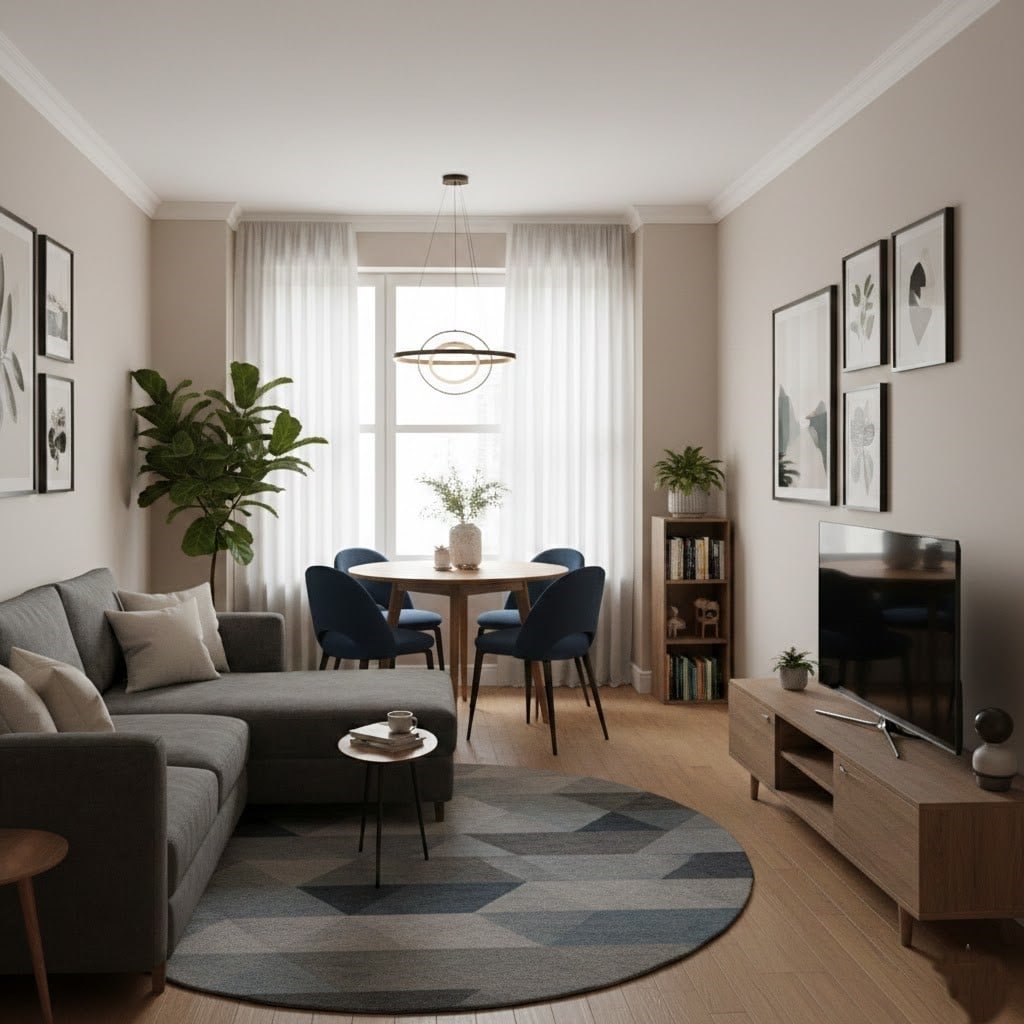
At Decor Your Room, we know that many modern apartments don’t have a separate dining room. Forcing two different functions into one small space can feel chaotic if you don’t have a plan. In 2026, the trend is Invisible Division. This guide provides small living room dining combo layouts that feel organized, airy, and expensive, regardless of your square footage.
The Challenge of the Dual-Purpose Room
When your sofa and your dining table share the same carpet, the room can quickly look like a furniture showroom. The trick is to create “Visual Boundaries” without using physical walls. You want the transition from eating to relaxing to feel natural, not like you’re tripping over a chair.
Planning a dual purpose room requires a strict budget because you are essentially furnishing two rooms in one. To keep your renovation costs organized and avoid overspending on bulky furniture, you can accurately track your expenses by using our Decor Room Budget Planner. This ensures you have enough for both a comfortable sofa and a functional dining set.
In this guide, we will explore five layout strategies that define each zone while maintaining a cohesive look.

The “Back-to-Back” Sofa Strategy
One of the most popular small living room dining combo layouts is placing the sofa with its back facing the dining area. This creates a psychological wall. When you are sitting on the sofa, you can’t see the dining table, which helps you switch into “relaxation mode.”
This layout works best in rectangular rooms. By using the back of the sofa as a divider, you create a clear walkway between the two zones. If the back of your sofa isn’t very attractive, you can place a slim console table there for added style.

Zoning with “The Power of Two” Rugs
If you don’t want to use furniture as a barrier, use rugs. Placing a large rug under the seating area and a different (but coordinating) rug under the dining table tells the eye that these are two distinct “islands.”
For the living zone, choose a plush rug for comfort. For the dining zone, a low-pile or flat-weave rug is better because it’s easier to pull chairs out and clean up crumbs. If you need to calculate the exact floor space or wall area for matching wallpaper in these zones, leverage our custom-built Paint & Wallpaper Calculator.

The Corner Nook (Banquette Seating)
If your living room is truly tiny, don’t try to center a dining table. Instead, use a corner. Banquette seating (a bench or L-shaped booth against the wall) takes up much less space than individual chairs.
This frees up the rest of the room for a larger sofa or a media center. This “Nook” approach is a favorite for studio apartments because it makes the dining area feel like a cozy cafe rather than an afterthought.

Consistent Color Palettes for Continuity
To prevent the room from looking like a mess, you must use a consistent color palette across both zones. If your sofa is navy blue, try using navy blue napkins or a piece of art with navy tones in the dining area.
This creates “Visual Flow.” It makes the two areas feel like they belong together even though they serve different purposes. As we explored in our Cheap Nursery Wall Decor guide, using a single theme or color family can make even the most budget friendly spaces look high-end.

Round Tables for Better Flow
In a combo room, traffic flow is everything. Rectangular tables have sharp corners that “eat” into walking paths. A round dining table, however, allows people to move around it more easily. It also softens the straight lines of the room, making a cramped layout feel more fluid and open.
Don’t Overspend! Track Costs With Our Room Budget Planner
Conclusion
Creating a successful small living room dining combo layout is all about balance. By using rugs, strategic furniture placement, and round shapes, you can have a space that works for both dinner parties and movie nights.
Take a deep breath, measure your space, and use the Decor Room Budget Planner to make your vision a reality. Your small home is about to feel much, much larger.
FAQs
How do I separate a living room and dining room in a small space?
The best way is to use a sofa as a divider, use two separate rugs to define the zones, or use a tall bookshelf as a partial “peek through” wall.
Should the living and dining room furniture match?
They don’t have to be a “set,” but they should complement each other in style and color. For example, use similar wood tones or a shared accent color.
What is the best dining table for a small combo room?
A round pedestal table or an expandable drop leaf table is best because they provide more flexibility and better traffic flow in tight spaces.