
Editor’s Note
Hosting a dinner party, Thanksgiving meal, or even just a nice Sunday family dinner can be incredibly stressful. The food is cooking, the house is clean, but then you stare at your dining table and panic: “Wait, does the fork go on the left or the right? Where does the water glass sit?” Don’t worry if the sheer number of utensils and glassware feels confusing; it’s a common struggle for many hosts.
In this ultimate word guide, we will break down exactly how to master the perfect place setting, from a basic everyday lunch to a full-blown formal holiday feast. Let’s make your table look like it was styled by a professional interior designer!
The Golden Rule of Any Place Setting
Before we dive into the different styles, you only need to memorize one golden rule of etiquette: Eat from the outside in. Utensils are placed in the exact order that the courses will be served. The silverware you use first (like a salad fork or soup spoon) goes on the farthest outside edge. The silverware you use last (like the main dinner fork and knife) goes closest to the plate. It is that simple!
The 5-Star Foundation
To make your dinner feel like a 5-star event, never place a dinner plate directly on bare wood. Always start with beautiful, heavy-duty as your clean base. On top of that, place a shiny metallic right in front of the chair. This simple trick not only catches any spilled food but also makes your entire place setting look incredibly expensive and elite before the food even arrives!

The Basic Everyday Place Setting
Let’s start small. If you are just having a nice Tuesday night dinner or hosting a very casual lunch with a friend, you do not need 15 pieces of silverware.
- The Plate: Center the dinner plate on the table mat.
- The Fork: This primary dining tool should always be situated to the left of your dinnerware.
- The Knife: Position this utensil directly to the right of your main dinner dish.Crucial detail: The sharp blade of the knife must always face inward towards the plate.
- The Glass: Place your water glass directly above the tip of the knife (in the top right corner).
- The Napkin: Folded neatly and placed either under the fork on the left or directly on top of the empty plate.

2. The Casual (Informal) Place Setting
You invited a few couples over for a three-course meal (soup/salad, main course, and dessert). This requires the “Casual” setup.
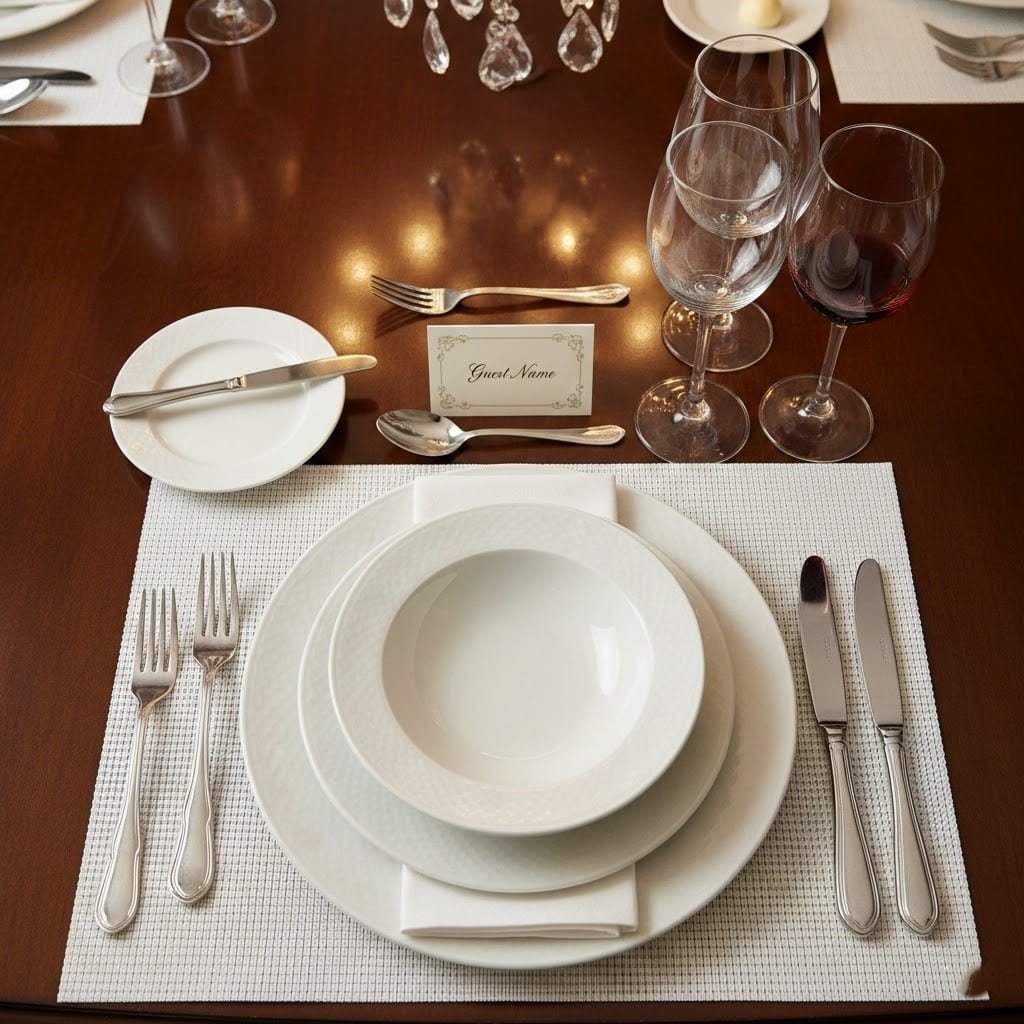
- The Plates: If serving soup, place the soup bowl directly on top of the salad plate, which sits on top of the main dinner plate.
- Left Side: Outside to inside Salad fork, then the larger Dinner fork.
- Right Side: Outside to inside Soup spoon, then the Dinner knife.
- Glassware: Water glass goes above the knife. If you are serving wine, the wine glass goes exactly to the right of the water glass.

The Formal Place Setting (The Royal Treatment)
This is for weddings, Thanksgiving, or a luxurious holiday dinner. It looks intimidating, but it is just the casual setting with a few upgrades.
- The Anchor: This is where you use a large, decorative base plate. If you aren’t sure how to use one, read our complete How to Use a Charger Plate guide! . This large base plate remains part of your table setup until it is time to bring out the dessert.
- Left Side: Salad fork (outside), Dinner fork (inside).
- Right Side: Soup spoon (farthest outside), Salad Knife (middle), Dinner Knife (closest to the plate).
- Top Left (The Bread Plate): A small bread plate goes in the top left corner, roughly at the 10 o’clock position. Place a small butter knife horizontally across it, blade facing down.
- Top Center (Dessert): The dessert spoon and dessert fork sit horizontally above the main dinner plate. The fork handle points left, and the spoon handle points right.

The “b and d” Trick for Left vs. Right
The most common problem users face is forgetting which bread plate is theirs and which drink belongs to them at a crowded round table.
- The Hack: Make a circle with the thumb and index finger of both hands, keeping your other fingers pointing straight up.
- Your left hand will form a lowercase “b” (for the Bread plate which goes on your left).
- Your right hand will form a lowercase “d” (for Drink/glasses which go on your right). You will never steal your neighbor’s water glass again!

Where Does the Napkin ReallyGo?
Napkin placement is one of the most hotly debated topics in table styling.
- Formal Standard: Placed neatly in the center of the charger plate or soup bowl. You can use a decorative metal napkin ring.
- Modern Aesthetic: Draped elegantly off the edge of the plate, hanging down the side of the table.
- What NOT to do: Never put the napkin inside the water or wine glass. It looks outdated and reminds people of cheap 1990s banquet halls.

Glassware Etiquette (Water, White, and Red)
When arranging a formal place setting, glasses form a diagonal line or a small triangle in the top right corner.
- The Water Goblet is closest to the plate (directly above the knife).
- Position your Red wine glass immediately to the right of the water goblet..
- The White Wine Glass goes to the right of the red wine glass (and slightly angled down).
- Remove any glasses for drinks you aren’t serving. Don’t clutter the table just to make it look “fancy.”

Styling Your Tablescape on a Budget
Now that you know the rules, how do you make it look aesthetic? You don’t need a matching 12-piece china set. In fact, mixing and matching vintage plates is a massive trend. Go to a thrift store and buy different floral plates. Keep the cutlery modern (like matte black or brushed gold) to tie it all together. If you want the table to feel grounded and earthy, use woven natural materials. The rattan textures we praised in our Boho Bedroom Ideas (Aesthetic) guide work perfectly as placemats under your plates!

The Centerpiece Rule
A beautiful place setting is ruined if your guests can’t see each other across the table. Keep your floral arrangements or candles either very low (under 12 inches) or extremely high (above eye level).
FAQs
Does the knife blade face in or out?
The sharp cutting edge of the knife blade must always face inward, pointing toward the dinner plate. Facing the blade outward is considered a sign of aggression in traditional etiquette!
What if I am not serving soup or a salad?
Simply remove those utensils. You only ever place the silverware on the table that will actually be used during the meal. If there’s no soup, do not put a soup spoon on the table.
Where does the coffee cup and saucer go?
Coffee cups and saucers are generally not placed on the table at the beginning of a formal dinner. They are brought out later and placed to the right of the setting, just below the glassware, when dessert is served.

Conclusion
Mastering the art of the place setting is not about being stiff or overly traditional; it is about making your guests feel comfortable and cared for. When people sit down at a beautifully organized table, they instantly know that they are in for a special experience. By remembering the “outside-in” rule and the simple “b and d” hand trick, you can set your table with confidence and focus on what really matters: enjoying great food and amazing conversation!