
Editor’s Note
As someone who loves bringing nature indoors, I’ve found that the Baby Rubber Plant (Peperomia obtusifolia) is the perfect “secret weapon” for home decor. It looks like a high-maintenance tropical gem but acts like a tough, low-water succulent. In this guide, I’ll share my personal tips and expert-backed strategies to help you master this plant, even if you’ve never kept a plant alive before.
Have you ever wanted a plant that looks like a lush, shiny jungle but doesn’t die if you forget to water it for a week? Let me introduce you to the Baby Rubber Plant.
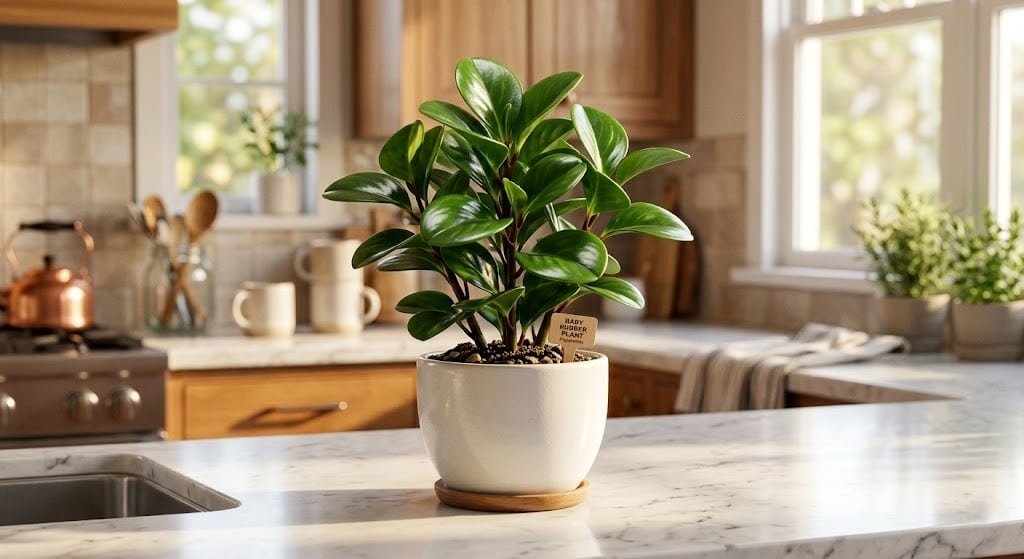
Scientifically called Peperomia obtusifolia, this plant is a favorite in the world of interior design. It is small, compact, and has leaves so glossy they look like they were polished with wax. But don’t let the name fool you, it isn’t a real rubber tree. It is actually much easier to handle!
In this massive guide, we will cover everything from basic care to expert propagation tricks. If you want a plant that brings “high-end” vibes to your room without the high-end stress, keep reading.
About Baby Rubber Plants: An In-depth Look
Before we dive into the “how-to,” let’s understand what makes this plant special. Understanding its origin helps you give it the best home possible.
How Do You Identify Peperomia Obtusifolia?
The Baby Rubber Plant is often confused with other plants. To identify it, look for:
- Leaves: They are thick, fleshy, and shaped like a spoon or a teardrop.
- Stem: The stems are sturdy and can store water.
- Texture: If you touch a leaf, it feels firm and rubbery (hence the name).
- Color: Most are dark forest green, but some “variegated” types have beautiful creamy white or yellow splashes.

Find Your Plant Match
Did you know there isn’t just one type?
- Solid Green: The classic choice. It handles low light better than others.
- Variegated: These have white or lime-green patterns. They need a bit more light to keep their colors bright.
- Marble: These look like they have been painted with strokes of cream and gold.
Peperomia Obtusifolia: The Big Benefits
Why should you clear a spot on your shelf for this plant?
- Pet Safety: Unlike many indoor plants, this one is non-toxic to cats and dogs.
- Air Purifier: It helps clear common indoor toxins from the air.
- Compact Growth: It won’t take over your room. It stays neat and tidy.
How to Care for a Baby Rubber Plant (Detailed Guide)
To make your plant grow like a champion, you need to master three main things: Light, Water, and Soil.
Baby Rubber Plant: Watering and Light Requirements
How Often Should I Water My Baby Rubber Plant?
The biggest “killer” of this plant is too much love (too much water). Because the leaves store water, they act like a succulent.
The Touch Strategy: To check for moisture, press your index finger about two joints deep into the potting mix. If the soil feels dry and crumbly at that depth, it is time to grab your watering can. If it feels even a little damp, do not water.
The Schedule: Usually, once every 7 to 10 days in summer and once every 2 weeks in winter is perfect.
The Rule: It is always better to be underwater than to overwater. If the plant gets too much water, the roots will turn to mush (root rot).

Do Baby Rubber Plants Need a Lot of Light?
They love bright, indirect light. Imagine the plant sitting under a big tree in the jungle. It wants sunlight, but it doesn’t want the sun to hit its leaves directly.
- Direct Sun: This will scorch the leaves and leave brown “burn” marks.
- Low Light: It can survive in low light, but it will grow very slowly and might get “leggy” (long, ugly stems).
Baby Rubber Plant: Soil & Fertilizer
The right “bed” for your plant makes all the difference.
Soil: Use a mix that drains fast. I recommend 50% regular potting soil and 50% perlite or cactus mixThis setup ensures that excess liquid doesn’t pool around the roots, protecting your plant from the dangers of stagnant water.
Potting: Always use a pot with drainage holes. If the water can’t get out, the plant can’t breathe.
Feeding: Give it a balanced liquid fertilizer once a month during Spring and Summer. In Winter, stop feeding entirely. The plant is “sleeping” and doesn’t need the extra food.

Temperature and Humidity
Since these are tropical plants, they like it warm.
- Ideal Temp: 65°F to 75°F (18°C to 24°C).
- The Danger Zone: If the temperature drops below 50°F (10°C), the plant will suffer. Keep it away from cold windows in the winter.
- Humidity: They enjoy moderate humidity. If your home is very dry, you can mist the leaves occasionally or use a pebble tray with water.
Pruning and Growth Rate
The Baby Rubber Plant is a slow to medium grower. It won’t grow 5 feet in a year, which is great for small spaces.
- Pruning: If your plant is getting too tall or messy, you can snip off the tops. This encourages the plant to grow “bushier” and wider. Always use clean scissors to prevent infections.
How to Propagate Peperomia Obtusifolia (Step-By-Step)
Want more plants for your other rooms? Or maybe a gift for a friend? Propagation is like magic.
Stem Cuttings (The Easiest Way)
- Cut a 3-4 inch piece of stem with at least 2 leaves.
- Let the cut end dry for a few hours.
- Place the stem in a glass of clean water.
- Change the water every 3 days.
- In 2-4 weeks, you’ll see roots. Then, move it to soil!

Leaf Cuttings
- Remove a healthy leaf.
- Dip the end in rooting hormone (optional) and stick it into moist soil.
- Wrap a clear plastic sheet or a transparent bag loosely over the container. This traps the humidity inside, providing the perfect warm environment for new growth.
- A “baby” plant will eventually pop out from the base of the leaf.

Division
If your plant is getting too big for its pot, you can gently pull the root ball apart into two sections during repotting. Now you have two separate plants!
Common Problems, Pests, and Diseases
Even the best plant parents face issues. Here is how to solve them:
Pests
- Mealybugs: Look for white, cotton-like spots. Wipe them off with a cotton swab dipped in rubbing alcohol.
- Spider Mites: If you see tiny webs, the air is too dry.

Diseases & Common Issues
- Dropping Leaves: This usually means a sudden temperature change or cold draft.
- Yellow Leaves: Usually a sign of overwatering. Check the roots for rot.
- Small Leaves: The plant needs more light or a bit of fertilizer.
Styling Your Baby Rubber Plant (Decorating Guide)
- Desk Buddy: Its compact size makes it perfect for office desks.
- Shelfie: Place it on a bookshelf next to white or wooden decor the green really “pops.”
- Groupings: Pair it with a tall Snake Plant or a trailing Pothos for a layered look.

Conclusion
The Baby Rubber Plant is a true gem. It is hardy, beautiful, safe for pets, and easy to multiply. By following the “less is more” rule with watering and giving it plenty of indirect light, you will have a thriving green companion for years.
FAQs
Is the Baby Rubber Plant a real rubber plant?
No. A real Rubber Plant (Ficus elastica) grows into a massive tree. The Baby Rubber Plant (Peperomia) stays small and belongs to the pepper family.
Can I grow it under office lights?
Yes! It does very well under fluorescent office lights, making it a great cubicle plant.
Why are the leaves turning black?
Black spots usually mean a fungal infection or severe root rot from too much water. Cut off the black parts and let the soil dry out.
Does it produce flowers?
Yes, it grows strange, greenish-white spikes that look like “tails.” They aren’t colorful flowers, but they are very unique!