
Editor’s Note
Do you want your home to smell like a high-end luxury spa? You can easily achieve this by growing real lavender! However, many people buy a beautiful, blooming lavender plant from the nursery, bring it home, and watch it sadly die within two weeks. Why does this happen? Because lavender has a “secret rulebook” for soil and water that most beginners simply do not know. In this massive, complete guide, I am going to show you exactly how to grow huge, healthy, and amazing-smelling lavender in pots, even if you have a small apartment. Let’s dive deep into the world of lavender!
Introduction: Why Growing Lavender is Worth the Effort
Lavender is undoubtedly one of the most famous and beloved plants in the entire world. It is cherished for its stunning purple flowers, its silver-green foliage, and, most importantly, its incredibly relaxing fragrance.
For hundreds of years, people have used lavender essential oils to help them sleep, to create expensive perfumes, and to elevate their home decor. Today, having a fresh, living lavender plant inside your house or on your balcony is the ultimate Small Space Solution to bring a touch of nature indoors.
But here is the absolute truth that nurseries do not tell you: Lavender is not like a normal tropical houseplant. If you treat it like a pothos or a fern, it will rot and die very quickly. To understand how to care for it, we first need to understand where it comes from.
Understanding Lavender’s Natural Habitat
Lavender originally comes from the Mediterranean coast. Think of places like Greece, Italy, and southern France. What is the weather like there? It is incredibly hot, baking under direct sunlight, with dry air and very rocky, sandy soil that has almost no nutrients.
There are no dense, wet jungles where lavender grows. It grows on the sides of rocky cliffs where sea breezes keep it dry. If you want to succeed in growing lavender in a pot, your number one goal is to recreate this hot, dry, and rocky Mediterranean environment right inside your home.
Choosing the Exactly Right Lavender Variety for Pots
Before you learn how to grow lavender, you need to buy the correct type. Not all lavenders are the same. Some grow into massive bushes that belong in a farm, while others stay small and compact. If you want to grow it in a pot inside your house or on a sunny balcony, choose one of these three varieties:
English Lavender (Lavandula angustifolia)
Do not let the name fool you; it does not come from England. This is the best, most highly recommended choice for beginners and indoor growers. It has the absolute strongest, sweetest, and most classic lavender smell.
- Appearance: The flowers are small, tightly packed, and very bright purple. The leaves have a beautiful frosty silver color.
- Best Feature: It is very tough. It can survive in cooler weather better than other types.
- Top Pot Varieties: Look for names like “Munstead” or “Hidcote” at your local plant shop. They stay small and compact, making them perfect for medium-sized pots.
French Lavender (Lavandula stoechas)
French lavender is a showstopper. It looks completely unique and very decorative.
- Appearance: The flowers are thicker, and they have cute little petals on top that look exactly like rabbit ears or butterfly wings!
- Best Feature: While it does not smell as strong or sweet as English lavender (it smells a bit more like rosemary), it blooms for a much longer time.
- Ideal For: It loves intense heat, making it the perfect plant for a balcony that gets blasted by the summer sun.

Lavandin (Lavandula x intermedia)
This is a hybrid plant. It is a mix between English lavender and spike lavender.
- Appearance: It grows very fast and produces long, elegant spikes of flowers.
- Best Feature: It creates highly fragrant oils, often used in commercial perfumes. Look for the “Grosso” variety if you have a very large, heavy pot on a patio.
The 3 Golden Rules: How to Grow Lavender Successfully
If you want to keep your plant alive and thriving, you must memorize the three golden rules of lavender care: Sun, Soil, and Water. If you master these three, your plant will live for years.
Rule 1: Massive, Unfiltered Sunlight Requirements
Lavender loves the sun. In fact, it is a hardcore sun-worshipper!
To grow a healthy, blooming plant, it absolutely needs at least 6 to 8 hours of direct, unfiltered sunlight every single day.
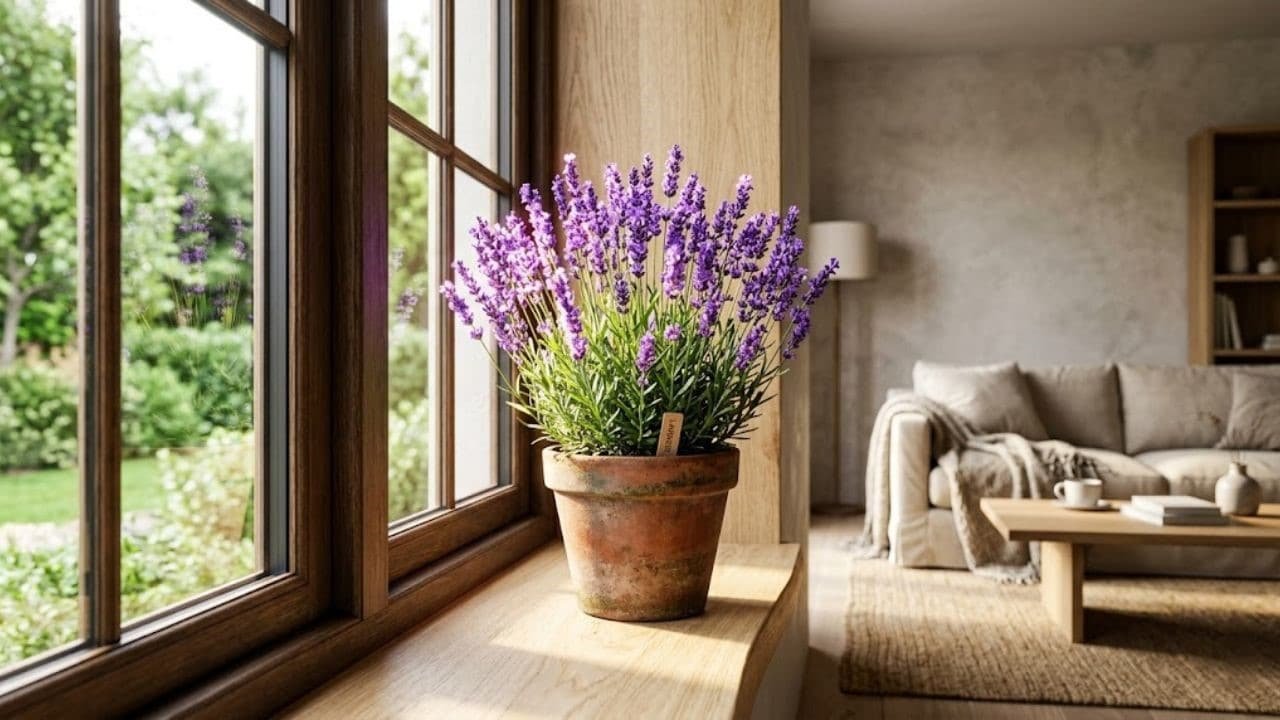
Indoor Placement: If you are growing it indoors, you must place it right next to your brightest south-facing window. Do not put it in the middle of the room. It needs to feel the heat of the sun on its leaves.
Signs of Low Light: If the plant does not get enough light, it will clearly tell you. The stems will stretch out and get very weak and floppy (this is called being “leggy”). The leaves will turn a sad, pale green instead of silver, and most importantly, it will refuse to grow any purple flowers.
Grow Lights: If your apartment is dark or only faces north, you cannot grow lavender naturally. You will need to invest in a full-spectrum LED grow light and leave it on for 12 hours a day positioned right above the plant.

Rule 2: The Secret “Rocky” Lavender Soil Recipe
This is where 90% of beginners make a fatal mistake. Never, ever plant lavender in standard, heavy potting soil straight from the bag!
Standard indoor potting soil is designed to hold moisture like a sponge. Lavender roots hate having “wet feet.” If they sit in wet mud, they will rot and die in a week. You need to recreate the rocky hills of the Mediterranean.
The Ultimate DIY Lavender Soil Recipe: To make the perfect dirt, you need to mix your own. In a large bucket, combine:
- 40% Regular Potting Soil (This gives a little bit of structure).
- 30% Coarse Sand or Builder’s Sand (Do not use fine play sand, it will turn into cement. You need thick, chunky sand).
- 30% White Perlite or Pumice Stones (This creates air pockets so the roots can breathe).
When you mix this together, the dirt should feel rough and airy. When you pour water into the pot, it should drain straight out of the bottom hole in less than 5 seconds. Additionally, lavender loves alkaline soil. You can mix a tiny spoonful of garden lime or crushed eggshells into the dirt to make it extra happy.

Rule 3: Strict, Unforgiving Watering Rules
Overwatering is the number one killer of potted lavender. We cannot stress this enough.
Because it comes from a hot, dry place, it is incredibly drought-tolerant. You must let the soil dry out completely and thoroughly before you even think about giving it more water.
How to Check: Never guess. Stick your index finger two full inches deep into the soil. If it feels even slightly cool or damp, stop! Do not water it. Wait 3 or 4 more days and check again.
The “Soak and Dry” Method: When the soil is finally bone-dry and dusty, take the pot to the sink. Give it a massive, heavy soak until water is pouring out of the bottom drainage hole. Let it sit in the sink until it stops dripping. Then, put it back in its sunny window and forget about it for another 10 to 14 days.

Potting and Environment: Getting the Details Right
Choosing the Right Pot Material
The pot you choose is just as important as the soil. You must always choose an unglazed Terracotta (clay) pot. Why? Clay pots are porous. They have millions of tiny, invisible holes that allow air to flow through the walls of the pot, helping the soil dry out much faster. Never use plastic pots or fully glazed ceramic pots for lavender, as they trap all the moisture inside and create a humid nightmare for the roots.
- Drainage is Non-Negotiable: Ensure the pot has at least one large drainage hole at the bottom. If it doesn’t, do not use it.
Temperature and Humidity
Lavender likes it hot and dry. Keep them in normal house temperatures between 65°F and 80°F. Keep them far away from humid areas. Never put a lavender plant in a bathroom! The steam from the shower will cause powdery mildew to grow on the leaves.
Fertilizing: Less is More
Unlike tropical Indoor Plants, lavender actually prefers poor, low-nutrient soil. If you give it heavy fertilizers, it will grow lots of green leaves but zero flowers. At most, you can give it a very weak, half-strength organic fertilizer just once at the beginning of spring.
How to Prune and Harvest Lavender Like a Pro
If you want your plant to look beautiful, bushy, and full of flowers every year, you absolutely must cut it. This is called pruning, and many beginners are too scared to do it.
Why You Must Prune
If you let lavender grow wild without cutting it, the bottom stems will turn into thick, hard, brown wood. Once the stems turn woody, they will never grow green leaves again, and your plant will look half-dead and ugly. Pruning forces new, fresh green growth from the center of the plant.
How to Prune
You should prune your plant twice a year:
Spring Pruning: When you see the first signs of new green growth in the spring, take clean, sharp scissors and cut off about one-third of the total green plant.
Important Rule: Never cut down into the hard brown wood at the base! If you cut the wood, that branch will die. Always leave at least two inches of green leaves on every stem.
Summer Harvesting: After the flowers have bloomed and start to fade, cut the flower stems off right at the base. This keeps the plant looking neat and saves its energy.

Troubleshooting: Common Problems & How to Fix Them
Even the best gardeners face issues. Here is how to diagnose and save a struggling lavender plant.
The Leaves are Turning Yellow, Brown, and Mushy
- The Diagnosis: This is the classic sign of root rot caused by severe overwatering or heavy soil.
- The Fix: You must act fast. Stop watering immediately. Take the plant out of the pot and inspect the roots. If they are black and slimy, cut them off. Repot the plant entirely in a fresh, dry batch of the sandy soil recipe mentioned above.
The Plant is Drooping, Grey, and Looks Sad
- The Diagnosis: Drooping can be tricky because it means either underwatering (it is severely thirsty) OR overwatering.
- The Fix: You must do the finger test. If the dirt is rock-hard, dusty, and bone-dry, give it a big, deep soak immediately. It will perk up in a few hours. If the dirt is wet mud, do not water it! Move it to a hotter spot to dry out.
The Plant is Green but Refuses to Grow Flowers
- The Diagnosis: The plant is either not getting enough direct sunlight, or the soil is too rich and heavily fertilized.
- The Fix: Stop feeding it any fertilizer. Move it to the brightest, hottest window in your house, or place it outside in direct sun during the summer.

Benefits of Lavender in Modern Home Decor
Having lavender in your home is not just an exercise in gardening; it is a serious lifestyle and decor upgrade. A beautifully aged terracotta pot with silvery-green and bright purple lavender looks absolutely incredible in a minimalist, bohemian, or Japandi style home.
Beyond looks, it is functional. When you prune your plant, do not throw the flowers away! Cut the purple flowers, tie them together with a rustic string, and hang them upside down in a dark, dry place. Once they are fully dried out, you can crush them and put them in small cloth bags.
Place these bags in your clothes drawers or closets. They will make your clothes smell like a high-end boutique and naturally keep moths and bugs away!

Conclusion
Growing lavender at home is an incredibly rewarding experience that challenges you to be a better plant parent. While its care requirements are completely different from a standard houseplant like the Baby Rubber Plant, it is actually very easy once you understand its nature. Just remember the golden rules: give it a breathable terracotta pot, mix a heavy sandy/rocky dirt, provide endless baking sunshine, and completely forget about watering it until the soil is bone dry. Follow this detailed guide, and you will have a gorgeous, fragrant, designer-quality lavender plant for years to come!
FAQs
Can lavender survive indoors all year round?
Yes, it can survive, but it is challenging. It absolutely requires a south-facing window with 6 to 8 hours of intense, direct sunlight. If your house gets dark in the winter, you must use an LED grow light to keep it healthy.
How often should I water indoor lavender in a pot?
There is no set schedule. It entirely depends on your home’s temperature. Generally, you might only water it every 10 to 15 days. You must wait until the soil feels completely dry two inches deep before watering again.
Why is my lavender dying from the bottom up?
This is almost always caused by poor airflow and wet, heavy soil. The leaves at the bottom stay damp and begin to rot. Make sure the plant is not crowded by other decor items and that you are using a sandy, fast-draining soil mix.
Is lavender safe to have around cats and dogs?
No, you need to be careful. The ASPCA lists lavender as toxic to dogs and cats. It contains essential oils (linalool and linalyl acetate) that can cause vomiting, lethargy, and a lack of appetite if your pet eats a large amount of the plant. Always keep it on a high shelf out of reach.
Should I mist my lavender plant with water?
Absolutely not! Lavender hates humidity and wet leaves. Misting the plant will quickly cause deadly fungal diseases and powdery mildew to spread across the leaves. Keep the leaves as dry as possible.