
Editor’s Note
At Decor Your Room we know that an unfinished basement is like a blank canvas waiting for a masterpiece. In the USA finishing a basement can add thousands to your home’s value but it doesn’t have to cost a fortune. This guide focuses on finished basement ideas on a budget that prioritize style and functionality without the luxury price tag.
The Potential of the Unfinished Basement
Most homeowners ignore their basement because they think a remodel requires a massive investment. However with the right planning and creativity you can turn that dark storage area into a high-energy gym or a quiet home office. The secret is to focus on high-impact changes that provide the most value for every dollar spent.
Before you start tearing down walls or buying furniture it is crucial to have a financial roadmap. You can accurately track your renovation costs by using our Decor Room Budget Planner which helps you allocate funds for materials and decor without any hidden surprises.
In this guide we will walk you through ten clever ways to upgrade your basement. We will cover everything from lighting to flooring while keeping our focus on affordable solutions that look professionally designed.

The Industrial Style Exposed Ceiling
One of the most expensive parts of finishing a basement is installing a drop ceiling or drywall. A budget-friendly alternative is to simply paint the exposed beams and pipes a single solid color. Dark charcoal or matte black gives the room a modern industrial loft feel that is very trendy in 2026.
Painting the ceiling not only saves money on materials but also maintains the maximum height of the room. This makes the basement feel less like a cave and more like an intentional design choice. To determine the precise quantity of paint required for your specific ceiling layout you can leverage our custom-built Paint & Wallpaper Calculator.

Creating a Multi Functional Office and Gym
As we discussed in our previous guide on basement office and gym combos, zoning is key. You can use large area rugs to define the “work” zone and the “workout” zone without building any permanent walls. This flexibility allows the space to grow with your needs.
For the gym area look for interlocking foam tiles which are much cheaper than professional gym flooring. They provide excellent cushion for your joints and are easy to replace if they get worn out. In the office area a simple floating desk can keep the floor clear and look minimalist.

Architectural Depth: Using Exposed Elements for a High-End Look
If you’re working with a tight budget and want to avoid the high cost of full drywalling, the 2026 standout trend is ‘Soft Industrial’ design. Instead of hiding your basement’s soul, you embrace it by leaving the ceiling beams and ductwork exposed but painting them in a single, uniform matte shade such as Charcoal Grey or Warm Off-White.
This architectural move instantly transforms a ‘half-finished’ basement into a sophisticated NYC-style loft. Pair this with ‘Wall Grazing’ LED strips placed at floor level to cast light upwards; this simple trick creates a sense of height and luxury that mimics high-end hotel lounges, all while saving you thousands on structural finishing.

Strategic Lighting to Eliminate the Cave Feel
Basements suffer from a lack of natural light which can make them feel depressing. Instead of expensive electrical work use a mix of plug-in wall sconces and high-quality floor lamps. Layered lighting creates warmth and eliminates dark corners that make rooms look smaller.
Using mirrors opposite your small basement windows can also help bounce light into the center of the room. This trick is a staple in our Studio Apartment Hacks and works just as effectively in a large basement.

Painted Concrete Floors for a Sleek Look
If you don’t have the budget for luxury vinyl plank (LVP) consider painting your concrete floors. Use a heavy-duty epoxy or porch paint for a durable and glossy finish that is incredibly easy to clean. You can even add a “stenciled” pattern to mimic the look of expensive tile.
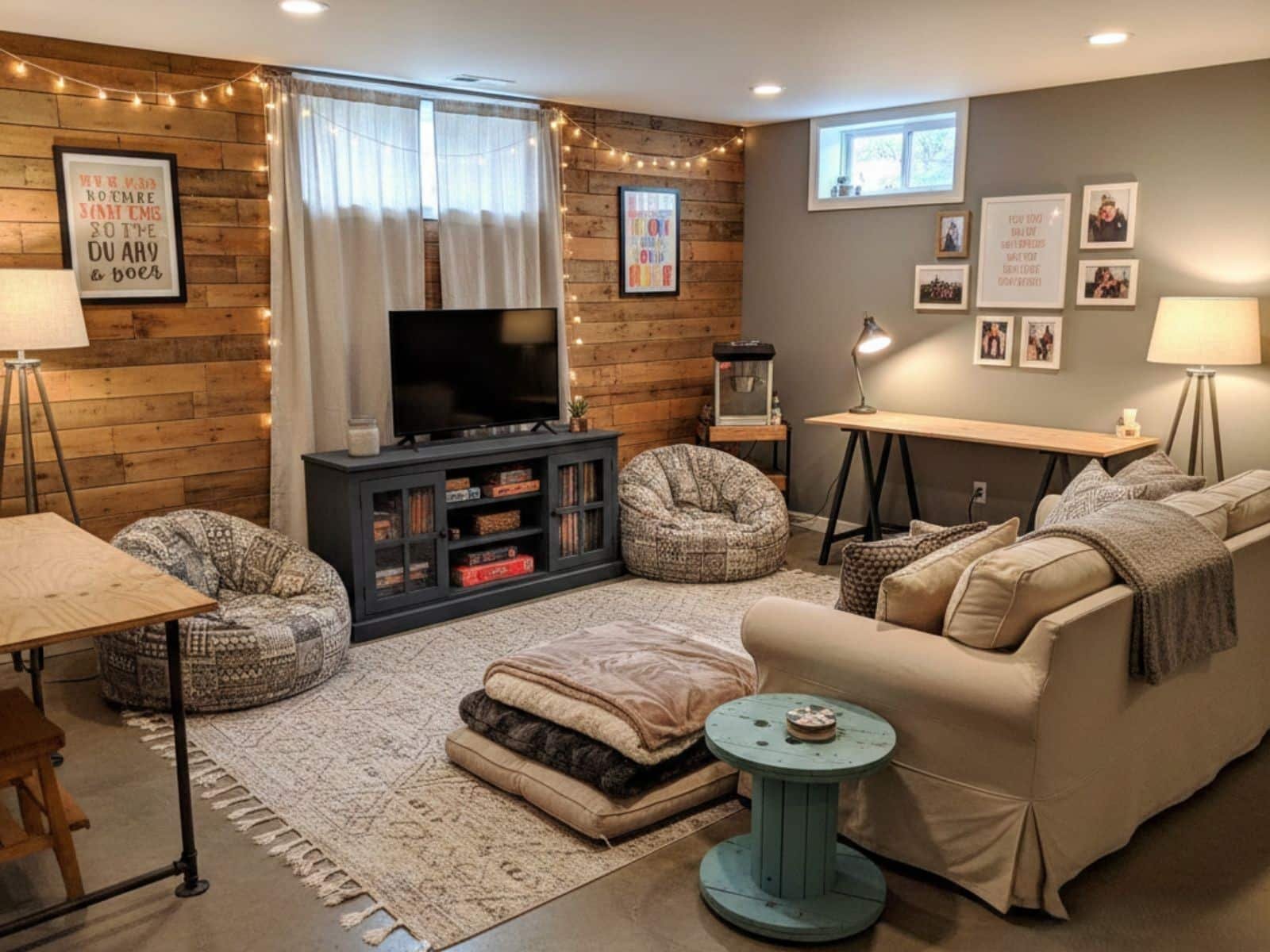
This approach is waterproof and perfect for basements that might have moisture issues. Adding a large neutral rug on top of the painted concrete provides the comfort and warmth needed for a cozy lounge area.

Curtains as Budget Friendly Room Dividers
Building walls is expensive and permanent but curtains are affordable and flexible. You can use heavy floor-to-ceiling curtains to hide storage areas or to separate your new basement bedroom from the main living area.
This “soft wall” technique is excellent for maintaining air circulation and keeping the project costs low. When the curtains are pulled back the basement remains one large open-concept space which is ideal for entertaining.

DIY Wall Art on a Grand Scale
Basement walls are often long and bare. Instead of buying expensive art you can create large-scale DIY pieces. Using oversized canvases or even framed fabric panels can add color and personality to the room without a gallery price tag.
If you missed our earlier tips you can find more inspiration in our guide on DIY Wall Art for a High-End Look. These small decorative touches are what make a finished basement feel like a real part of the home.

Creating a Cozy Movie Nook with Pallet Furniture
You don’t need a professional home theater system to enjoy movies in your basement. A simple projector and a white wall can create a cinema experience for a fraction of the cost. For seating consider upcycling wooden pallets into a tiered lounge area with plush cushions.
This rustic yet modern approach provides plenty of seating for family movie nights. It also gives the basement a relaxed “recreation room” vibe that is perfect for kids and teenagers.

The Power of Open Shelving Storage
Basements often become a dumping ground for clutter. Combat this by installing simple open shelving made from 2x4s and plywood. Matching your shelf color to your walls is a clever design trick that creates a seamless, custom-built appearance. This monochromatic approach instantly elevates the room, giving your storage a high-end, integrated feel.
This keeps your items organized and off the floor which is crucial for preventing mold and water damage. Organized storage makes the finished part of your basement feel much more polished and intentional.

Using Area Rugs to Add Warmth
A cold floor is the biggest complaint in any basement. While wall-to-wall carpeting is expensive a few well-placed area rugs can provide the same warmth for much less money. Look for rugs made from synthetic fibers that are moisture-resistant and easy to clean.
Ensure your rug is large enough to ground your furniture. As we mentioned in our Rug Sizing Guide, a rug that is too small will make your basement look disjointed.
Fresh Paint and a Focus on Neutrals
A simple splash of new color can completely redefine your home’s energy. By choosing timeless neutral tones, you create a sophisticated canvas that makes your decor and personal style truly shine. To avoid waste and save money, use our professional Paint & Wallpaper Calculator to get the perfect measurement before you start.
Conclusion
Transforming your basement doesn’t require a lottery win. By focusing on these finished basement ideas on a budget you can create a space that is functional, beautiful and uniquely yours.
Whether you are building a gym, an office or a lounge the key is to stay organized and stick to your financial plan. Use the Decor Room Budget Planner to guide your spending and don’t be afraid to get creative with DIY solutions. Your basement has the potential to be the best room in your house. It’s time to start building.
FAQs
Which paint shades work best for a basement that isn’t gender-specific?
For basements we recommend warm whites or light greys as they brighten the space and work perfectly with any decor style from gyms to offices.
How do I prevent my budget basement from feeling damp?
Always use a dehumidifier and choose moisture-resistant materials like painted concrete or LVP flooring. Avoid thick wall-to-wall carpets in basements prone to humidity.
Is it cheaper to paint or drywall a basement ceiling?
Painting an exposed ceiling is significantly cheaper and faster than installing drywall or a drop ceiling while also providing a modern industrial look.