
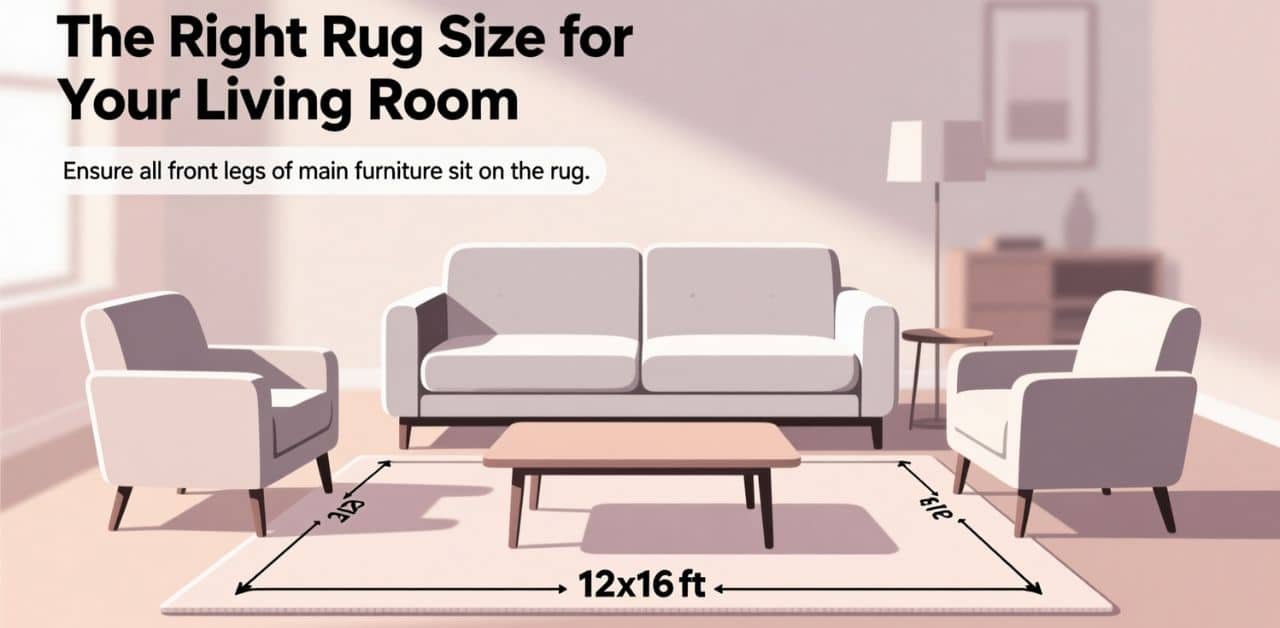
Editor’s Note
At Decor Your Room, we know that a rug is the foundation of any room’s design. Choosing the wrong size is one of the most common interior mistakes, often making a beautiful space feel unfinished. Our experts have put together this guide to help you master the ‘Negative Space’ rule, ensuring your rug perfectly anchors your furniture for a high-end, designer look.
Why Your Rug is the Most Important Decision
Imagine your living room is a picture. The rug is the frame that holds everything together. If the frame is too small, the picture looks unfinished and strange.
This is the biggest mistake people make in interior design: they buy a rug that is too small.
A rug does two very important things:
- It defines the space (it shows exactly where the “living room” is).
- It makes the room feel cozy and warm.
If you follow a few simple rules, you can choose the perfect size every time. This guide will give you the three Golden Rules that all professional designers use.
The 3 Golden Rules of Rug Placement
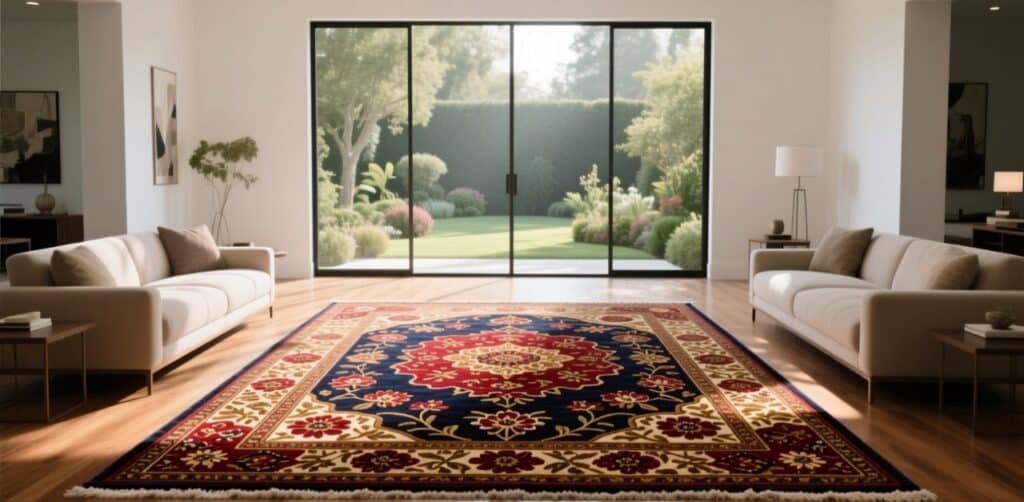
Choosing a rug is not guesswork. It is based on three easy-to-follow rules. These rules depend on how your furniture sits on the
All Legs On
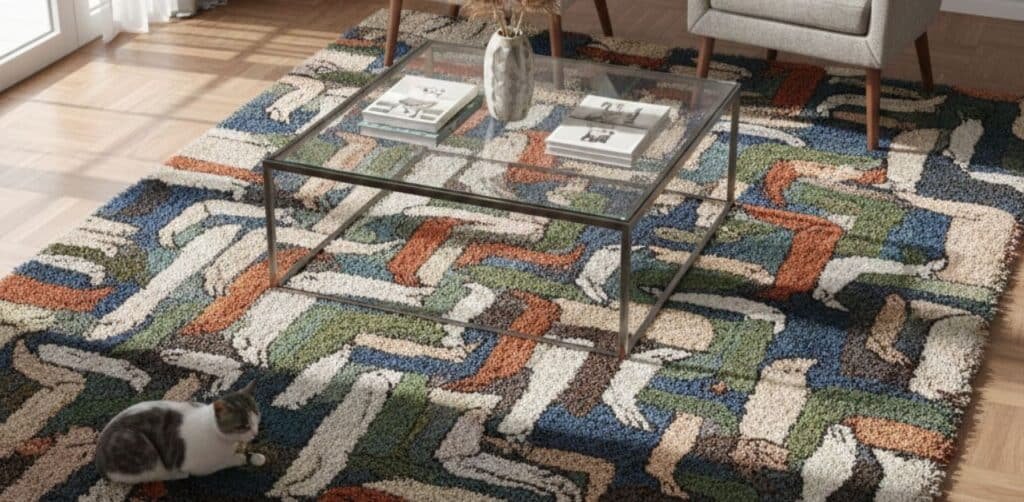
This is the designer’s favorite rule. It is also the most luxurious and expensive choice because it requires the biggest rug.
What to do: The rug must be large enough so that ALL the furniture legs the sofa, the armchairs, and the side tables are sitting completely on the rug.
Why it works: When all the furniture is connected by the rug, the room feels grand, stable, and completely put together.
When to use it: Use this rule if you have a very large room, a lot of budget, or if you want the highest-end look.
Image suggestion: A simple diagram showing a large rug with a sofa, two chairs, and side tables all sitting fully on the rug.
Front Legs On
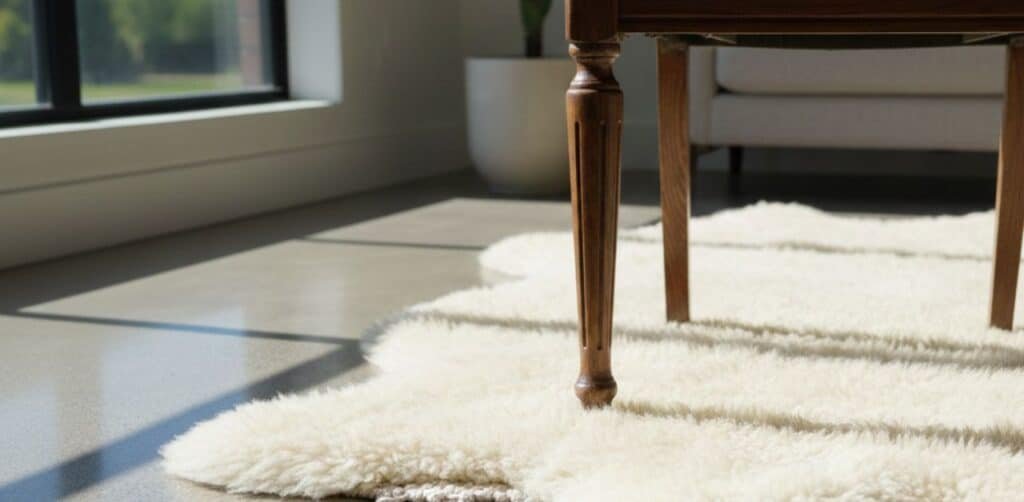
This is the most popular rule for most homes. It looks professional but is much cheaper than Rule 1 because you can buy a smaller rug.
What to do: The rug must be placed so that only the FRONT legs of your sofa and chairs are sitting on the rug. The back legs should rest on the bare floor.
Why it works: By putting the front legs on the rug, you “anchor” the main furniture. It connects the sofa to the rug and makes the whole seating area feel like one single unit.
When to use it: Use this for a standard-sized room or if you want a beautiful look without buying the largest, most expensive rug.
Image suggestion: A simple diagram showing a sofa and two chairs, with only the front two legs of each piece touching the rug.
Coffee Table Only (The Exception)
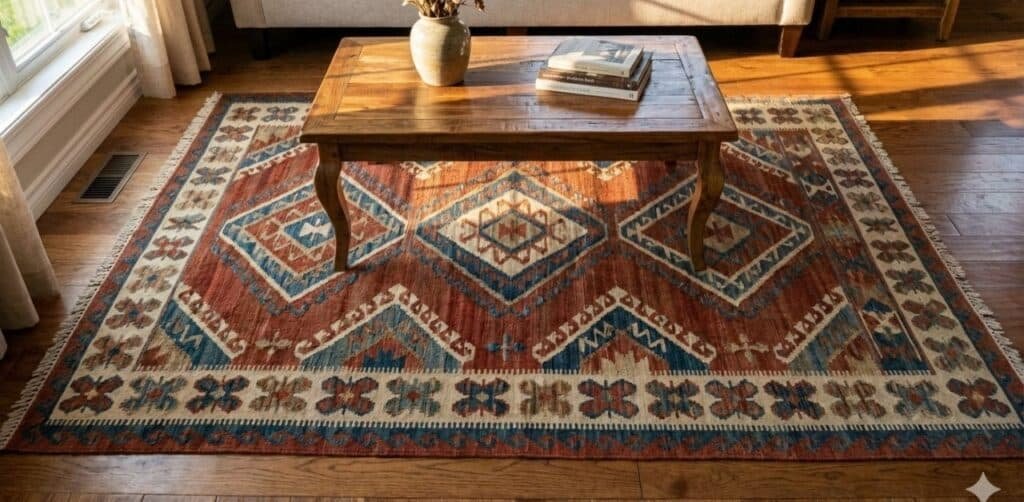
This is the rule you should try to avoid. When a rug is too small, it looks like a floating “island” in the middle of the room.
What to do: In this case, the rug is only large enough to sit under the coffee table. None of the sofa or chair legs touch the rug.
Why it works (but only sometimes): This only works if your living room is extremely small, like a studio apartment, and you only want the rug for warmth under your feet. It is generally not the best design choice.
When to use it: Use this only as a last resort in very small rooms, or if you are using a unique rug (like an animal hide) just for decoration.
Standard Rug Sizes and When to Use Them
Rugs come in standard sizes. Knowing which one is right for your room is key. Always measure your room first.
The Small Rug (5×8 feet or less)
These rugs are great for small spaces where the sofa is very compact, or for rooms that are long and narrow.
Best for:
- Placing under a small coffee table only .
- Apartment living rooms that are very, very small.
- Filling an empty space in a room corner, not the main seating area.
The Medium Rug (8×10 feet)
This is the most common and versatile size sold today. For many homes, this size works perfectly with Rule 2 (Front Legs On).
Best for:
- A sofa and two chair arrangement in a mid-sized room.
- When using Rule 2, the 8-foot width usually covers the front of the sofa perfectly, and the 10-foot length allows the chairs to be anchored.
- This is the best choice if you are unsure.
The Large Rug (9×12 feet and Bigger)
If you have a spacious room, you must go big. This size almost always allows you to follow Rule 1 (All Legs On).
Best for:
- Large or open-concept living rooms.
- Any time you have a big sectional sofa.
- Creating a luxurious, high-end design look. A 9×12 rug will make your room look bigger and feel more expensive than it is.
Layout Scenarios: Which Rule to Use?
The rug rule you use depends on how your furniture is placed in the room.
Floating Furniture Layout
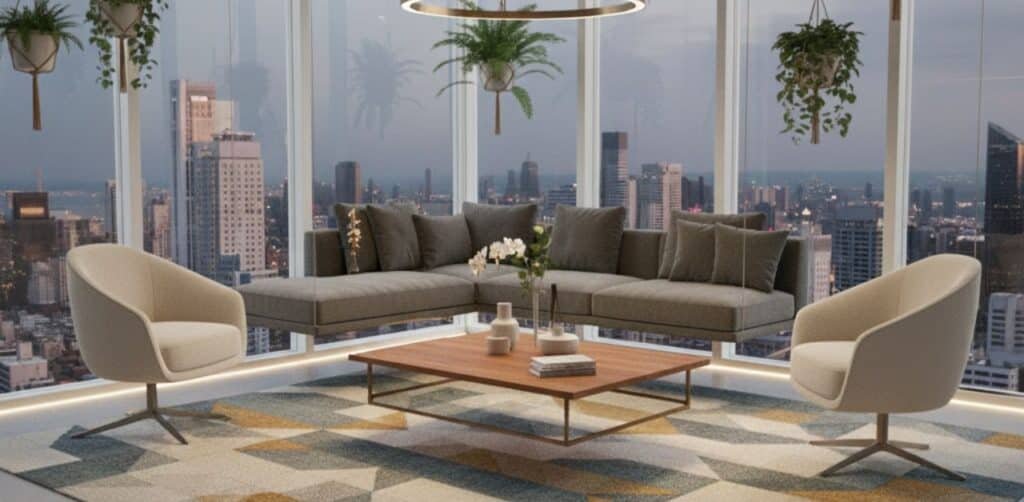
When the sofa and chairs are pulled away from the walls and sitting in the middle of the room, this is called a floating layout.
The Rule: You must use Rule 1 (All Legs On). If the rug is too small, the furniture will look like it is floating away from the center, which is very awkward. The rug needs to be the anchor.
Sofa Against the Wall Layout
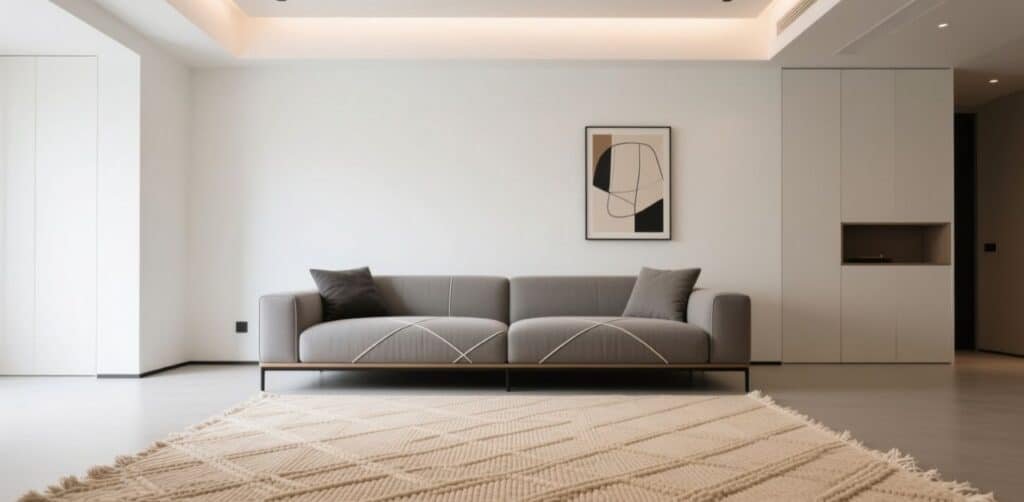
This is the most common layout where the sofa is pushed directly against a main wall.
The Rule: You can easily use Rule 2 (Front Legs On). Since the back of the sofa is already anchored by the wall, the rug only needs to cover the sitting area and anchor the front. This is where an 8×10 rug works best.
Open Concept Spaces
In a modern home where the kitchen, dining room, and living room are all in one big space, the rug is super important.
The Rule: The rug is used to define the zone. Use a large rug (9×12 or bigger) to clearly mark the boundaries of your living area. This visually separates the living room from the kitchen area, making the whole big space feel organized.
Rug Placement Mistakes to Avoid
Even if you buy the right size rug, placing it incorrectly can ruin the look. Avoid these common mistakes:
Mistake 1: The “Floating Island”
As mentioned before, a rug that only holds the coffee table makes the furniture look disconnected. Your rug must always touch or go under the main seating pieces.
Mistake 2: The Awkward Wall Gap
When placing a large rug, leave a space of about 12 to 18 inches (about 30 to 45 centimeters) between the edge of the rug and the wall.
If the rug is placed right up against the wall, it looks like you tried to use carpet, not an area rug. Leaving that gap allows the bare floor to act as a natural frame.
Mistake 3: Doorways and Closets
Always check if your rug blocks any doors from opening. This is a common practical mistake. If a door swings open and gets stuck on the rug, it is a big problem. Move the rug away from the door’s path.
Final Tips for the Perfect Rug
These last tips will ensure your rug choice is perfect and up-to-date with current design trends.
Measure, Measure, Measure!
Before you spend money, do this simple test:
- Use masking tape (the kind painters use) or newspapers.
- Lay the tape or newspapers on your floor in the exact size of the rug you plan to buy (e.g., 8 feet by 10 feet).
- Place your sofa and chairs as they would be.
- Look at the tape. Does it look right? Do the front legs fit on the taped area? This visual step is the best way to be sure.
Up-to-Date Trend: Layering Rugs
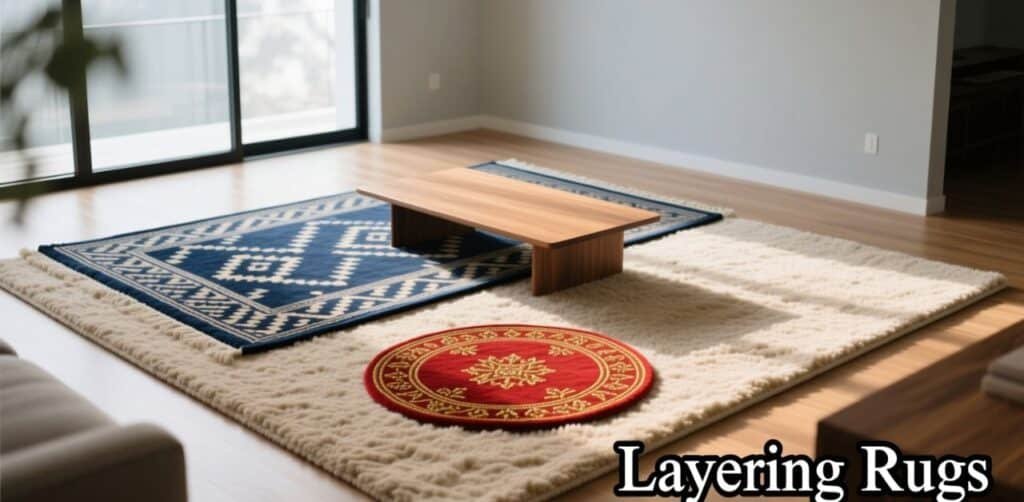
This is a new and smart way to save money and add texture to your room.
- Buy a large, inexpensive rug (like a 9×12 rug made of simple jute or sisal). This large, cheap rug covers the floor area and lets you follow Rule 1 or 2.
- Place a smaller, beautiful rug (like a 5×8 rug with a great pattern or bright colors) on top of the big one.
The big rug anchors the furniture, and the small rug adds style. This is an inexpensive trick to get a high-end look.
Why Organic Shapes are the 2026 Interior Design Favorite
If you want to break the ‘boxy’ feel of a room, it’s time to move beyond standard rectangular rugs. In 2026, Organic and Scalloped rugs are taking over high-end interior design. Unlike traditional rugs that follow the walls, these irregular shapes like soft pebbles, wavy edges, or abstract puddles create a sense of movement and flow. They are particularly effective in small master bedrooms or nurseries where a sharp corner might feel too harsh.
A scalloped jute rug, for example, adds a touch of ‘cottage-core’ elegance while still feeling modern. By choosing a rug with soft, rounded edges, you’re not just covering the floor; you’re adding an architectural element that makes the entire room feel custom-made and expertly curated.

The Secret to Perfect Room Proportions: Managing Negative Space
Many homeowners overlook the critical ‘negative space’ around a rug the visible floor area that frames your furniture arrangement. A rug that’s too small can make a room feel disjointed and cramped, almost like a floating island. Conversely, a rug that’s too large, without proper furniture placement, can overwhelm the space and make it feel less intimate.
The key is to visualize the rug as the anchor for your furniture, creating a cohesive ‘zone’ that invites conversation and comfort. Always ensure there’s enough clear floor around the rug to define the room’s boundaries, typically 12-18 inches from the wall, allowing the eye to comfortably transition from soft textile to solid flooring.

The Visual Weight Test
When you look at your room, does the rug look too small for the furniture? This is the “visual weight” test.
Always remember this simple rule
The rug should be at least as long as your sofa is wide. If your rug is shorter than your sofa, it will look like a mistake.
Conclusion
Choosing the right rug size does not need to be difficult. By using the three Golden Rules especially Rule 2 (Front Legs On) you can feel confident about your choice.
A correctly sized rug will make your living room feel balanced, put together, and much bigger than it really is. Start with the masking tape, measure your space, and transform your home today.