
Editor’s Note
Living in a small bedroom often feels restricting, almost like you are cut off from the outside world. But what if your tiny room could feel as peaceful, open, and breathable as a lush forest? That is the magic of biophilic design. It is not just about throwing a potted plant in the corner; it is an architectural approach grounded in our biological need to connect with nature.
When we bring natural elements indoors, our nervous system calms down, our circadian rhythm balances, and our stress levels drop. If you want to transform your cramped sleeping area into an organic sanctuary, this massive guide will show you exactly how to incorporate biophilic design in a small bedroom without sacrificing an inch of floor space.
Introduction: The Biology Behind the Design
Before we start decorating, it is important to understand what “Biophilia” actually means. The word translates to “love of life or living systems.” Humans spent thousands of years living in nature, and our brains are still wired to feel safest when surrounded by natural light, fresh air, and greenery.
When you sleep in a room completely disconnected from nature, it can negatively affect your sleep quality and cognitive function. Incorporating biophilic design means strategically using nature-inspired textures, colors, lighting, and plants to trick your brain into feeling like it is outside.
However, doing this in a small bedroom comes with challenges. You cannot fit massive indoor trees or giant water features in a 10×10 room. Instead, we have to use smart Small Space Solutions to maximize vertical space and natural illusions.
Maximize Natural Light (Regulate Your Circadian Rhythm)
The most crucial element of biophilic design is natural sunlight. Light dictates our biological clock. If your small bedroom lacks light, it will feel like a cave.
Ditch the Heavy Curtains
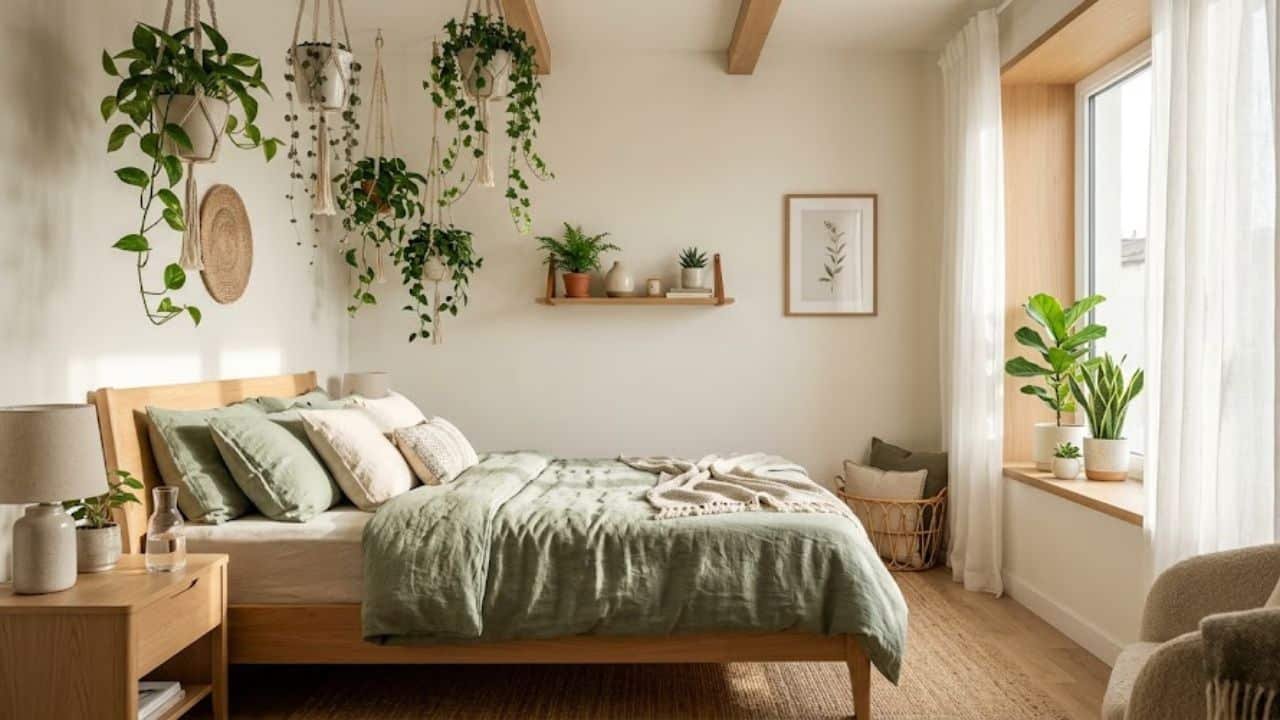
In 2026, heavy, dark drapery is out. To let maximum light in, switch to light-filtering linen or sheer cotton curtains. These fabrics allow the sun to softly enter the room while still giving you privacy.
The Mirror Illusion
If you only have one small window, you need to bounce that light around. Place a large leaning floor mirror directly across from the window. This not only doubles the amount of sunlight hitting your walls but also creates the visual illusion that the room is twice as deep.
Embrace Dynamic Lighting
If your room has terrible natural light, you must fake it biologically. Invest in “circadian rhythm light bulbs.” These smart bulbs change color throughout the day bright, cool white in the morning to wake you up, and a warm, dim amber at night to prepare your brain for sleep.

Vertical and Suspended Greenery (Space-Saving Plants)
You cannot have biophilic design without plants. Plants actively remove airborne toxins, clean the air, and provide a massive psychological boost. But in a small bedroom, floor space is precious.
Hanging Macrame Planters
Look up! Your ceiling is completely unused space. Hang trailing plants like Golden Pothos or English Ivy from the ceiling using beautiful cotton macrame hangers. The vines will hang down like a natural curtain, drawing the eye upward and making your ceilings look much higher.
Floating Plant Shelves
Instead of putting pots on your nightstand, install a single floating wooden shelf high up on the wall above your bed. Fill it with small, lush plants.
Safety Tip: If you have a baby in the house or a nursery nearby, always choose non-toxic, baby-safe plants like the Spider Plant or Boston Fern to ensure the indoor environment is completely safe.

The Moss Wall Art Hack
If you have zero floor space and you are terrible at keeping plants alive, try a preserved moss wall frame. These are essentially living pieces of art. The moss requires zero water and zero sunlight, but it provides that crucial burst of natural green texture on a blank wall.

Earthy, Organic Color Palettes
The emotional impact of a room is heavily influenced by the specific color palette you choose. Bright neons or stark, hospital-white walls can increase anxiety.
Nature-Inspired Tones
To incorporate biophilic design in a small bedroom, paint your walls using colors found in nature.
Sage Green: The ultimate calming color. It mimics the leaves of a forest.
Warm Terracotta: Brings in the grounding feeling of baked clay and earth.
Soft Sand/Beige: Mimics natural stone and provides a warm, neutral backdrop.

The Two-Tone Trick
If painting the whole room feels too dark for a small space, try a “half-painted” wall. Paint the bottom half of your walls a soft olive green and leave the top half a warm, creamy white. This technique provides a sense of stability to the design without sacrificing the room’s light and open atmosphere.
Incorporate Natural and Tactile Textures
Biophilic design is a sensory experience. It is not just about what you see; it is about what you touch. Modern bedrooms often have too much plastic, metal, and synthetic materials.
Raw Wood Elements
Wood is the easiest way to bring warmth into a room. You do not need heavy, chunky furniture. Choose a bed frame made of light oak or raw pine. If you are on a budget, an easy Budget Decor & DIY project is to create a headboard using thin wooden slat panels.
Organic Bedding
You spend a third of your life in bed. Throw away the synthetic polyester sheets. Upgrade to 100% organic linen, bamboo, or soft washed cotton. These materials are breathable, sustainable, and have a beautiful, slightly wrinkled texture that feels incredibly inviting.

Jute and Wool Rugs
Step out of bed onto something natural. A woven jute rug or a soft sheepskin (faux or real) adds immediate organic texture to your floors, completely changing the vibe of a sterile apartment box.
Biomorphic Shapes and Patterns
Nature does not have perfectly straight lines or sharp 90-degree corners. Nature is full of curves, waves, and organic imperfections.
Curved Furniture
If you are buying a new nightstand or an accent chair, look for rounded edges. A circular wooden bedside table feels much softer and more natural than a sharp, square metal one.

Nature-Inspired Wallpapers
If you cannot add real plants, add the pattern of plants. Use a renter-friendly peel-and-stick wallpaper featuring delicate botanical prints, subtle leaf motifs, or water-color forest silhouettes on an accent wall behind your bed.
Engage the Other Senses (Sound and Smell)
True biophilic design engages all five human senses.
Aromatherapy
The smell of a room can instantly transport your mind. Use an essential oil diffuser with natural, high-quality oils like cedarwood, eucalyptus, or lavender. These scents scientifically lower heart rates and promote deep, restorative sleep.
The Sound of Water
If you live in a noisy city, the sound of traffic can ruin your peace. Add a tiny, tabletop water fountain on your dresser. The gentle sound of trickling water masks street noise and mimics the calming effect of a natural stream.

Conclusion
Learning how to incorporate biophilic design in a small bedroom is not about turning your room into a chaotic jungle. It is about making intentional, biology-based design choices. By maximizing natural light, utilizing vertical space for plants, choosing earthy colors, and bringing in raw textures like wood and linen, you can completely transform your space. You do not need a massive budget or a huge house. With these simple, space-saving strategies, your tiny bedroom will become the ultimate natural sanctuary, providing you with better sleep, less stress, and a beautiful home.
FAQs
Can I do biophilic design without real plants?
Yes! While real plants are ideal for air purification, you can achieve a biophilic feel using preserved moss art, botanical wallpapers, earthy green paint colors, and natural wood furniture.
What are the best plants for a dark, small bedroom?
If your room gets very little natural light, choose resilient, low-light plants like the Snake Plant (Sansevieria), ZZ Plant, or Pothos. They thrive in dim corners and require very little maintenance.
How does biophilic design improve sleep?
Biophilic design reduces the stress hormone cortisol. Natural textures, calming earthy colors, and proper lighting help regulate your circadian rhythm, signaling to your brain that it is in a safe, natural environment, which leads to deeper sleep