
Editor’s Note
Succulents are often sold as “unkillable” beginner plants. However, anyone who has ever owned one knows this is a myth. We see countless homeowners struggle to keep these beautiful plants alive. The number one reason? Incorrect watering. Succulents have very specific biological needs, storing water in their thick fleshy leaves to survive droughts. Treating them like regular houseplants is a recipe for disaster. In this comprehensive guide, we will break down exactly how often to water succulents, the foolproof “Soak and Dry” method, and how to read the signs your plant is giving you. Let’s save your green friends!
Introduction: Understanding Your Succulent
To understand how to water a succulent, you first need to understand its biology. Succulents originate from dry, arid climates like deserts.
In their natural habitat, they experience long periods of drought followed by heavy, sudden rainfall. Their shallow root systems are designed to drink up as much water as possible during that rain. They then store this water in their leaves and stems to survive the next dry spell.
When we bring them into our homes, we have to mimic this natural weather cycle. Watering them a little bit every single day will drown their roots. Let’s look at the best practices to keep them thriving.
The Golden Rule: The Soak and Dry Method
If you search for how often to water succulents, the most important answer is not a specific number of days. It is a technique called the “Soak and Dry” method.
How to Soak
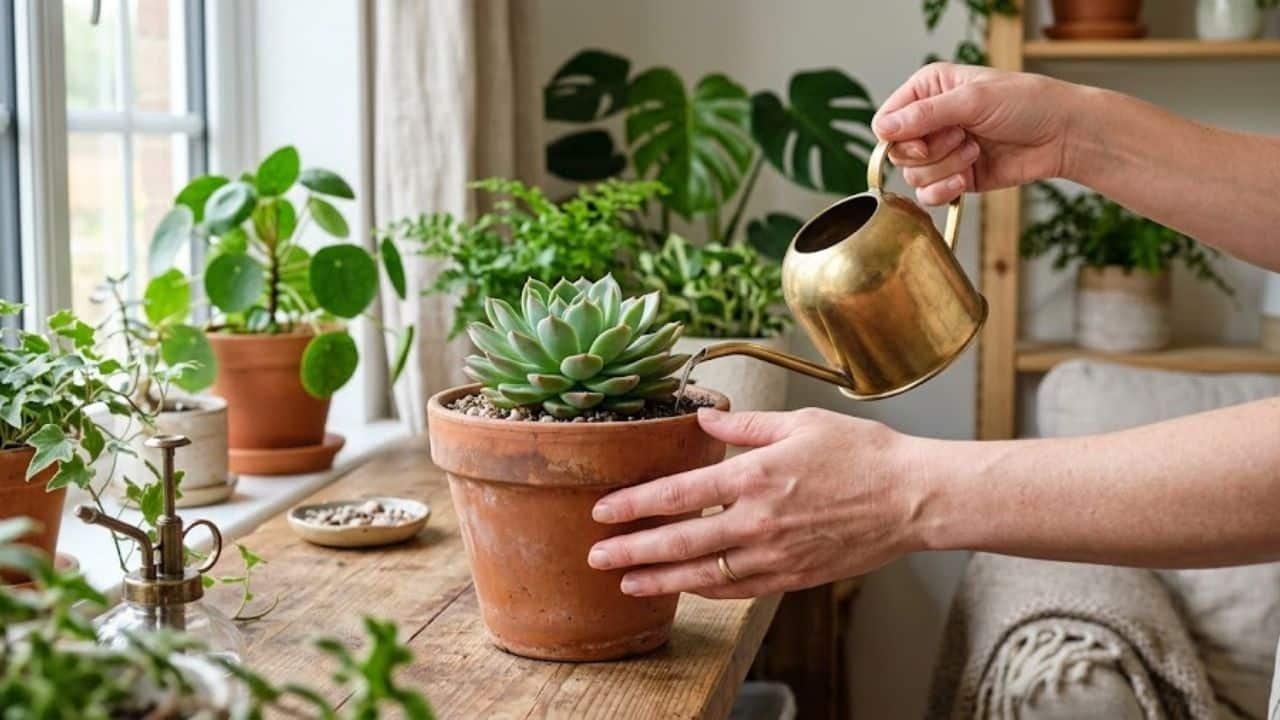
When it is time to water your succulent, you must water it deeply. Pour water onto the soil until it runs out of the drainage hole at the bottom of the pot. Ensure the entire root ball is completely saturated. This mimics the heavy desert rainfall.
How to Dry
Once watered, you must leave the plant completely alone. Do not water it again until the soil is 100% dry from top to bottom. This dry period is crucial. It forces the roots to grow stronger as they reach down searching for moisture.

How Often to Water Succulents: A General Timeline
While the “Soak and Dry” method is the rule, you probably still want a rough schedule to follow.
The Indoor Schedule
For succulents kept indoors in a typical climate-controlled home, you will generally need to water them every 14 to 21 days. However, you must always check the soil before watering. Stick your finger or a wooden skewer about two inches deep into the soil. If it feels even slightly damp, wait a few more days.

The Outdoor Schedule
Outdoor succulents get more sunlight, wind, and heat. Because of this, their soil dries out much faster. During the hot summer months, you may need to water outdoor succulents every 7 to 10 days.
Factors That Change Your Watering Schedule
No two homes are exactly alike. Several environmental factors will change how often to water succulents in your specific space.
The Type of Pot
The pot you choose matters heavily. We highly recommend using raw clay or terracotta pots. Just like we discussed in our terracotta color palette guide, terracotta is porous. It allows water to evaporate through the walls of the pot, preventing root rot. If you use a plastic or glazed ceramic pot, the soil will stay wet longer, meaning you should water less often.

Sunlight and Temperature
A succulent sitting on a bright, sunny, south-facing windowsill will use up its water reserves very quickly. A succulent placed on a dark bookshelf will use very little water. Always adjust your watering based on how much light the plant receives.
The Dangers of Overwatering (The #1 Killer)
Overwatering is the fastest way to kill a succulent. Because they already store water, giving them too much causes their cells to literally burst.
Signs of an Overwatered Succulent
How do you know if you are watering too much? Look at the leaves. An overwatered succulent will have leaves that look yellow, translucent, and mushy. They will feel like soft water balloons and will fall off the stem with the slightest touch.

How to Save It
If you catch it early, you can save it. Remove the plant from the wet soil immediately. Let the bare roots dry out in the open air for two days. Then, repot the plant in fresh, completely dry succulent soil.
Signs of an Underwatered Succulent
While it is rare, it is absolutely possible to be succulent. Luckily, underwatered succulents are much easier to save than overwatered ones.
What to Look For
When a succulent is thirsty, it begins to consume the water stored inside its leaves. The leaves will start to look wrinkled, deflated, and puckered. The tips of the leaves might become dry and crispy brown.
The Fix
The fix is simple! Just give the plant a thorough watering using the Soak and Dry method. Within 24 to 48 hours, the wrinkled leaves will plump right back up and look perfectly healthy again.

Best Soil for Proper Drainage
You cannot properly water a succulent if it is sitting in the wrong soil. Standard indoor potting soil is too heavy and retains too much moisture.
Succulent and Cactus Mix
Always use a specialized succulent or cactus soil mix. These mixes contain sand, perlite, and pumice. These chunky materials create air pockets in the soil, allowing water to drain out rapidly. This is essential for preventing root rot and keeping your plants happy in any biophilic design setup.

How Often to Water Succulents in Winter
Plants have seasons just like we do. As the days get shorter and colder in the winter, most succulents enter a state of dormancy.
The Winter Slowdown
During dormancy, the plant stops growing to conserve energy. Because it is not growing, it needs very little water. If you keep watering it on your summer schedule, it will drown.
The Winter Schedule
In the winter, cut your watering back significantly. You may only need to water your indoor succulents once every 4 to 6 weeks. Only give them enough water to keep the leaves from wrinkling.

Expert Botanical Advice
As an interior design publisher and plant care enthusiast, I always emphasize the science of root rot to my readers. The roots of a succulent need oxygen just as much as they need water. When soil stays constantly wet, all the air pockets are filled with water, effectively suffocating the roots. This wet, oxygen-deprived environment breeds fungal and bacterial infections (root rot) that travel up the stem and destroy the plant from the inside out. When in doubt, always wait an extra week to water. Your succulent will easily survive a drought, but it will not survive a flood.
Conclusion
Learning how often to water succulents doesn’t require a strict calendar; it requires observation. By utilizing the Soak and Dry method, using porous terracotta pots, and paying attention to the signs your plant gives you (like wrinkled or mushy leaves), you can easily keep your indoor garden thriving. Remember, these desert beauties love to be ignored. Give them bright light, fast-draining soil, and infrequent but deep waterings, and they will reward you with beautiful, lush growth year-round.
FAQs
Should I spray my succulents with water?
No, you should never mist or spray succulents. Misting only wets the leaves (which can cause fungal diseases) and does not reach the roots where the plant actually absorbs water. Always water the soil directly.
How do I know if my succulent needs water?
Check the soil; it should be 100% dry. Also, look at the leaves. If the leaves are firm and plump, it does not need water. If the leaves look slightly wrinkled or soft, it is time to water.
Can a succulent recover from overwatering?
Yes, if caught early. You must remove it from the wet soil, trim away any black or rotting roots, let it air dry for a few days, and repot it in fresh, dry, fast-draining succulent soil.