
Editor’s Note
We all know the terrible feeling of moving into a new rental apartment and staring at a giant, boring, blank white wall. You want to hang beautiful art, mirrors, and shelves, but your lease clearly says: “NO NAILS, NO DRILLING.” If you make a hole, you lose your security deposit. But what if I told you that you do not need a single nail to create a high-end designer home? In this massive guide, I am going to reveal the absolute best damage-free wall decor ideas for renters. From massive gallery walls to temporary wallpaper, you will learn how to transform your space legally, safely, and beautifully!
Introduction: The Renter’s Decorating Dilemma
Renting a home or a small studio apartment often feels like living in a temporary box. Because you do not own the property, you are usually banned from making any permanent changes.
For years, renters thought their only option was to leave their walls completely bare. But in 2026, interior design has completely changed. The home decor industry has invented incredible new products designed specifically for people who cannot use hammers and nails.
Whether you love the calm, minimalist look of Japandi style or a bold, colorful aesthetic, there is a damage-free solution for you. Let’s dive deep into the best methods to hang your favorite decor without leaving a single scratch on the paint.
The Magic of Adhesive Hanging Strips (Command Strips)
When we talk about damage-free decor, adhesive strips are the undisputed kings. They are the foundation of any renter-friendly home makeover.
How They Work
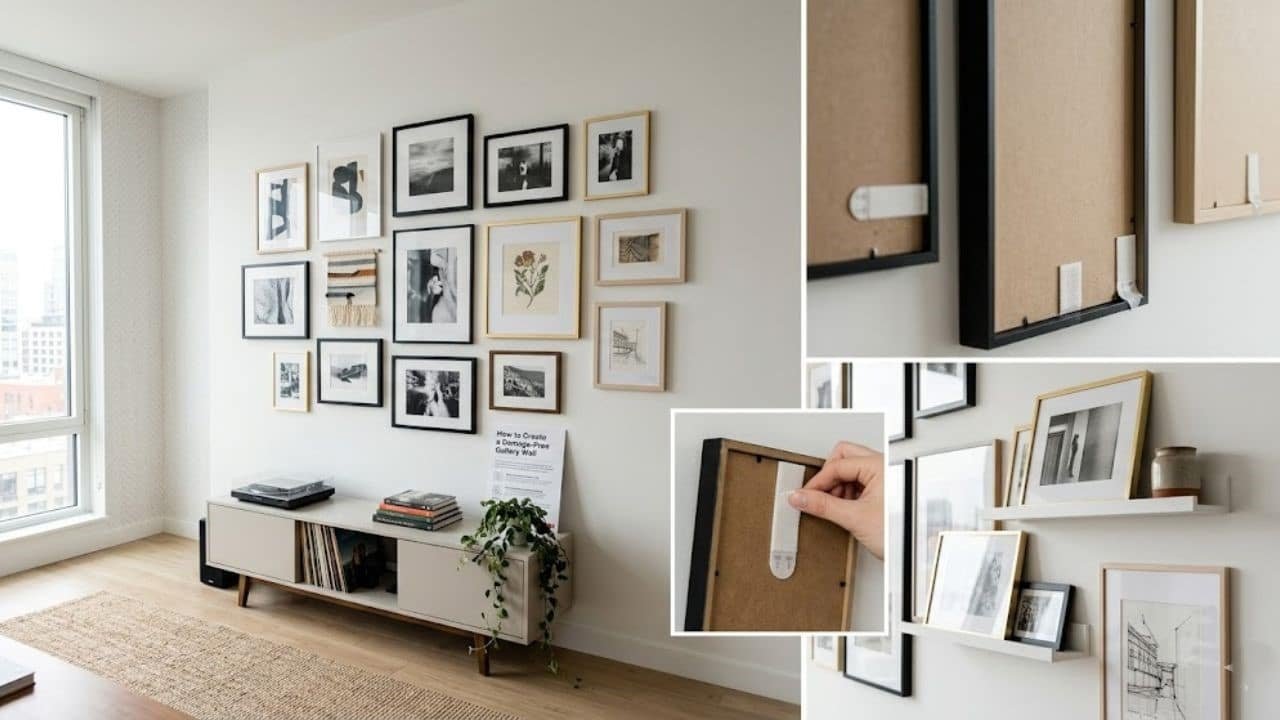
These strips use a special, heavy-duty rubber glue. One strip sticks to your picture frame, and the other sticks to the wall. They lock together like Velcro. When it is time to move out, you simply pull a small plastic tab straight down, and the strip stretches and pops off the wall, leaving zero sticky mess.
Creating a Damage-Free Gallery Wall
You do not need a single nail to create a massive, floor-to-ceiling gallery wall.
- The Strategy: Buy a large pack of heavy-duty strips. Lay your picture frames out on the floor first to decide on your pattern.
- Weight Limits: Always read the box! Some strips can hold up to 16 pounds (perfect for large wooden frames), while smaller ones hold 4 pounds. Always use four strips per frame (one in each corner) for maximum safety.
- Pro Tip: Use a digital level tool on your smartphone to make sure your frames are perfectly straight before you press them hard against the wall.

Large Leaning Floor Mirrors
Mirrors are the ultimate secret weapon for interior designers, especially if you are living in a tight space and need some Small Space Solutions.
Why You Do Not Need to Hang Them
Heavy mirrors are terrifying to hang, even if you own your home. If a heavy mirror falls, it shatters. The most modern, high-end way to display a large mirror is to simply lean it against the wall.
The Design Benefits
Leaning a massive, six-foot-tall mirror with a thick wooden or brass frame instantly makes your room look like a luxury hotel.
- Reflecting Light: Place the mirror exactly opposite a window. It will bounce the natural sunlight around the room, making a tiny, dark apartment feel twice as big and twice as bright.
- Safety Tip: If you have smooth wooden floors, put a small rubber non-slip pad under the bottom corners of the mirror so it does not slide out and fall.

Washi Tape Geometric Wall Art
If you have zero budget and cannot afford expensive framed art, Washi tape is your best friend.
What is Washi Tape?
Washi tape is a Japanese decorative masking tape made from rice paper. It is incredibly gentle. It sticks beautifully to painted walls but peels off effortlessly without pulling off any paint.
How to Use It for Decor
- Faux Frames: Print out your favorite photos or posters and tape them to the wall. Then, use black Washi tape to create a “frame” around the poster directly on the wall.
- Geometric Murals: You can use long strips of tape to create massive geometric shapes, mountains, or abstract lines across an entire blank wall. It takes an hour to do, costs less than $10, and looks like a custom-painted mural.

Removable Peel and Stick Wallpaper
Sometimes, a room does not need art; it needs color and texture. If your landlord painted your walls a sad, depressing grey, you can cover it up!
The Power of Temporary Wallpaper
Peel and stick wallpaper acts like a giant sticker. It is made of thick vinyl. You peel off the back and smooth it onto the wall.
Best Ways to Use It
- Accent Walls: Do not try to wallpaper an entire room; it is too expensive and takes too much time. Instead, choose one wall (like the wall behind your bed or your TV) and make it an “accent wall.”
- Faux Textures: You can buy peel and stick wallpaper that looks exactly like real red brick, raw concrete, or wooden shiplap. This adds incredible architectural interest to a boring square room.

Tension Rods for Tapestries and Curtains
Tension rods are not just for shower curtains anymore. They are a genius hack for renter-friendly wall decor.
Hanging Heavy Fabric
If you have a beautiful, heavy fabric tapestry or a macrame wall hanging, do not use thumbtacks. Thumbtacks leave tiny holes, and heavy fabric will eventually rip them out of the wall.
The Window Hack
If you have a small alcove or two walls that are close together, put a tension rod tightly between them. You can then hang your tapestry, a collection of hanging plants, or even fairy lights from the rod. No drills, no screws, completely secure.
Floating Shelves with Adhesive Mounts
Can you have floating shelves without drilling giant holes into the drywall? Yes, thanks to modern engineering.
Adhesive Ledges
Many companies now make lightweight acrylic or wooden floating shelves that come with a massive adhesive backing. You stick the entire back plate to the wall.
What to Display
Because these shelves are held by glue, you must respect the weight limit. Do not put heavy hardback books on them. Instead, use these damage-free shelves to display:
- Small, lightweight succulent plants.
- A collection of vinyl records.
- Unframed canvas paintings.
- Small decorative candles and aesthetic objects.

Crucial Step: How to Prepare Your Walls First
If you ignore this step, all of your damage-free decor will fall off in the middle of the night and scare you to death!
Adhesive glue hates grease and dust. Before you stick anything to your apartment walls, you must clean them.
- Take a clean cloth and a little bit of rubbing alcohol.
- Wipe the exact spot on the wall where the adhesive will go.
- Let it dry completely for 5 minutes. This creates a perfect, sterile surface for the glue to bond with, ensuring your decor stays up for years.

Conclusion
Living in a rental apartment does not mean you have to sacrifice your personal style. By using smart, Budget Decor & DIY techniques like heavy-duty adhesive strips, leaning mirrors, and peel-and-stick wallpaper, you can create a magazine-worthy home. Always remember to clean your walls first, strictly follow the weight limits on the packaging, and remove adhesives slowly with heat. Now, go turn that blank, boring wall into a masterpiece, knowing your security deposit is 100% safe!
FAQs
Do Command strips really come off without damaging paint?
Yes, but only if you remove them correctly. You must pull the plastic tab straight down, parallel to the wall, stretching it slowly. If you pull it toward you, it will rip the paint off.
Can I use a hairdryer to remove stubborn adhesive decor?
Absolutely. If a strip or peel-and-stick wallpaper is stuck too hard, blast it with hot air from a hairdryer for 30 seconds. The heat melts the glue, making it easily peel off without damage.
What is the heaviest thing I can hang without nails?
Using large, heavy-duty adhesive strips (using four to six strips together), you can safely hang a large picture frame weighing up to 16-20 pounds. However, never hang heavy glass items above your bed using only adhesives.
Are thumbtacks considered damage?
It depends on your landlord. Thumbtacks leave tiny pinholes. Some landlords do not care, but strict landlords will charge you a “painting fee” for them. It is always safer to use adhesives.