
Editor’s Note
At decoryourroom.com, we know that no outdoor balcony, garden border, or sunlit windowsill is truly complete without the soothing scent and striking visual appeal of lavender. Lavender is one of the most beloved perennial herbs in the world, renowned for its relaxing aroma, medicinal properties, and vibrant purple blooms. However, many home gardeners struggle to keep it alive because they treat it like a typical leafy houseplant. In this comprehensive guide, we break down the exact Mediterranean growing conditions, lavender craves, how to select the right soil mix, pruning techniques to prevent woody stems, and clever container gardening tricks. Get ready to enjoy thriving lavender blooms year after year.
Introduction: Why Lavender is the King of Fragrant Herbs
Lavender (Lavandula) is more than just a beautiful floral addition to your garden; it is a powerhouse herb. Originating from the rocky, sun-drenched Mediterranean coastlines, lavender thrives in conditions where many other plants fail.
It tolerates poor, sandy soils, requires minimal watering once established, and naturally repels unwanted garden pests like mosquitoes while attracting beneficial pollinators like bees and butterflies.
Whether you have a sprawling backyard garden or a tiny apartment balcony, learning how to grow lavender successfully comes down to understanding one fundamental secret: lavender loves sun and hates wet feet. Once you master its basic lighting and drainage needs, caring for this Mediterranean beauty becomes almost effortless.

Choosing the Right Lavender Variety for Your Climate
Before planting, you must select the correct variety. Not all lavender species tolerate cold winters or high humidity the same way.
English Lavender (Lavandula angustifolia)
English lavender is the most popular, cold-hardy, and aromatic type available. It produces sweet-smelling purple blooms in late spring and early summer. Because it survives freezing winter temperatures, it is ideal for outdoor garden beds.
French Lavender (Lavandula dentata)
Identified by its delicate, serrated leaves and soft lavender scents, French lavender blooms continuously throughout the summer. It prefers warmer climates and performs exceptionally well in sunny container setups.
Spanish Lavender (Lavandula stoechas)
Spanish lavender is famous for its unique butterfly-shaped purple bracts topping each flower head. It handles heat and humidity much better than English varieties, making it perfect for southern climates.
Soil, Sunlight, and Drainage: The Non-Negotiable Trio
If your lavender plant dies within a few weeks of buying it, 90% of the time the culprit is soggy soil or lack of direct sun.
The Power of Full Sun Exposure
Lavender needs a minimum of 6 to 8 hours of direct, unfiltered sunlight every day. If you plant it in the shade, the growth will become spindly, sparse, and bloom production will completely stall.
Formulating the Perfect Fast-Draining Soil
Lavender roots decay quickly when trapped in heavy clay or dense potting mix. Create a custom soil mixture using:
- 40% High-Quality Potting Mix (for light nutrient support)
- 40% Coarse Horticultural Sand or Fine Gravel (for maximum drainage)
- 20% Perlite or Pumice (for root aeration)
Additionally, lavender prefers slightly alkaline soil with a pH between 6.5 and 7.5. If your soil is acidic, mix in a handful of crushed agricultural limestone to balance the alkalinity.
How to Grow Lavender in Pots and Containers
Container planting is the single best method for growing lavender if you live in an area with rainy weather or poor garden soil.
Selecting the Right Pot Material
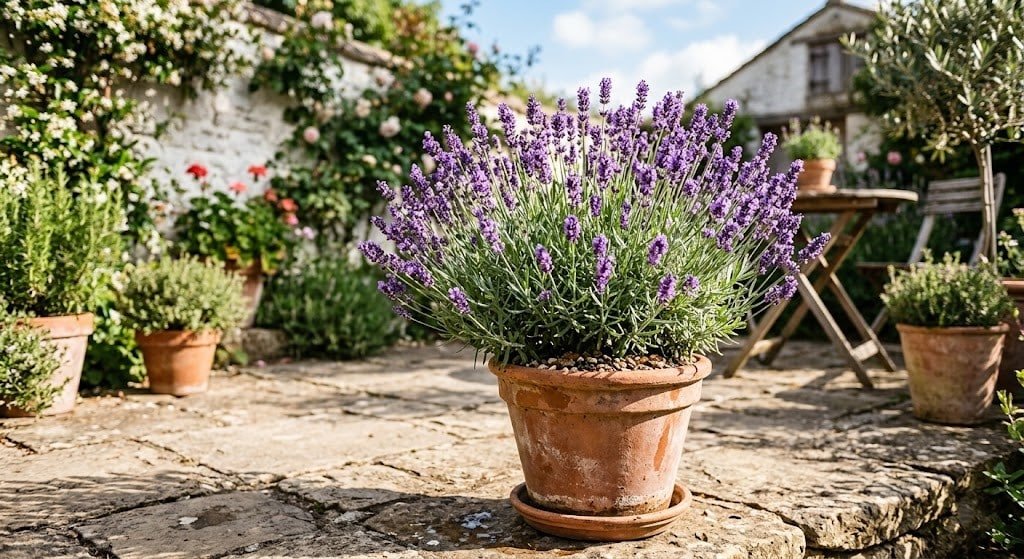
Always choose unglazed terracotta or ceramic pots over plastic containers. Terracotta is porous, meaning it allows moisture to evaporate through the pot walls, preventing water logging around the root ball.
Pot Sizing and Drainage Holes
Pick a pot that is roughly 12 to 16 inches in diameter. Ensure the pot has large, open drainage holes at the bottom. Before adding your sandy soil mix, line the bottom of the pot with a one-inch layer of small pebbles or crushed gravel.
If you are setting up greenery indoors or on small windowsills, check out our popular guide on [Baby Rubber Plant Care] for non-toxic indoor plant ideas.
Pruning Lavender Like a Pro (Preventing Woody Stems)
Pruning is the most overlooked step in growing lavender. Without annual pruning, lavender plants grow tall, leggy, and woody at the base, eventually splitting open in the middle and producing fewer flowers.
The Spring Light Trim
In early spring, as soon as you see new green shoots appearing, lightly prune away any winter-damaged tips. This encourages dense, bushy foliage.
The Post-Bloom Major Prune
Once the plant finishes blooming in late summer, cut back the plant by roughly one-third of its total height. Cut just above green leaf growth.
Crucial Rule: Never cut into the old, hard wood at the base of the plant; old lavender wood rarely regenerates new growth.
Overcoming Common Lavender Growing Problems
Even hardy plants run into issues when environmental conditions shift. Here is how to diagnose and fix common problems quickly.
Yellowing and Drooping Stems
Drooping leaves combined with yellowing foliage are clear signs of overwatering. Immediately reduce watering and ensure the drainage holes are not blocked. Allow the soil to dry out completely.
Fungal Disease and Powdery Mildew
If you live in a warm, humid region, fungal diseases can attack lavender foliage. To prevent mildew, avoid overhead watering. Water directly at the root base and space your plants at least 2 to 3 feet apart to ensure maximum airflow around the foliage.
Looking to combine your outdoor plants with modern aesthetic interior layouts? Explore our complete breakdown on [Modern Minimalist Small Bathroom Inspiration] for seamless indoor-outdoor design continuity.
Expert Advice on Winterizing Lavender
As a horticultural specialist, the most critical mistake I see home gardeners make is leaving potted lavender exposed to wet, freezing winter weather. While established English lavender in garden beds is cold-hardy down to -20°F (-28°C), potted lavender roots are vulnerable because they lack surrounding ground insulation. If you live in a cold climate, move your potted lavender against a warm wall under a patio roof to protect it from cold winter rainfall. Water sparingly only once a month during winter dormancy. Never fertilize lavender during autumn or winter, as forcing tender new growth during cold snaps will kill the entire plant.
Conclusion
Learning how to grow lavender successfully is one of the most rewarding gardening achievements. By giving this Mediterranean native plenty of direct sunlight, planting it in sandy, fast-draining soil mix, and maintaining a regular post-bloom pruning schedule, your lavender will thrive for up to ten years. Whether you grow it in rustic garden borders, elegant patio pots, or small balcony containers, its mesmerizing purple flowers and calming fragrance will transform your home exterior into a soothing retreat. Put these simple steps into practice today and watch your garden flourish!
FAQs
How often should I water my growing lavender plant?
Water newly planted lavender once or twice a week until established. Once mature, lavender is extremely drought-tolerant and only requires thorough watering once every 10 to 14 days when the top two inches of soil feel bone dry.
Can you grow lavender indoors?
Yes, but it requires a very bright south-facing window that receives 6 to 8 hours of direct daily sunlight. If natural sunlight is limited, supplement with a high-intensity LED grow light to prevent the stems from stretching.
Why is my lavender plant turning woody and bare in the middle?
Lavender turns woody when it is not pruned annually. Failing to trim back the green growth by one-third after summer blooming causes the stems to harden at the base and lose their lower foliage.
What is the best fertilizer for lavender?
Lavender requires little to no fertilizer. In fact, excess chemical fertilizer causes weak growth and reduces floral fragrance. A light dressing of organic compost or a sparse handful of bone meal in early spring is all it needs.