
Editor’s Note
At decoryourroom.com, we frequently feature stunning, architectural cacti in our interior design showcases. However, the most common message we receive from readers is: “Help, my cactus is turning mushy!” The culprit is almost always the same. Standard indoor potting soil is a death sentence for desert plants. Cacti have evolved to survive in arid, sandy environments, and putting them in dark, wet, heavy dirt leads to instant root rot. In this comprehensive guide, we are diving deep into the exact potting soil mix for cactus that will keep your spiky friends thriving, growing, and looking beautiful in your home.
Introduction: Why Cacti Need Special Soil
If you want to keep a cactus alive indoors, you have to understand where it comes from. Cacti are native to harsh, dry environments like deserts and high-altitude rocky plains.
In these natural habitats, the ground is rarely made of rich, dark earth. Instead, it is composed of sand, gravel, and crushed rocks. When it rains in the desert, the water hits the ground, soaks the roots for a brief moment, and then immediately drains away deep into the earth.
When we bring these magnificent plants into our homes, we must replicate that exact environment. If you use standard potting soil, it acts like a sponge, holding onto water for weeks. This suffocates the cactus. Creating the perfect potting soil mix for cactus is all about one word: Drainage.
The Biological Science of Cactus Roots
In terms of plant biology, root systems do far more than just absorb hydration; they actually require a continuous supply of oxygen to function properly. Roots undergo cellular respiration, a process that requires oxygen to convert nutrients into energy.
When you plant a cactus in heavy, dense soil, the water fills all the tiny air pockets in the dirt. Without oxygen, the root cells literally drown and die. Once the root tissue dies, anaerobic bacteria and fungi take over, causing a nasty infection known as root rot.
This rot travels up from the roots into the main stem of the cactus, turning the firm green flesh into yellow mush. A fast-draining potting soil mix for cactus ensures that plenty of oxygen can reach the roots immediately after watering.
The 3 Essential Components of Cactus Soil
To create the perfect potting soil mix for cactus, you need to balance three vital components. Each ingredient plays a specific role in mimicking the desert floor.
Organic Matter (The Base)
Even though cacti live in deserts, they still need a tiny bit of organic material to hold onto nutrients and a minimal amount of moisture. For this, you can use standard indoor potting soil or coconut coir. However, this should only make up a small portion of your final mix.
Aeration Materials (The Lungs)
This is what gives your soil “fluffiness” and prevents it from compacting over time.
Perlite: These are small, white, lightweight volcanic rocks that look like bits of styrofoam. They are excellent for creating air pockets.
Pumice: Even better than perlite, pumice is a porous volcanic rock that does not float to the top of the pot when you water it. It is the secret weapon of professional growers.
Drainage Materials (The Flow)
This component ensures the water runs out of the pot as quickly as possible.
Coarse Sand: Never use fine play sand from a sandbox, as it will clump together like cement. You must use coarse builder’s sand or horticultural sand.
Gravel or Poultry Grit: Tiny crushed rocks help break up the soil and recreate the rocky texture of the desert.

The Ultimate DIY Potting Soil Mix Recipe
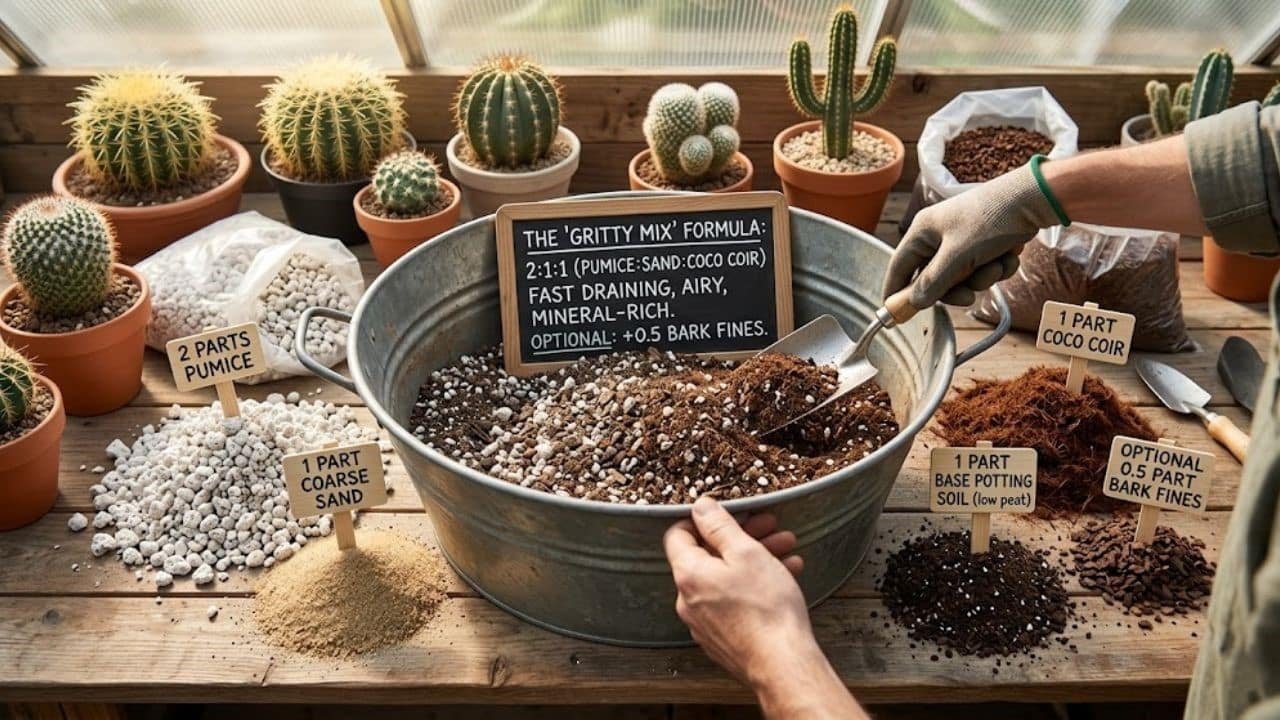
Crafting a custom cactus substrate at home is surprisingly simple, highly cost-effective, and far better for your plant’s long-term well-being. The industry standard for a foolproof cactus mix is the 1:1:1 Golden Ratio.
The 1:1:1 Golden Ratio Ingredients
1 Part Organic Base: (Standard potting soil or coconut coir)
1 Part Coarse Sand: (Horticultural sand or poultry grit)
1 Part Aeration: (Perlite or pumice)

Step-by-Step Mixing Instructions
Find a Container: Grab a large bucket or a heavy-duty plastic bin.
Measure Your Parts: Use a small garden trowel or an old measuring cup to ensure equal parts. For example, three cups of soil, three cups of sand, and three cups of perlite.
Mix Thoroughly: Use your hands (wear gardening gloves!) to blend the ingredients together.
The Squeeze Test: Take a handful of your new mix and squeeze it tight. When you open your hand, the soil should immediately crumble and fall apart. If it stays clumped together in a ball, add more sand and perlite.

Trending Add-Ins for Advanced Soil Mixes
If you want to take your potting soil mix for cactus to the absolute next level, you can add a few trending, expert-level ingredients.
Activated Charcoal
Adding a handful of horticultural activated charcoal to your mix works wonders. Charcoal naturally absorbs excess moisture and filters out impurities and toxic bacteria from the soil, adding an extra layer of protection against root rot.

Worm Castings
Cacti do not need heavy fertilizers, but a tiny sprinkle of worm castings (worm manure) provides a slow-release, gentle boost of natural nutrients that will not burn the delicate roots.
Repotting Your Cactus: A Pain-Free Guide
Now that you have the perfect soil, you need to get your spiky plant into it without hurting yourself.
The Towel Trick
Never try to grab a cactus with your bare hands. Instead, fold a thick newspaper or an old bath towel into a thick band. Wrap this band around the body of the cactus to act as a handle.

Loosening the Old Soil
Carefully slide the cactus from its current container, then use a wooden chopstick to softly break apart and remove the dense, compacted earth surrounding the root structure. You want to get peperomia hope rid of as much of the bad soil as possible.
Planting in the New Mix
Place the cactus into a terracotta pot (which is porous and helps water evaporate). Fill in the empty spaces with your fresh, dry DIY potting soil mix for cactus.
Crucial Tip: Do not water the cactus immediately after repotting! Wait at least one full week before watering to allow any damaged roots to heal.
Styling Cacti in Your Home Safely
Cacti are the ultimate statement pieces for interior styling, bringing an undeniable architectural edge to any room.
Aesthetic Placement
A tall San Pedro or a perfectly round Golden Barrel cactus looks breathtaking in a minimalist Japandi-style living room. Alternatively, placing a few small cacti in aged, dark terracotta pots can beautifully complement a moody, dark academia home office setup.
Nursery and Child Safety
While cacti are gorgeous, their spines pose an obvious hazard. If you are decorating a family space or have a young baby crawling around, safety is paramount. Keep all cacti off the floor and low tables. Instead, display them on secure, high floating wooden shelves where toddlers and curious pets cannot reach them.

Expert Botanical Advice
As an interior design publisher and plant science enthusiast, I cannot overstate the importance of mimicking nature. The biological integrity of a desert plant relies entirely on rapid wet-dry cycles. When you create your own potting soil mix for cactus using the 1:1:1 ratio, you are artificially recreating the arid plains of South America right in your living room. A common mistake I see is layering rocks at the bottom of a pot with regular soil on top. Physics dictates that this actually raises the water table, keeping the soil wetter and closer to the roots. Always mix your drainage materials throughout the entire soil profile, and always use pots with visible drainage holes.
Conclusion
Stop relying on generic, store-bought dirt that stays wet for weeks. By mixing your own potting soil mix for cactus using equal parts organic soil, coarse sand, and perlite, you give your plants the oxygen and drainage they desperately need. This simple, affordable DIY recipe will stop root rot in its tracks, allowing your beautiful desert plants to grow strong, healthy, and vibrant for decades to come.
FAQs
Can I use beach sand for my cactus soil mix?
No, you should never use beach sand or fine play sand. These types of sand are too fine and will compact together like cement when wet, completely suffocating the cactus roots. Always use coarse horticultural sand.
How often should I change the soil for my cactus?
Cacti are slow growers and do not need to be repotted often. Generally, you should refresh the potting soil mix for your cactus every 2 to 3 years, or when the roots start growing out of the bottom drainage hole.
Why is my cactus leaning over in its new soil?
If your cactus is leaning, the new soil mix might be too loose to support it initially, or the plant is stretching toward a light source. Gently pack the soil down a bit more, add a thin layer of decorative gravel on top for weight, and ensure the plant is getting bright, even sunlight.