
Editor’s Note
At decoryourroom.com, we constantly emphasize that your exterior landscaping deserves the exact same attention to detail as your interior decor. A garden without proper edging is like a beautiful painting without a frame; it simply looks unfinished. Garden borders do more than just look pretty; they are crucial functional elements that stop aggressive lawn grass from invading your delicate flower beds and keep your expensive mulch from washing away during heavy rain. Whether you recently designed a highly structured French garden layout or you simply want to tidy up your backyard, selecting the correct edging material will dramatically elevate your property’s curb appeal. In this comprehensive guide, we are exploring the most trending, high-end, and practical garden border ideas dominating the landscaping world today.
Introduction: Why Garden Edging is Essential
Many homeowners spend hundreds of dollars on exotic plants, premium soil, and beautiful mulch, only to neglect the physical boundary separating their garden beds from their lawn.
Without a solid border, the natural elements will quickly destroy your hard work. Turfgrass has incredibly aggressive root systems that will silently creep into your nutrient-rich flower beds, choking out your prized perennials. Furthermore, heavy rains will wash your soil and mulch directly onto your walkways, creating a muddy hazard.
Choosing the right garden border is about balancing aesthetics with utility. You need a material that complements the architectural style of your home while acting as an impenetrable fortress against weeds and grass. Let us dive into the top trending materials and techniques you can implement this weekend.
The Modern Marvel: Corten Steel Edging
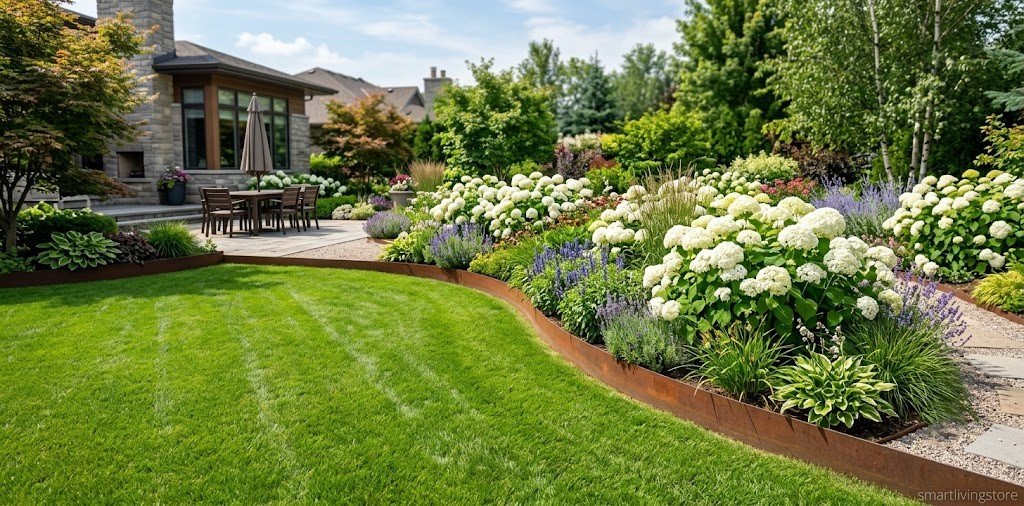
If you are looking for the absolute biggest trend in modern landscaping, Corten steel is it. Also known as weathering steel, this material is beloved by high-end architects.
The Beautiful Rust Aesthetic
Corten steel is designed to intentionally rust on the surface when exposed to the elements. This oxidation process forms a protective, deeply textured, orange-brown patina that prevents the core of the steel from decaying. The warm, earthy tone of the rusted metal provides a striking, contemporary contrast against vibrant green foliage.
Unmatched Durability and Flexibility
Unlike plastic or cheap aluminum, Corten steel is virtually indestructible. It comes in long, flexible strips that can easily be bent to create perfectly smooth, sweeping curves around organic-shaped flower beds. It is the ultimate choice for minimalist, modern backyards.
Classic and Timeless: Victorian Brick Borders
For homes with traditional architecture, cottage styling, or vintage charm, nothing beats the timeless elegance of classic red clay bricks.
The Diagonal “Sawtooth” Method
One of the most popular ways to lay a brick border is the traditional Victorian “sawtooth” or zigzag pattern. By leaning the bricks at a 45-degree angle within a shallow trench, you create a beautiful, textured, jagged edge that instantly adds historical charm to any pathway.

The Flat Mower-Edge Layout
If you want something more practical, lay the bricks completely flat, flush with the soil level of your lawn. This creates a “mower strip.” You can run the wheels of your lawnmower directly over the bricks, ensuring you cut every blade of grass without ever needing to use a string trimmer.
Natural and Rustic: Woven Willow and Wattle Edging
Eco-friendly and sustainable landscaping is a massive movement right now. Woven willow borders are entirely biodegradable and offer a charming, storybook aesthetic.
The Cottage Core Vibe
Wattle edging is created by driving sturdy wooden stakes into the ground and weaving flexible willow or hazel branches horizontally between them. This technique has been used in European farming for centuries. It looks spectacular framing a rustic vegetable garden or keeping sprawling plants contained.
Cost-Effective but Temporary
Because this material is 100% natural and untreated, it will eventually break down and decompose into the soil after three to five years. However, the materials are extremely inexpensive (or even free if you forage the branches yourself), making it a highly rewarding weekend DIY project.

Poured Concrete and Custom Curbing
If you want a highly customized, permanent solution that requires absolutely zero maintenance, custom-poured concrete curbing is the ultimate investment.
Seamless and Weed-Proof
Professional landscapers can bring a special extrusion machine to your home that pours a continuous line of concrete perfectly around the contours of your garden. Because there are no seams or gaps, it is physically impossible for grass roots to penetrate this barrier.
Stamped and Stained Finishes
Concrete no longer has to look like a grey sidewalk. Modern curbing can be stamped with textures that mimic natural slate, cobblestone, or even wood grain. It can also be integrally colored to match the exact exterior paint of your home or your outdoor patio styling.

The “Zero Dollar” Solution: The Natural Trench Edge
Also known as the “Victorian Trench” or “Spade Edge,” this is the preferred method for professional botanical gardens and golf courses. It relies strictly on negative space rather than physical materials.
How to Dig a Perfect Trench
Using a sharp half-moon edging tool, you carve a steep, 4-inch deep V-shaped trench exactly where the lawn meets the flower bed. The sheer drop-off physically prevents grass roots from crossing over into the soil.

The Crisp, Clean Look
This method provides an incredibly crisp, manicured line that blends seamlessly into any landscape design. While it costs absolutely nothing in materials, it does require manual labor. You will need to recut and tidy the trench once or twice a year to maintain that sharp, professional edge.
Utilizing Large River Rocks and Boulders
For a deeply organic, Zen-inspired aesthetic, utilizing heavy natural stone is a highly effective strategy.
The Japandi Garden Aesthetic
If you have styled your home with a serene Japandi interior design, you can carry that exact vibe outdoors. Using smooth, oversized river rocks or irregularly shaped boulders creates a natural, effortless boundary that looks like a dried riverbed.

Combining Stone and Tropicals
Large rocks absorb heat during the day and release it at night. This micro-climate is fantastic if you are bringing your potted tropical plants, like your Swiss Cheese Monstera, outside for the warm summer months. Frame the pots with heavy stones to create a lush, tropical oasis.
Expert Advice from a Landscape Architect
As a licensed landscape architect, the most frequent edging disaster I encounter is the use of cheap, black corrugated plastic borders sold at big-box hardware stores. Homeowners install these because they are inexpensive, but within a single season, the plastic warps in the summer heat, heaves out of the ground during winter frosts, and ultimately cracks under the sun’s UV rays. If you are on a strict budget, I always recommend digging a natural Victorian trench edge over buying cheap plastic. If you are going to purchase materials, invest in heavy-duty Corten steel or solid brick. Remember, an edging material is only effective if it is buried deeply enough. At least one-third of your border material must be submerged below the soil line to physically block aggressive grass rhizomes from spreading underground.
Conclusion
Implementing the right border ideas in your garden is the defining factor that separates an amateur backyard from a professionally manicured landscape. Whether you are drawn to the sleek, modern rust of Corten steel, the timeless, historical charm of red brick, or the completely natural look of a crisp spade-cut trench, your chosen edging will provide critical structure to your outdoor space. By investing time into creating a solid, impenetrable boundary, you will save
yourself countless hours of weeding and maintenance, allowing you to actually sit back, relax, and enjoy the beautiful garden you have cultivated.
FAQs
What is the cheapest way to edge a garden?
The absolute cheapest method is the “natural trench edge.” Using a flat garden spade or a half-moon edger, you carve a 3-to-4-inch deep V-shaped trench between the lawn and the bed. It costs zero dollars in materials, requiring only your physical labor to maintain the crisp line once a year.
How deep should garden edging be buried?
To effectively stop grass roots from invading your garden beds, your edging material should be buried at least 3 to 4 inches below the soil line. If you simply rest the border on top of the grass, the aggressive root systems will easily creep underneath it within a matter of weeks.
Is Corten steel edging safe for growing vegetables?
Yes, Corten steel is completely safe for edible gardens. The material is made of natural iron and steel alloys. The rust that forms on the surface is simply iron oxide, which is naturally occurring in soils and poses no toxic threat to your vegetables, fruits, or surrounding environment.