
Editor’s Note
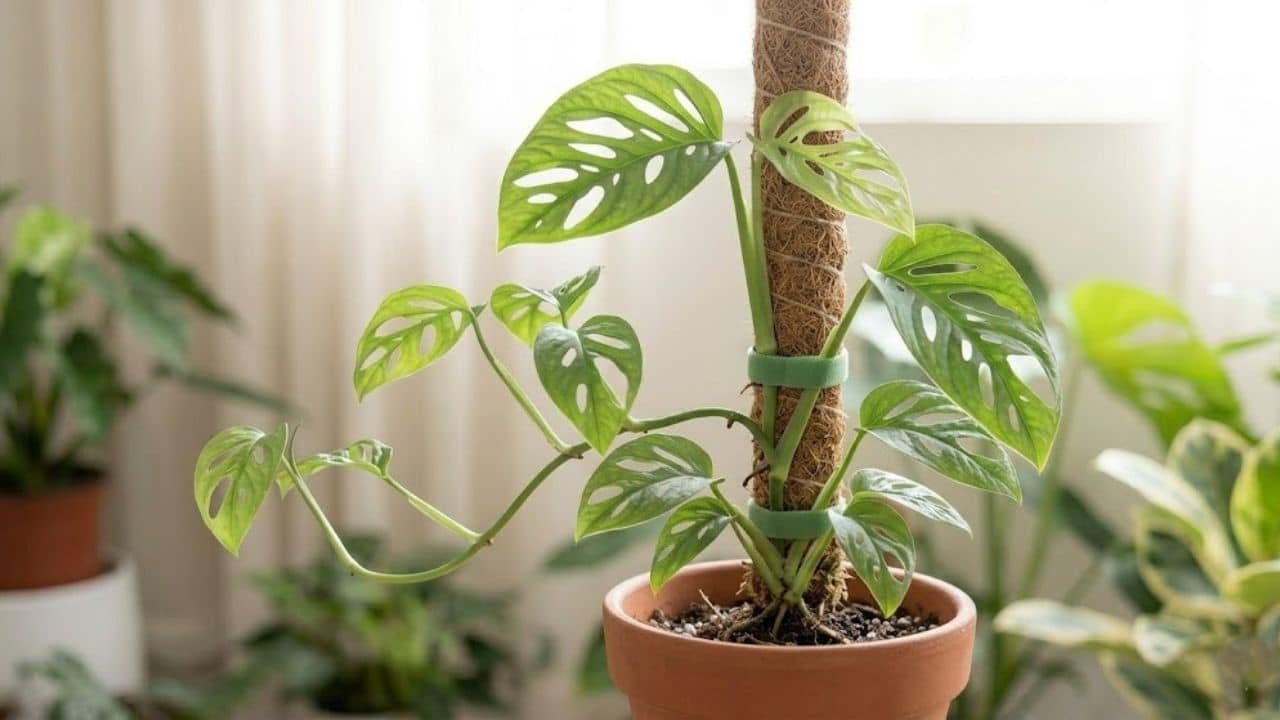
At decoryourroom.com, we constantly talk about the transformative power of biophilic design. If there is one plant that has completely taken over modern home aesthetics, it is the Swiss Cheese Monstera (officially known as Monstera adansonii). With its striking, hole-punched leaves and fast-growing vines, it brings an instant jungle vibe to any room. However, we see many indoor gardeners struggling to keep those beautiful leaves green and healthy. They often confuse its care with the larger Monstera deliciosa. In this comprehensive guide, we are breaking down the exact science of Swiss Cheese Monstera care, from the perfect chunky soil mix to mastering the moss pole. Let’s help your plant thrive!
Introduction: What is the Swiss Cheese Monstera?
Before diving into care routines, it helps to understand the origin of this fascinating plant. Native to the dense tropical rainforests of Central and South America, the Monstera adansonii is a vining epiphyte.
In the wild, it starts its life on the dark forest floor and rapidly climbs up the trunks of massive trees, reaching for the sunlight piercing through the canopy above.
The iconic holes in its leaves botanically known as fenestrations serve a brilliant evolutionary purpose. They allow harsh tropical winds and heavy rain to pass straight through the leaves without tearing them, while also letting sunlight filter down to the lower leaves. Replicating this tropical, climbing environment in your home is the secret to lush, rapid growth.
Lighting Requirements: How Much Sun Does It Need?
If you search for Swiss Cheese Monstera care, lighting is the most critical factor. Getting the light right dictates how fast the plant grows and how many holes the leaves produce. While it can survive in lower light (like a moody dark academia home office design), it will not thrive.
Bright, Indirect Sunlight is Key
To mimic the dappled light of the rainforest canopy, place your Monstera adansonii in bright, indirect sunlight. An east-facing or west-facing window with a sheer curtain is the absolute perfect spot.
The Danger of Direct Sun
Never place this plant in direct, scorching midday sun. The delicate, fenestrated leaves will quickly suffer from sunburn, developing large, crispy brown and black patches that will never heal.
What Happens in Low Light?
While it can survive in a lower light (like a moody dark academia home office), it will not thrive. In low light, the plant becomes “leggy.” The stems stretch out, the leaves grow very small, and most importantly, the plant will stop producing its iconic holes. If your plant has solid leaves, it desperately needs more light.

How Often to Water Swiss Cheese Monstera
Overwatering is the number one killer of indoor tropical plants. Because the Monstera adansonii has delicate, fine roots compared to its larger cousins, it is highly susceptible to root rot.
The Top Two Inches Rule
Do not water this plant on a strict weekly schedule. Instead, always check the soil first.Push your finger a couple of inches down into the dirt. If you detect any moisture lingering below the surface, hold off on watering for another day or two. You should only water when the top two to three inches of the soil are completely dry.
Proper Watering Technique
When it is time to water, take the plant to the sink and soak the soil thoroughly. Allow the water to run freely out of the bottom drainage holes. Never let the pot sit in a saucer full of stagnant water, as this suffocates the roots.

Best Soil Mix for Swiss Cheese Plant
Because this plant is an epiphyte (a plant that climbs trees rather than growing deep in the dirt), standard indoor potting soil is far too heavy and dense for it.
The Chunky Aroid Mix
You need to create a fast-draining, highly oxygenated “aroid mix.” You can easily make this at home by blending:
- 1 Part High-Quality Indoor Potting Soil
- 1 Part Orchid Bark (Coarse)
- 1 Part Perlite or Pumice
This chunky texture allows water to rush through the pot instantly while giving the roots plenty of air to breathe, perfectly mimicking the side of a tree trunk. Just like creating the perfect potting soil mix for cactus, drainage is everything.

Should I Use a Moss Pole for My Monsters?
This is one of the highest-searched questions regarding Swiss Cheese Monstera care, and the answer is a resounding yes!
Trailing vs. Climbing
You can absolutely let your Monstera adansonii trail down from a high shelf or a hanging basket. It looks beautiful cascading in a minimalist Japandi-style living room. However, when left to trail, the leaves will remain relatively small. It looks beautiful cascading in a minimalist Japandi style living room, alongside other aesthetic trailing vines like the Peperomia Hope.
The Magic of the Moss Pole
In nature, this plant is programmed to climb. When you provide it with a sturdy moss pole and attach the vines to it, the aerial roots will grab hold of the moist moss. Once the plant feels itself climbing vertically, it activates a biological trigger. The leaves will grow exponentially larger, and the fenestrations (holes) will become much more dramatic.

Temperature and Humidity Demands
You cannot expect a tropical rainforest plant to thrive in a freezing, dry environment.
Ideal Room Temperature
Keep your home between 65°F and 85°F. Keep the plant away from drafty winter windows, exterior doors, and direct blasts from air conditioning vents.
Boosting Humidity
The Swiss Cheese Monstera loves high humidity (ideally between 50% and 60%). If your home is very dry, especially in the winter, the tips of the leaves will turn crispy and brown. To solve this dry air problem, you can either run a small room humidifier or cluster several of your tropical plants together to build a naturally humid micro-environment.
Why Are My Swiss Cheese Plant Leaves Turning Yellow?
When your Monstera adansonii starts producing pale, yellow foliage, it is usually a clear signal of distress. Let’s break down how to identify the exact root cause:
Overwatering (Most Common): If the yellow leaves are soft, mushy, and located at the bottom of the vine, the soil is staying too wet. Check for root rot and let the plant dry out.
Underwatering: If the leaves are turning yellow, dry, and crispy at the edges, the plant is severely dehydrated.
Nutrient Deficiency: If the new leaves are coming out pale yellow or light green with dark green veins, the plant likely needs fertilizer. Feed it with a balanced, diluted liquid fertilizer once a month during the spring and summer.

How to Propagate Swiss Cheese Monstera in Water
Propagating this plant is incredibly rewarding and gives you free plants to expand your indoor jungle.
Taking the Perfect Cutting
Use sterilized scissors to cut a vine just below a “node.” The node is the small, brown, bumpy nub on the stem where a leaf attaches. Without a node, roots will never grow.
Water Propagation
Place the cutting into a clear glass jar filled with fresh water, ensuring the node is fully submerged but the leaves remain above the water line. Place the jar in bright, indirect light and change the water weekly. Within 3 to 4 weeks, you will see a robust white root system developing!

Is the Swiss Cheese Monstera Toxic to Pets?
If you are styling a family home or a safe nursery environment, safety is crucial.
Yes, the Monstera adansonii is toxic. The leaves and stems contain insoluble calcium oxalate crystals. If chewed or ingested by cats, dogs, or curious toddlers, it will cause severe burning in the mouth, swelling of the throat, and vomiting. Always keep this plant safely elevated on a high floating shelf, securely fastened to a tall moss pole, or hanging from the ceiling entirely out of reach.

Expert Botanical Advice
As an interior plant stylist and content publisher, I always urge my readers to pay attention to their plant’s aerial roots. Those long, brown, alien-looking strings shooting out of the stems are not just for decoration; they are the plant’s lifeline. If you are not using a moss pole, do not cut the aerial roots off! Instead, gently tuck them back down into the pot’s soil. Once they hit the soil, they will transition into subterranean roots, providing the plant with a massive boost in water and nutrient absorption, leading to thicker stems and healthier foliage.
Conclusion
The Swiss Cheese Monstera is an absolute showstopper that adds unparalleled architectural beauty to any interior space. By understanding its natural rainforest habitat providing it with bright dappled light, a chunky fast-draining soil mix, and something sturdy to climb you will unlock its true growing potential. Avoid the temptation to overwater, keep an eye on humidity, and watch as your home transforms into a lush, vibrant, biophilic oasis.
FAQs
Why doesn’t my Swiss Cheese Monstera have any holes?
If your plant is producing solid leaves without the iconic fenestrations (holes), it is almost always a lack of sunlight. Move the plant closer to a bright window with indirect light, and consider giving it a moss pole to climb.
Should I mist my Monstera adansonii?
While they love humidity, misting the leaves with water only provides a temporary 10-minute boost and can actually encourage fungal and bacterial leaf spot diseases. It is much better to use a dedicated room humidifier.
How fast does a Swiss Cheese Plant grow?
When provided with optimal lighting, a chunky soil mix, and proper watering, the Monstera adansonii is an incredibly fast grower. It can easily grow 1 to 2 feet of new vine length in a single growing season (spring and summer).