
Editor’s Note
At decoryourroom.com, we frequently witness homeowners investing thousands of dollars into premium furniture, only to completely ruin the aesthetic with terrible, harsh illumination. Your lounge room is the beating heart of your home it serves as a cinema, a reading sanctuary, a social hub, and a place to unwind after a grueling day. Achieving the perfect ambiance requires much more than simply flicking on a single, glaring overhead bulb. Mastering the art of layering lights in lounge room environments is the ultimate secret to creating a space that feels expensive, inviting, and functionally brilliant. In this comprehensive masterclass, we will break down the precise strategies professional interior designers use to illuminate modern living spaces flawlessly.
Introduction: Why Lounge Room Lighting Makes or Breaks Your Decor
Lighting is the unsung hero of interior design. It is the single most powerful tool you possess to dictate the mood and emotional frequency of a room.
Think about your favorite high-end hotel lobby or a luxury restaurant. The reason those spaces feel so incredibly welcoming is not just the furniture; it is the strategic, intentional use of illumination. A beautifully designed space can look completely flat and uninviting under the wrong bulbs.
When planning the lighting for your primary living area, versatility is paramount. You need bright, functional illumination for hosting game nights or cleaning, but you also require soft, moody glows for late-night movie marathons. To achieve this, you must step away from single-source lighting and embrace a comprehensive, multi-layered approach.
The Golden “Rule of Three”: Layering Your Illumination
If you want your lounge to look professionally curated, you must employ the “Rule of Three.” This architectural standard involves combining three distinct types of lighting to build visual depth and eliminate harsh shadows.
Layer One: Ambient (General) Lighting
Ambient lighting is the foundational layer. It provides the primary source of illumination, acting as a substitute for natural daylight. This is typically achieved through recessed ceiling downlights, flush mounts, or a large central chandelier. The goal here is broad, even coverage so you can navigate the room safely without bumping into furniture.
Layer Two: Task Lighting
Task lighting is highly localized. It is designed to illuminate specific zones where you perform activities that require focus. A slender, articulated floor lamp positioned next to your favorite armchair for reading is a perfect example. This layer ensures you have adequate brightness exactly where you need it, without having to blast the ambient lights.
Layer Three: Accent (Mood) Lighting
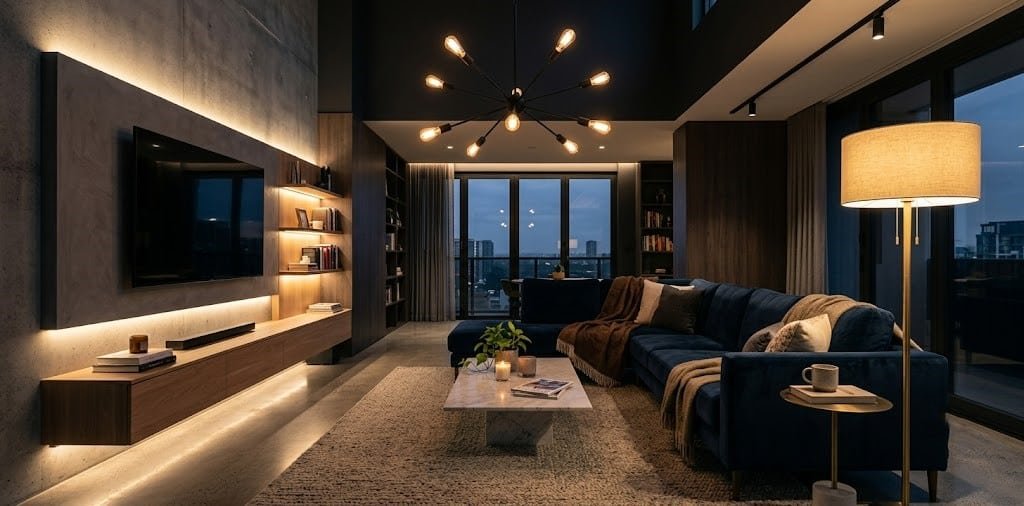
This is where the magic happens. Accent lighting is purely decorative. It is used to highlight the architectural features of your room or draw attention to specific decor pieces. Picture-lights above a painting, LED strip lights hidden behind a television console, or soft uplighting behind a large indoor plant all fall into this luxurious category.

Statement Chandeliers vs. Modern Recessed Downlights
The ceiling is your largest uninterrupted canvas. Choosing the right primary light fixture sets the entire stylistic tone of the lounge.
The Dramatic Impact of Chandeliers
If your living space features high ceilings, a statement chandelier acts as the ultimate jewelry for the room. Whether you prefer a cascading crystal piece for a classic look or a matte black, sputnik-style fixture for an industrial vibe, it instantly draws the eye upward.
The Clean Look of Recessed LEDs
For modern, minimalist homes particularly those embracing a sleek Japandi living room setup recessed downlights are the preferred choice. They offer a clean, uncluttered ceiling profile. However, you must install them strategically around the perimeter of the room, rather than blindly placing them in a grid, to avoid casting harsh downward shadows on people’s faces.

Mastering Color Temperature (The Kelvin Scale)
Purchasing a lightbulb without checking its color temperature is the biggest mistake you can make. The Kelvin (K) scale measures how “warm” or “cool” a light appears, and it drastically affects your interior colors.
Warm White (2700K – 3000K)
This is the absolute sweet spot for any lounge room. Warm white bulbs emit a soft, yellowish-orange glow that mimics the cozy light of a sunset or a fireplace. This temperature relaxes the human brain, making the space feel intimate and inviting. It also beautifully complements the trending paint colours for drawing rooms, bringing out the richness in terracotta and soft beige walls.
Cool White and Daylight (4000K – 6000K)
Avoid these in your living room at all costs! Cool, bluish-white light is highly stimulating. It is excellent for operating rooms, commercial offices, or windowless kitchens, but it will make your cozy lounge feel like a sterile dentist’s waiting area.

Zoning with Floor and Table Lamps
Lamps are not just light sources; they are crucial sculptural elements that help define distinct zones within a large, open-plan room.
Anchoring the Seating Area
When you arrange your sofas and coffee table, you are creating a “zone.” Just as perfectly sizing your living room rug physically anchors the furniture to the floor, placing a substantial table lamp on an end table anchors the lighting. It creates a localized pool of warm light that visually signals “this is the area to sit and relax.”
The Versatility of Arc Floor Lamps
If your space lacks overhead wiring for a central pendant light, an oversized arc floor lamp is a brilliant workaround. Position the heavy base safely behind a sectional sofa, and let the sweeping metal arm hover the lampshade directly over the center of your coffee table.

Wall Sconces: The Ultimate Architectural Upgrade
Wall sconces are experiencing a massive revival in contemporary interior design, moving away from traditional hotel corridors and directly into modern homes.
Creating Symmetrical Balance
Flanking a fireplace, a large mirror, or a piece of primary artwork with a matching pair of wall sconces introduces immediate symmetry. Symmetrical design is naturally pleasing to the human eye and injects a sense of high-end, structured order into the room.

Soft Bounced Light
Unlike ceiling lights that point straight down, many modern sconces are designed to shine light upward (uplighting) or backward against the wall (backlighting). This bounces the light off the plaster, creating a soft, diffused, and incredibly flattering ambient glow that eliminates harsh shadows completely.
Smart LED Integrations and Voice Automation
In 2026, a truly modern lounge room leverages the power of smart home technology to make adjusting the ambiance completely effortless.
Dynamic Color Changing
While warm white is best for daily use, smart LED bulbs (like Philips Hue) allow you to change the color spectrum entirely based on the occasion. You can switch to a dim, deep blue or purple for an immersive home theater experience, or a vibrant amber for hosting a festive evening gathering.
Voice-Activated Scenes
By syncing your smart bulbs to a virtual assistant, you can create pre-programmed “scenes.” Simply saying, “Activate Movie Mode,” can automatically turn off the main ceiling lights, dim the floor lamps to 10%, and activate the soft LED bias lighting behind your television screen.

Advice from a Lighting Designer
As a professional architectural lighting consultant, the most critical piece of hardware I insist upon for every single residential project is the humble dimmer switch. Never install a light in your lounge room that only operates on a basic “on/off” toggle. Dimmers are inexpensive to install but fundamentally change how you interact with your space. They allow you to manually lower the intensity of your overhead lights as the sun sets outside, signaling to your circadian rhythm that it is time to wind down. If you cannot afford a total lighting overhaul, simply replacing your standard wall switches with high-quality LED-compatible dimmers is the highest-ROI upgrade you can make in your living room.
Conclusion
Designing the perfect setup for lights in lounge room areas is an art form that balances profound functionality with soothing aesthetics. By strictly adhering to the Rule of Three, avoiding harsh cool-toned bulbs, and embracing the architectural beauty of wall sconces and arc lamps, you can completely transform your space. Remember, lighting should never be an afterthought. When you thoughtfully layer your ambient, task, and accent fixtures, your living room will transition seamlessly from a bright, energetic daytime hub into a deeply relaxing, luxurious evening sanctuary.
FAQs
How many light sources should a lounge room have?
As a general rule, a standard-sized lounge room should feature a minimum of three to five distinct light sources. This typically includes one central ambient fixture, two table or floor lamps for task lighting, and one or two accent lights (like sconces or LED strips) to build depth.
Are LED strip lights still in style for living rooms?
Yes, but the application has matured significantly. Exposed, glaring LED strips dotting the ceiling are outdated. The modern, stylish approach is “hidden” or “bias” lighting. This means installing the strips behind the TV, under floating entertainment units, or inside architectural coves where you only see the soft, bouncing glow, never the actual bulbs.
Can I mix different metals with my lighting fixtures?
Absolutely. The “matchy-matchy” look is considered outdated. Mixing metals such as pairing a matte black central chandelier with brushed brass wall sconces or table lamps adds incredible depth, texture, and a curated, collected-over-time feel to your interior decor.