
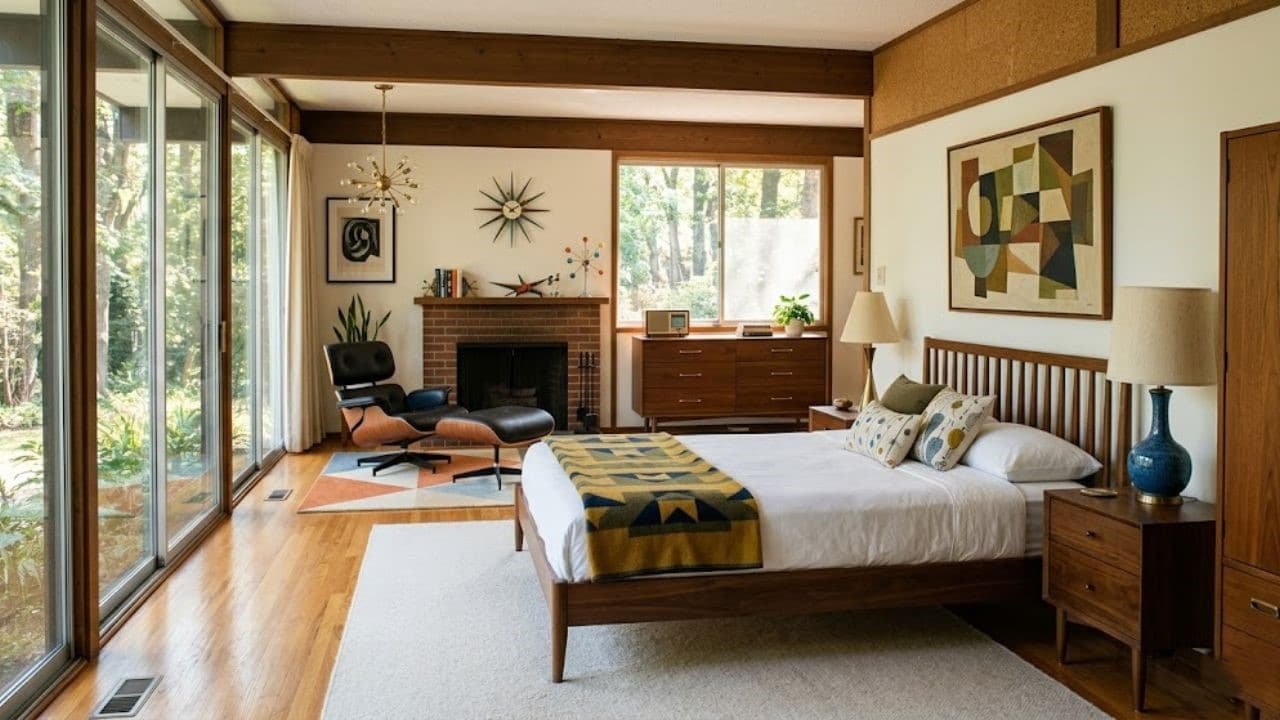
Editor’s Note
At decoryourroom.com, we frequently track interior design shifts, and one trend refuses to fade: the mid-century modern aesthetic. Born in the post-World War II era, this design philosophy champions clean lines, functional forms, and a deep connection to nature. Designing a mid century bedroom is not about creating a vintage movie set; it is about merging the nostalgic charm of the 1950s and 60s with the comforts of contemporary living. Whether you are moving into a new apartment or overhauling your master suite, this comprehensive guide will equip you with the exact layouts, color palettes, and furniture choices needed to achieve a flawless, high-end retro aesthetic.
Introduction: The Appeal of the Mid Century Modern Bedroom
During the mid-20th century, designers moved away from the heavy, overly ornate furniture of the past. Instead, they embraced geometric simplicity, organic curves, and the honest display of natural materials. A properly styled mid century bedroom feels inherently calming because it completely rejects visual clutter.
By utilizing warm wood tones, sleek profiles, and strategic splashes of color, this design style creates a sanctuary that feels both energized and restful. Let us explore the fundamental steps to bringing this iconic look into your personal resting space.
The Best Mid Century Bedroom Color Palettes
Establishing the correct color foundation is critical. The era was famous for juxtaposing muted, earthy neutrals with sudden, unexpected pops of vibrant color.
Warm Earth Tones as a Foundation
Start by painting your primary walls in warm, inviting shades. Creamy off-whites, warm beige, and soft olive greens provide a superb backdrop. These tones prevent the room from feeling stark or clinical while allowing your wooden furniture to take center stage.
Adding Retro Accent Colors
To inject that authentic 1960s flavor, you need to introduce accent hues. Muted mustard yellow, burnt orange, terracotta, and deep teal are historically accurate choices. You can introduce these vibrant shades through upholstered reading chairs, throw blankets, or a geometric area rug.

Essential Mid Century Bedroom Furniture
The defining characteristic of this style is the furniture. You want to focus on pieces that feel visually lightweight but structurally solid.
The Iconic Platform Bed Frame
Your bed is the visual anchor of the room. A genuine mid century bed frame typically features a low-profile platform design, eliminating the need for a bulky box spring. Look for frames made from solid walnut or teak wood, characterized by gently tapered, angled legs (often called “peg legs”). Headboards should be simple either a smooth wooden panel, vertical slats, or minimal button-tufted upholstery.

Dressers and Nightstands
Avoid purchasing matching bedroom sets that look too uniform. Instead, curate complementary pieces. A long, horizontal walnut dresser with sleek brass hardware or recessed handles is a staple. For the bedside, select floating nightstands or compact tables with those signature angled legs.

Lighting Ideas: Mid Century Bedroom Sconces & Chandeliers
Lighting in the 1950s was treated as functional sculpture. Replacing standard builder-grade light fixtures with period-appropriate designs will instantly elevate the entire space.
The Sputnik Chandelier
If your room features high ceilings, a Sputnik-style chandelier is the ultimate retro statement. With its multiple arms extending outward like a starburst, it draws the eye upward and provides brilliant, multidirectional ambient lighting.

Brass Globe Sconces and Table Lamps
To keep your nightstands free of clutter, consider installing hardwired wall sconces. Brass fixtures featuring frosted white glass globes offer a soft, diffused glow perfect for reading. If you prefer table lamps, look for ceramic bases with organic, sculptural shapes paired with drum-style linen shades.
Mixing Mid Century Style with Biophilic Design
The original architects of this era believed strongly in bridging the gap between indoor and outdoor environments. Incorporating nature is a non-negotiable step.
Bringing the Outdoors In
If you are learning how to incorporate biophilic design into a small bedroom, the mid-century aesthetic makes it incredibly easy. The warm woods naturally complement vibrant green foliage.
Selecting the Right Houseplants
Position a tall, architectural plant in a white ceramic planter supported by a wooden, peg-legged stand. A lush Swiss Cheese Monstera or a towering Ficus elastica (Rubber Tree) fits the era perfectly. Not only do these botanical additions soften the sharp geometric lines of the furniture, but they also significantly improve the air quality in your sleeping quarters.

Geometric Patterns and Mid Century Wall Decor
A bedroom lacking texture and art can quickly feel like an empty showroom. The secret lies in using bold shapes and carefully chosen accessories.
The Starburst Wall Clock
No mid century space is truly complete without the iconic starburst or sunburst wall clock. Hanging a large, brass or wood-spindled clock above your dresser or bed immediately establishes the vintage theme.
Abstract Art and Textured Rugs
For wall art, focus on large-scale canvas prints featuring abstract geometry or minimalist line drawings. On the floor, anchor your bed with a substantial rug. While a luxury bachelor pad might utilize a thick Persian rug, a retro bedroom benefits most from a low-pile rug featuring interlocking abstract shapes or a simple, plush flokati style for added texture.

Designing a Small Mid Century Modern Bedroom
If you are working with limited square footage, the lightweight nature of this design style is a massive advantage.
Maximizing Floor Space
Because retro furniture sits raised on tapered legs, it exposes more of the floor beneath it. This visual trick tricks the human eye into perceiving the room as much larger than it actually is.

Mirrors and Vertical Storage
Instead of a wide, bulky dresser, opt for a tall, narrow “highboy” chest of drawers to save horizontal space. Place an irregularly shaped, asymmetric mirror (like a kidney-bean or teardrop shape) on the wall opposite your window. This will bounce natural sunlight around the room, making a cramped area feel expansive and airy.
Professional Interior Design Insights
As an architectural stylist, the most frequent mistake I observe clients making is going overboard with the vintage theme. If every single item in your space is sourced from a 1960s antique shop, the room transitions from a stylish home into a museum exhibit. The true mastery of mid century bedroom design lies in strategic layering. Pair a vintage teak wood dresser with a highly modern, minimal mattress and crisp, contemporary white bedding. If you have a classic starburst clock, ensure your bedside technology (like phone chargers or smart speakers) is sleek and discreet. Balancing historical silhouettes with modern, everyday convenience ensures your sanctuary remains timeless, elegant, and exceptionally livable.
Conclusion
Crafting the perfect mid century bedroom is a deeply rewarding design journey. By anchoring the space with warm walnut or teak woods, embracing the elegance of tapered furniture legs, and illuminating the room with sculptural brass lighting, you build a foundation of enduring style. Introduce muted earth tones, a few thriving houseplants, and abstract geometric art to complete the atmosphere. This design philosophy proves that a room can be highly functional, remarkably clean, and bursting with nostalgic personality all at the same time.
FAQs
What woods are typically used in mid century modern furniture?
The most authentic and widely used woods in this design style are teak, walnut, and rosewood. These materials were prized for their rich, warm coloring and beautiful, distinct grain patterns, which added organic texture to the clean geometric shapes of the furniture.
How can I make my modern bedroom look mid century?
You can easily introduce this aesthetic by swapping out your lighting for brass globe fixtures, adding a piece of furniture with tapered wooden peg legs, and introducing a retro accent color like mustard yellow or burnt orange through your bedding or curtains.
Is mid century modern design going out of style?
Not at all. Because it is rooted in minimalism, high-quality materials, and extreme functionality, the mid-century modern aesthetic is considered a timeless design staple that continuously adapts to current trends rather than fading away.