
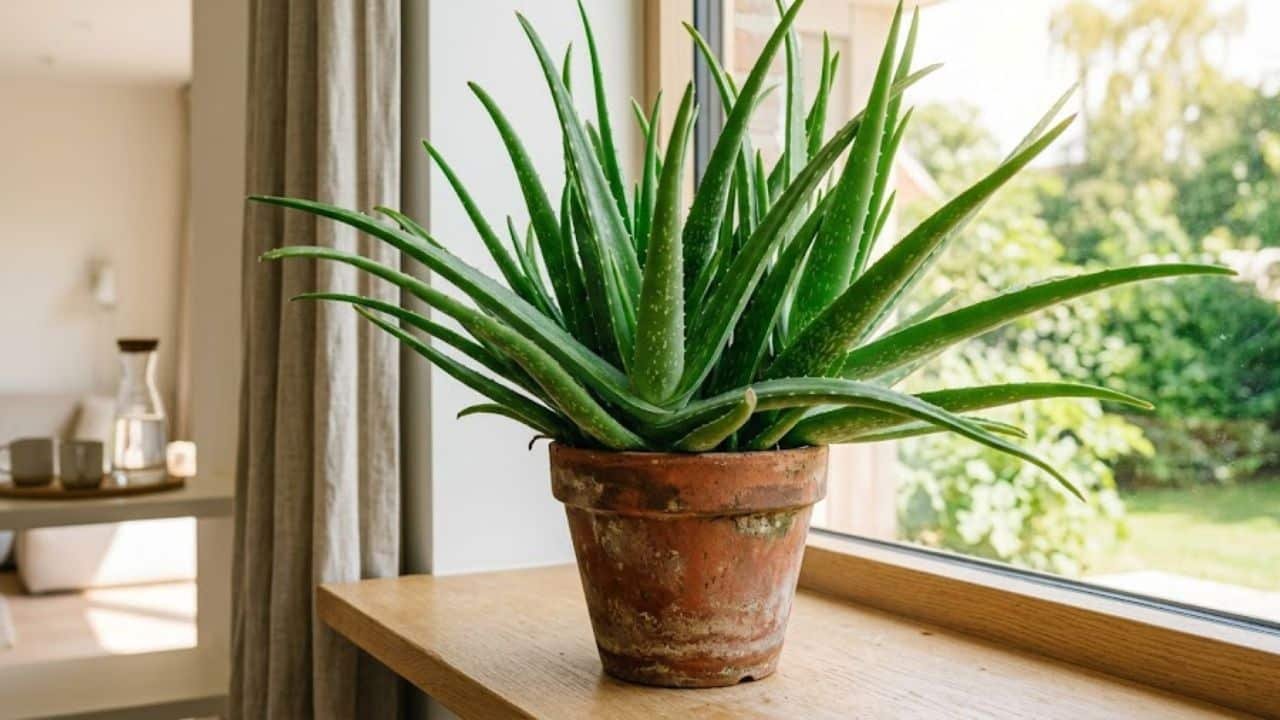
Editor’s Note
At decoryourroom.com, we love functional beauty. While plants like the Swiss Cheese Monstera bring unmatched dramatic visual textures into a room, the Aloe Vera offers something even better: a living, breathing first-aid kit. This incredible African succulent has been cultivated for thousands of years for its soothing, medicinal gel. Yet, despite its reputation for being “unkillable,” millions of indoor gardeners struggle with mushy stems, brown leaves, and stunted growth. In this ultimate guide on how to grow Aloe Vera, we will share expert botanical secrets to help you cultivate thick, plump, gel-filled leaves right on your windowsill.
Introduction: Understanding the Desert Nature of Aloe Vera
To successfully master how to grow Aloe Vera, you must first travel mentally to its native habitat. Aloe barbadensis miller is indigenous to the arid, scorching climates of the Arabian Peninsula and parts of Africa.
In these regions, the plant thrives in poor, rocky, or sandy soils where rain is a rare luxury. To survive months of drought, the Aloe Vera evolved to become a living reservoir.
Its thick, fleshy leaves are filled with a complex, water-dense parenchymal tissue what we commonly call Aloe Vera gel. Because the plant is genetically hardwired to hold onto water inside its body, treating it like a typical leafy houseplant is the fastest way to kill it. Let’s break down the exact steps to recreate its desert paradise indoors.
Lighting Requirements: How Much Sun Does Aloe Vera Need?
When studying how to grow Aloe Vera indoors, light is the absolute foundational pillar. Without adequate light, your plant cannot photosynthesize enough energy to produce its thick gel.
Bright, Direct Sunlight is Best
Aloe Vera plants crave light. Ideally, they need around six hours of bright, direct sunlight daily. A south-facing or west-facing window is the absolute perfect location in your home.
Signs Your Aloe Needs More Light
If you place your Aloe Vera in a dark corner or a windowless bathroom, it will start to complain. The plant will undergo a process called etiolation the leaves will grow thin, flat, and weak, stretching wildly toward the nearest light source. The beautiful upright structure will collapse, causing the heavy leaves to droop sideways.
Can Aloe Vera Get Too Much Sun?
Yes! While they love the sun, if you suddenly move a plant from a dark room into scorching summer sunlight without acclimating it, the leaves will get sunburned. They will turn an unsightly muddy brown or orange color as a defense mechanism against intense UV radiation.

How to Water Aloe Vera Without Causing Root Rot
If you want to know the number one reason why people fail when learning how to grow Aloe Vera, it is overwatering.
The “Soak and Dry” Rule
An Aloe Vera plant prefers a cycle of drought followed by a heavy downpour. Never water your Aloe on a fixed weekly schedule. Instead, let the soil dry out 100% all the way to the bottom of the pot. Much like when you are caring for Peperomia, you should use the squeeze test or look at the leaves. If the leaves look plump and feel rock-hard, do not water. When they start to look slightly puckered or thin, it is time for a deep drink.
The Dangers of Stagnant Water
When you water, drench the soil thoroughly until water leaks out of the bottom drainage hole. Always empty the drainage saucer immediately. If the shallow root system sits in muddy, stagnant water for more than a few hours, the roots will drown, rot, and turn into black mush.

The Perfect Soil Formula: Recreating the Desert Floor
You cannot use regular, dense, moisture-retentive potting dirt for succulents. It holds onto water like a sponge, which is a death sentence for an Aloe plant.
The Fast-Draining Mix
Aloe Vera requires a gritty, loose substrate that allows water to pass through instantly. You can easily create a world-class mix at home using a modified version of the perfect potting soil mix for cactus. Combine:
- 1 Part Standard Organic Potting Soil
- 1 Part Coarse Horticultural Sand
- 1 Part Perlite or Pumice
This gritty texture ensures that the fine, delicate roots of your Aloe Vera stay surrounded by air pockets, providing the essential oxygen they need to grow strong.

Choosing the Best Pot for Aloe Vera
The container you choose plays a massive psychological role in your plant’s health.
Why Terracotta is King
Always opt for unglazed terracotta or clay pots when growing succulents. Terracotta is highly porous, meaning it breathes. It naturally wicks excess moisture out of the soil through the sides of the pot, helping the soil dry out much faster than plastic or glazed ceramic pots.
The Drainage Hole Mandate
Never, under any circumstances, plant an Aloe Vera in a decorative pot that does not have a functional drainage hole at the bottom. Without a way for water to escape, root rot is completely inevitable.
How to Harvest Aloe Vera Gel Without Killing the Plant
Once your plant is mature, you will want to harvest its magical, soothing gel for skincare, sunburns, or DIY hair masks. However, doing it incorrectly can leave your plant permanently scarred or dead.
Always Pick Mature, Outer Leaves
Never cut the young, small leaves growing from the very center of the plant. This is the growth core. Instead, always harvest the largest, thickest leaves from the very bottom, outer edge of the plant. These are the oldest leaves and contain the highest concentration of mature gel.
The Clean Cut
Use a very sharp, sterilized knife to slice the leaf off as close to the main central stem as possible.
Draining the Alonin (Crucial Step)
Once the leaf is cut, place it upright in a small glass or cup for 10 to 15 minutes. You will notice a dark yellowish, sticky liquid draining from the cut end. This is aloin (or aloe latex). It is highly irritating to the skin and can cause severe stomach cramps if consumed. Once the yellow sap drains out, wash the leaf thoroughly, slice off the spiky edges, and scoop out the pure, crystal-clear inner gel safely.

How to Propagate Aloe Vera Pups
As your Aloe Vera grows happier, it will start to reproduce naturally by producing baby clones around its base. These are affectionately known as “pups.”
When to Separate Pups
Do not rip the tiny pups out as soon as they appear. Wait until the baby plant is at least 3 to 4 inches tall, or roughly one-fifth the size of the mother plant. At this stage, the pup will have developed its own independent root system.
The Separation Process
Gently slide the entire plant out of its terracotta pot. Brush away the gritty soil to expose the connection point. You will see a thick root (called a stolon) connecting the baby to the mother. Use a sterile knife to slice this connection, ensuring you keep the baby’s roots intact. Plant the pup in its own small container with fresh sand-perlite mix, and wait a week before watering it to let the cut wound heal.

Troubleshooting: Why is My Aloe Vera Turning Brown?
Even when you are trying your best, you might encounter a few visual issues. Here is how to diagnose them quickly:
Mushy, Browning Stems: If the base of the leaves looks translucent, soggy, and is collapsing into a brown mess, you are overwatering. The plant is rotting from the inside out.
Thin, Curling Leaves: If the leaves are curving inward like straws and feel soft or hollow, the plant has completely depleted its internal water reservoir and needs a thorough watering.
Pale, Bleached Foliage: If your vibrant green leaves look washed out, grey, or yellow-white, the plant is likely getting blasted by intense, un-filtered afternoon sun without being acclimated. Move it slightly back from the glass.
Biophilic Styling: Aloe Vera in Modern Decor
Beyond its medicinal properties, the sharp, architectural silhouette of the Aloe Vera makes it a prized asset for contemporary home design.
Aesthetic Placement
An Aloe Vera looks spectacular when placed on a floating wooden shelf or a minimalist concrete console table. It pairs beautifully with clean lines, neutral color palettes, and earth tones. It is a fantastic option when you want to incorporate biophilic design into a small bedroom because it releases oxygen at night, unlike most plants, helping to purify your sleeping environment.

Safety First
While it is incredible for humans, Aloe Vera is mildly toxic to cats and dogs. The saponins and anthraquinones inside the leaves can cause vomiting and lethargy if chewed by pets. Always place your pots on high countertops, secure plant stands, or windowsills where your furry friends cannot access them.
Professional Horticultural Advice
As an interior plant specialist and biological researcher, my ultimate tip for anyone learning how to grow Aloe Vera is to practice the art of strategic neglect. Human intervention is usually what kills this desert native. People want to fuss over it, water it every three days, and feed it heavy fertilizers. Don’t do it! Cacti and succulents thrive on being ignored. Give it a high-intensity light location, ensure the soil crumbles perfectly between your fingers, and only feed it a highly diluted, low-nitrogen succulent fertilizer once a year in the spring. Let the plant rely on its own internal biological systems, and it will reward you with massive growth and a lifetime of free medicinal gel.
Conclusion
Learning how to grow Aloe Vera successfully is all about respecting its desert lineage. By providing it with a minimum of six hours of bright light, utilizing a highly porous terracotta pot, mixing a gritty DIY sand-and-potting-soil substrate, and strictly adhering to the “soak and dry” watering method, you will never have to worry about mushy or dying succulents again. Enjoy the gorgeous sculptural presence it adds to your home decor, harvest its soothing gel with care, and propagate its tiny pups to share the joy of gardening with your friends and family.
FAQs
Can Aloe Vera grow indoors without sunlight?
No, Aloe Vera cannot grow or survive long-term in low-light environments or rooms without windows. It requires bright, indirect to direct sunlight to produce thick leaves and maintain its upright structure. If your space lacks light, you must use a dedicated LED grow light.
How fast does Aloe Vera grow?
Aloe Vera is considered a slow to moderate grower when kept indoors. Its growth rate depends entirely on the amount of light it receives. In ideal bright conditions during the spring and summer, it will rapidly produce new center leaves and throw out multiple pups.
Why are the leaves of my Aloe Vera flat instead of plump?
If the leaves look flat, thin, and bend easily, your plant is likely starving for light or dehydrated. Check the soil: if it is bone-dry and has been for months, give it a deep watering. If the soil is fine but the plant is in a dark spot, move it immediately to a sunny window.