
Editor’s Note
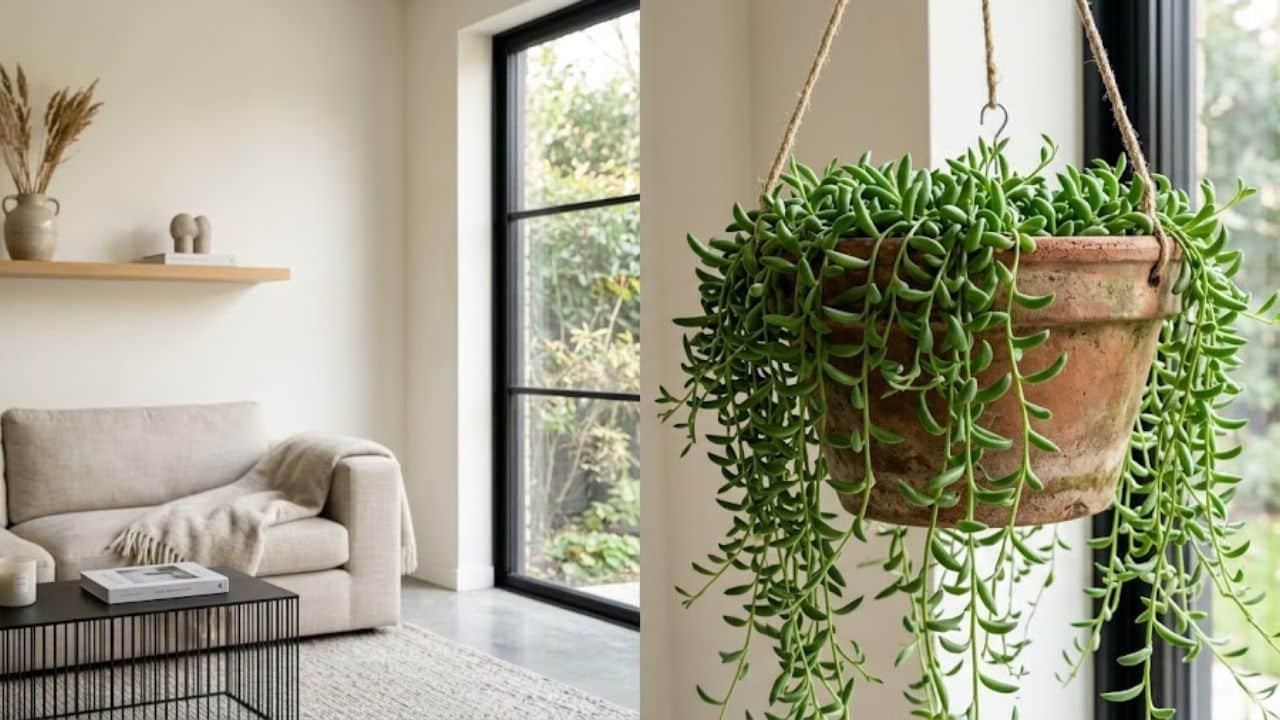
At decoryourroom.com, we constantly search for trailing plants that add dramatic vertical lines to our interior spaces. While the Swiss Cheese Monstera provides lush, tropical vibes, sometimes a room needs something a bit more delicate. Enter the String of Bananas (Senecio radicans). This bizarre, beautiful trailing succulent looks exactly like its name suggests: cascading vines covered in tiny, green, curved bananas. It is famous for being incredibly fast-growing and surprisingly forgiving. However, because it is succulent, it requires a very specific watering and lighting routine to prevent mushy stems. In this master guide, we are revealing everything you need to know to keep your String of Bananas plump, green, and growing beautifully.
Introduction: What is a String of Bananas?
Native to the harsh, arid landscapes of South Africa, the String of Bananas (botanically known as Senecio radicans or Curio radicans) is a vining succulent.
In its natural habitat, it creeps along the sandy, rocky ground, rooting wherever its stems touch the earth. This evolutionary trait makes it incredibly resilient and extremely easy to propagate at home.
When grown indoors in hanging baskets, those creeping stems cascade downwards, creating a stunning waterfall of green, banana-shaped leaves. These fleshy leaves are designed to store water for long periods of drought, which dictates exactly how we should care for them in a modern home environment.
Lighting Requirements: Does String of Bananas Need Direct Sunlight?
This is one of the most highly searched questions by indoor gardeners, and the answer is crucial to your plant’s survival.
The Need for Bright Light
Much like when you are learning how to grow Aloe Vera, the String of Bananas is a sun-loving desert plant. It requires at least 4 to 6 hours of bright, indirect sunlight every single day. A south-facing or west-facing window is ideal.
Can It Take Direct Sun?
Yes, it can tolerate a few hours of direct morning sunlight perfectly fine. However, harsh, blazing afternoon sun through a magnifying glass window can scorch the delicate “bananas,” turning them brown and crispy. Use a sheer white curtain if your afternoon sun is too intense.
Signs of Low Light (Etiolation)
If you place this plant in a dark room, it will instantly stretch toward the light. The stems will become weak, and the space between each banana will become very wide and sparse. A healthy plant should have closely packed, plump bananas.

How to Water String of Bananas Without Causing Root Rot
Overwatering is the absolute fastest way to kill this plant. Because the leaves are literally tiny water balloons, adding too much water causes them to burst and rot.
The “Soak and Dry” Strategy
You must treat this plant like a true desert succulent. Wait until the soil is 100% bone-dry before even thinking about watering. When in doubt, wait another week.
The Shrivel Test
The plant will tell you when it is thirsty. When fully hydrated, the bananas are firm, round, and slightly glossy. When the plant needs water, the bananas will start to look slightly dull and develop a small, indented crease (like a deflating balloon) along the side. This is your green light to water.

Watering Technique
Take the pot to the sink and soak the soil completely until water pours out of the drainage holes. Never let the pot sit in a saucer full of stagnant water.
The Best Soil Mix for String of Bananas
Dense, heavy indoor potting soil will suffocate the very fine, shallow root system of the Senecio radicans.
Creating a Fast-Draining Environment
You must provide maximum aeration and rapid drainage. The easiest way to achieve this is by using the perfect potting soil mix for cactus.
If you are mixing it yourself, combine:
- 1 Part Organic Succulent Soil
- 1 Part Coarse Sand or Poultry Grit
- 1 Part Perlite or Pumice
This highly gritty texture ensures water rushes past the roots instantly, preventing the muddy environment that triggers fungal infections and root rot.

String of Bananas vs. String of Pearls: Which is Easier?
Many people confuse these two famous succulents, but there is a clear winner when it comes to beginner-friendly care.
The String of Pearls
The String of Pearls (Senecio rowleyanus) is notoriously finicky. Its perfectly round leaves have less surface area for photosynthesis, making it extremely sensitive to lighting changes and incredibly prone to rotting if overwatered even slightly.
The String of Bananas (The Winner)
The String of Bananas is vastly easier to grow. Its curved, elongated leaves photosynthesize much more efficiently, and the stems are thicker and more robust. If you have killed a String of Pearls in the past, the String of Bananas will restore your confidence!
How to Propagate String of Bananas (Step-by-Step)
Because it naturally creeps along the ground in the wild, propagating this plant is ridiculously easy and highly rewarding.
The Soil-Laying Method
- Use sterilized scissors to cut a healthy, 4-to-5-inch vine from your main plant.
- Fill a shallow, wide terracotta pot with your gritty cactus soil mix.
- Simply lay the cut vine flat across the top of the dry soil. You can gently press it down so the stem makes contact with the dirt.
- Mist the top of the soil lightly once a week.
- Within 2 to 3 weeks, tiny pinkish-white roots will shoot out from the stem directly down into the soil!

Troubleshooting: Why is My String of Bananas Shriveling?
If your plant is looking sad, shriveling is the most common symptom. Here is how to diagnose the real issue:
Shriveling + Dry Soil = Underwatering: If the soil has been dry for weeks and the bananas look like raisins, the plant is severely dehydrated. Give it a deep, thorough soaking.
Shriveling + Wet Soil = Root Rot : This is the dangerous one. If the soil is wet, but the bananas are shriveling and turning brown or mushy at the top near the dirt, the roots have drowned. The plant can no longer drink water. You must cut off the healthy green vines and propagate them in fresh soil to save the plant.

Toxicity: Is String of Bananas Safe for Cats and Dogs?
When learning how to incorporate biophilic design into a small bedroom or a living space, plant safety is paramount.
Unfortunately, the String of Bananas is toxic. It contains pyrrolizidine alkaloids. If ingested by dogs, cats, or small children, it can cause vomiting, lethargy, and in severe cases, liver damage.
If you want a safe, non-toxic trailing alternative, we highly recommend the Peperomia Hope. Otherwise, ensure your String of Bananas is hung securely from the ceiling in a macrame planter, completely out of reach of curious paws.

Expert Styling and Botanical Tips
As a botanical enthusiast and interior plant stylist, my biggest secret for a lush, thick String of Bananas is “the haircut method.” Most people let their vines grow incredibly long, which eventually results in a bald, sparse top near the soil. To fix this, do not be afraid to trim the long vines! Take those cuttings and simply lay them back on top of the soil in the mother pot. They will root and create a dense, full crown, hiding the bare dirt. Furthermore, always use unglazed terracotta pots. The porous clay actively wicks moisture out of the soil, acting as a foolproof safety net against accidental overwatering.
Conclusion
The String of Bananas is an architectural marvel that brings rapid, cascading growth to any sunny corner of your home. By respecting its succulent nature providing it with a highly porous soil mix, bright indirect sunlight, and strictly following the “soak and dry” watering method you will enjoy a spectacular, zero-fuss indoor plant. Keep an eye out for shriveling signs, propagate your trimmings for a fuller pot, and remember to hang it high away from your pets!
FAQs
Should I mist my String of Bananas?
Absolutely not. Succulents hate wet leaves. Misting does not provide any benefit to a String of Bananas and will actively encourage fungal diseases and leaf rot. Always water directly into the soil.
Why is my String of Bananas turning purple?
If your plant is developing a purple or reddish tint, it is experiencing “sun stress.” This isn’t necessarily a bad thing! It just means the plant is reacting to intense, direct sunlight. If it looks healthy otherwise, leave it be. If the bananas look scorched, move it slightly away from the window.
How fast does a String of Bananas grow?
It is one of the fastest-growing indoor succulents. Under optimal conditions (plenty of light and good drainage), a healthy String of Bananas can easily grow several feet in a single spring and summer season.